Quick Facts
The word “Aarti” originated from the Sanskrit word “Harati,” meaning “to respect.” It is spelled in various ways such as Aarti, Puja, and Ardas, but it is primarily associated with the Hindu religious formal procedure of worship. In this ritual, a flame is lit from wicks saturated in ghee (a purified form of butter) or sometimes camphor to honor deities. During the worship ceremony, religious songs are sung or played in praise of the divine. Aarti has descended from Indian Vedic culture, where “Aa” means “towards” or “to,” and “Rati” signifies the right of virtue, often expressed through fire rituals known as “Homa.” It can be considered a special event to devote oneself in front of God, during which participants wear traditional attire, such as yellow-colored dhotis, and cover their heads until the completion of the worship ceremony.
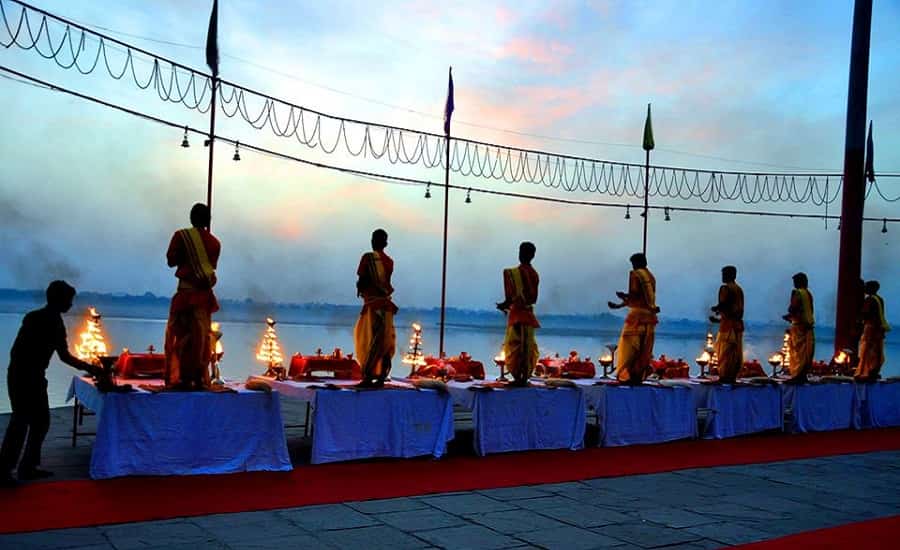

Every day, the sun sets in Varanasi with the Ganga Aarti at Dashashwamedh Ghat, near the Kashi Vishwanath Temple. While Ganga Aarti also takes place at the shores of Haridwar and Rishikesh, the Varanasi Aarti stands out due to its elaborate, choreographed ceremony. This grand event holds deep significance for the people of Banaras, which is why they participate with full divine dedication. The Aarti or Puja is performed by both young and experienced pundits, all dressed in yellow saffron robes, each holding a puja plate in hand. The ceremony begins with the movement of large flames from the lamps that illuminate the entire environment, contrasting with the darkening sky.
The movement of the lamps, held by devotees, aligns with the rhythmic chants of the pundits, the synchronized clanking of cymbals, and the invigorating scent of rose and sandalwood filling the air. A notable point is that the Varanasi Ganga Aarti is conducted both in the morning and evening at the popular riverbank. The most common Puja Aarti sung by the pundits is “Om Jai Jagdish Hare,” also known as the Universal Aarti, which is dedicated to all deities, including the Ganga. Other Aartis dedicated to specific occasions include “Om Jai Shiv Omkara,” “Om Jai Ambe Gauri,” “Om Jai Adhya Shakti,” and “Om Jai Lakshmi.”
- Suggested to Read: Famous Ghats in Varanasi
How You Could Be a Part of Varanasi Aarti
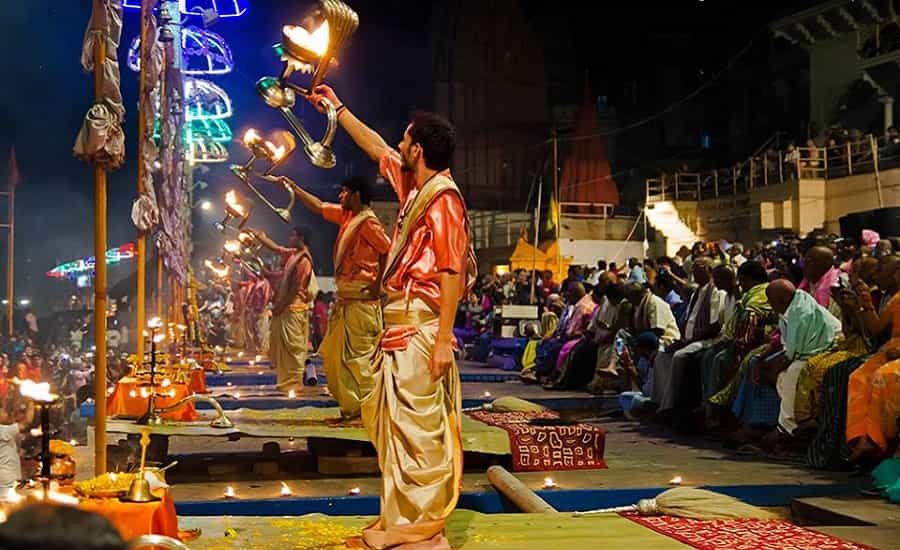
A large number of locals and visitors wish to attend the Aarti, and an interesting aspect is that people gather very early at the Ganga Ghat to secure a close view. It is a unique experience to witness the Aarti from a boat cascading along the river, and many tourists hire shop balconies along the river to get a closer look at the Varanasi Ganga Aarti. The Maha Ganga Aarti is especially significant and is celebrated on Kartika Purnima, which takes place annually. This day is considered one of the most important occasions for devotees to witness the grandeur of the Aarti.
Ganga Aarti Timing
|
Varanasi Ganga Aarti Time Table |
|||
| Season | Morning | Evening | Duration |
| Summer | 5:00 AM | 7:45 PM | 45 Minutes |
| Winter | 6:30 AM | 6:45 PM | 45 Minutes |
Ganga Aarti Videos of Varanasi (Kashi)


