Dwarka — the more you say about this city, the less it seems. Known worldwide as the abode of Lord Shree Krishna, Dwarka is one of the Sapta Puri, the seven holiest cities in India, situated where the Gomti River meets the Arabian Sea.
As the legendary kingdom of Lord Krishna, Dwarka also holds the honour of being one of the four Char Dham pilgrimage sites of Hinduism. The best places to visit in Dwarka blend deep spirituality with a relaxed, coastal charm — on one side the devotion of Lord Krishna, on the other, beaches and islands that feel a world away from temple crowds.
This guide covers every major Dwarka tourist attraction, with facts checked against current sources, updated timings, and a few names that deserved a spot on this list but were missing before.
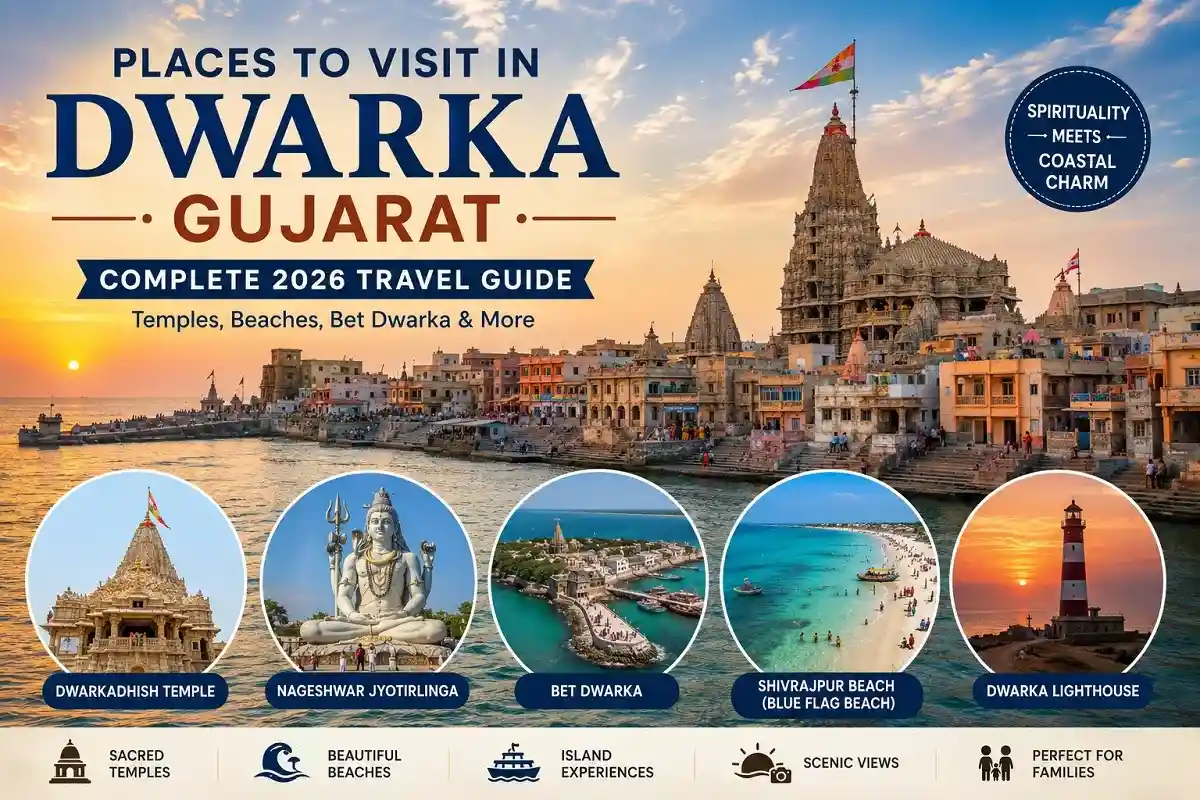

Quick Overview
Short on time? Here’s the fastest way to plan Dwarka sightseeing.
| Category | Top Pick |
| Must-see temple | Dwarkadhish Temple (Jagat Mandir) |
| Best Shiva temple | Nageshwar Jyotirlinga Temple |
| Best beach | Shivrajpur Beach (Blue Flag certified) |
| Best island excursion | Bet Dwarka (Dwarka Beyt) |
| Best sunset spot | Dwarka Lighthouse |
| Best day trip | Somnath Temple (~233 km, separate city) |
| Best for families | Gopi Talav and Dwarka Beach |
Why Dwarka Deserves a Place on Your Travel List
Dwarka is one of India’s most sacred cities, yet it’s far from a solemn, one-note destination. On one side, devotion to Lord Shree Krishna puts visitors on a path of spirituality; on the other, the beaches and islands nearby offer a genuinely peaceful coastal escape. Whether you’re planning a religious Char Dham yatra or a relaxed Gujarat tourism trip, the places to visit in Dwarka cover both moods without much travel between them.
Top Places to Visit in Dwarka, Gujarat
Dwarkadhish Temple
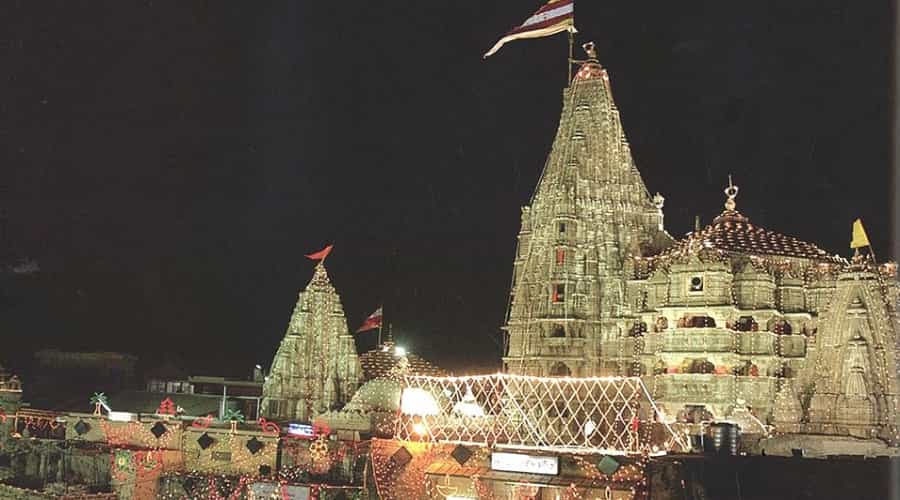

Let’s start with the city’s spiritual centrepiece. Dedicated to Lord Shree Krishna, Dwarkadhish Temple (also called Jagat Mandir) is the essence of Dwarka.
With its painstaking carvings and grand architecture, the temple’s original structure is believed to date back over 2,000–2,500 years, built by Vajranabha, Krishna’s great-grandson. The current five-storied building was rebuilt in the 15th–16th century and reflects Chalukya-influenced architectural style. It is supported by 72 pillars, not 60 as sometimes reported.
The mesmerising black-stone deity of Lord Krishna is the temple’s central charm, so personified that for a moment you’ll feel as though the god himself stands before you. Krishna is the presiding deity, with smaller shrines dedicated to Balram, Subhadra, Rukmini, and his other queens. This temple deserves the top spot on any Dwarka sightseeing list.
- Location: Dwarka, Gujarat 361335
- Timings: 6:00 AM to 9:30 PM
- Ideal for / Things to Do: Spirituality, architecture, heritage, Tulabhara, camel rides near Sudama Setu, shopping, sunrise & sunset views
- Required time: 1–2 hrs
- Entry fee: No entry fee
- Best time to visit: November to March
- How to reach: Nearest railway station: Dwarka Railway Station (3 km); nearest airport: Porbandar (~105 km)
Must Read: Beautiful Temples In Gujarat To Visit
Nageshwar Jyotirlinga Temple
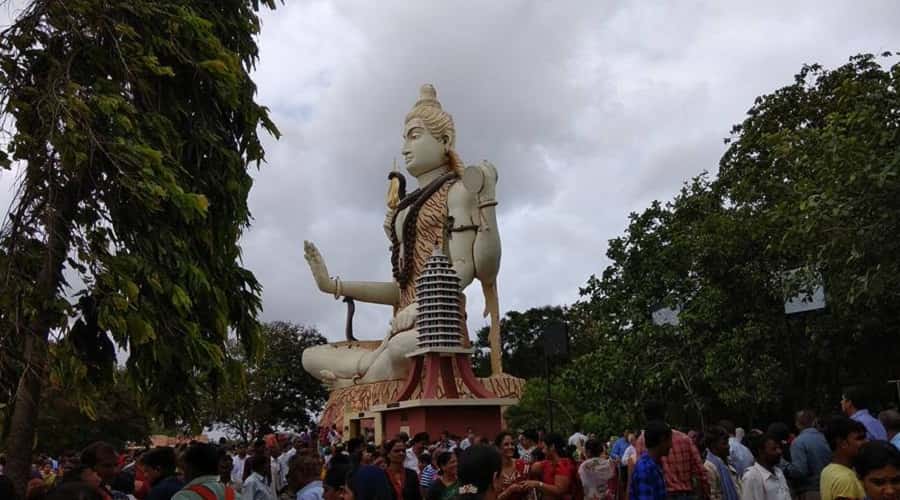
Nageshwar Jyotirlinga is one of the 12 sacred Jyotirlingas in India. Its exact founding date is unknown, though legend connects it to the era of Lord Krishna; historical records place a rebuilt temple structure here from around 1750.
The Shivalinga faces south, considered especially auspicious in Hindu tradition, which is why it draws such devotion. A 25-metre-tall statue of a seated Lord Shiva stands near the temple, along with a peaceful pond and garden where visitors can spend time.
- Location: Near Dwarka–Bet Dwarka route, Gujarat 361335
- Timings: 6:00 AM to 9:30 PM
- Ideal for / Things to Do: Religion, spirituality, Maha Shivratri, Abhishekam/Pooja
- Required time: 1–2 hrs
- Entry fee: No entry fee
- Best time to visit: October to March
- How to reach: Nearest railway station: Dwarka Railway Station (~17 km); nearest airport: Porbandar (~120 km) & Jamnagar (~135 km)
Also Read: Popular Shiva Temples in Gujarat
Rukmini Devi Temple
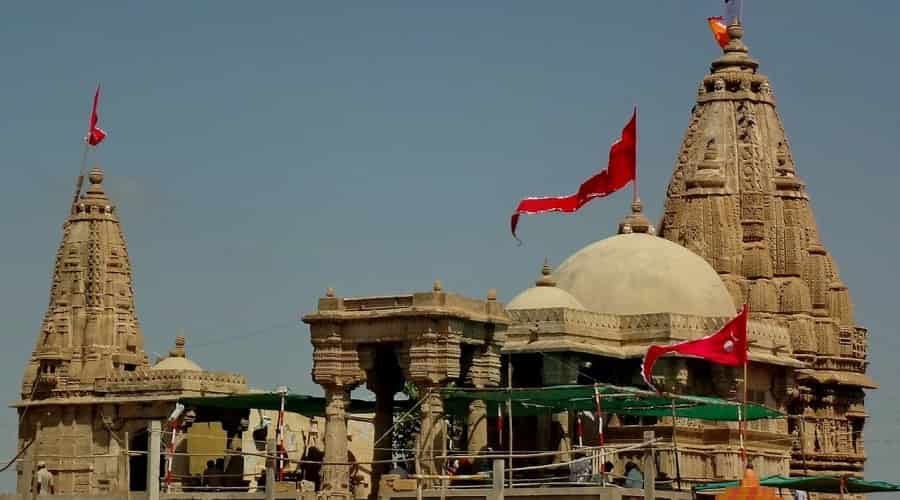
An important stop that’s easy to miss: Rukmini Devi Temple, dedicated to Krishna’s principal queen, sits about 2 km from Dwarkadhish Temple. Local tradition holds that a Dwarka pilgrimage is incomplete without her darshan.
The temple’s origins are believed to go back roughly 2,500 years, with the current Nagara-style structure dating to the 12th century — built around the same time as parts of the main Dwarkadhish Temple. According to legend, sage Durvasa cursed Rukmini to live apart from Krishna after she drank water without offering him some first, which is why her temple stands at a distance from his. The temple is known for its jal daan (water donation) tradition, since the surrounding land is said to remain dry because of the same curse.
- Location: About 2 km from Dwarkadhish Temple, Dwarka
- Timings: Roughly 7:00 AM–12:00 PM & 4:00 PM–8:30 PM (may vary by season)
- Ideal for / Things to Do: Darshan, jal daan tradition, architecture, Rukmini Vivah and Janmashtami festivities
- Required time: 45 min–1 hr
- Entry fee: No entry fee
- Best time to visit: October to March
- How to reach: Auto-rickshaw or taxi from Dwarkadhish Temple; nearest airport: Porbandar (~105 km), Jamnagar (~137 km)
Dwarka Beach
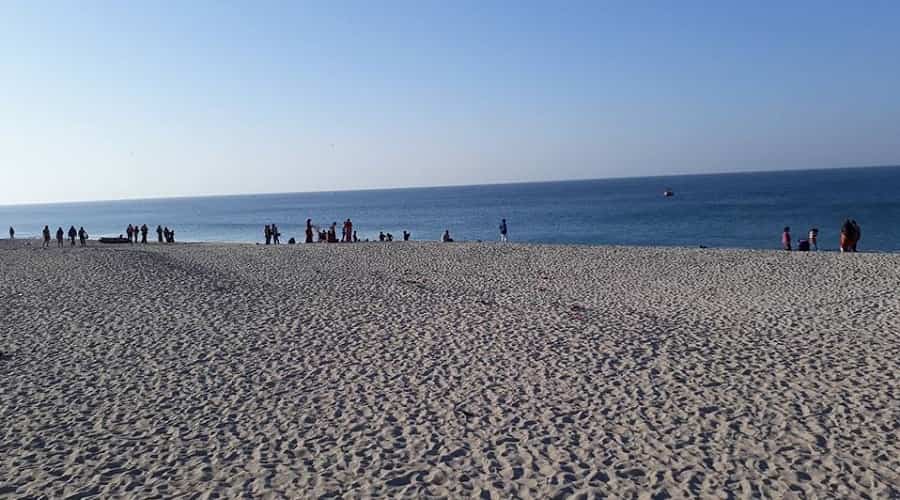
Dwarka’s spirituality is no secret, and Dwarka Beach is one of its most refreshing counterpoints. The city is steeped in sanctity at every turn, but explore it fully and its lighter, livelier side comes through too.
After all, it’s Lord Shree Krishna’s land — so why shouldn’t it carry a bit of romance and vivacity as well? Located along the Arabian Sea near the town centre, Dwarka Beach is loved as much for its calm as for its charm. The soaring waves and sandy coastline make it an easy, relaxed stop close to the main temple.
- Location: Dwarka, Gujarat 361335
- Timings: Open through daylight hours; visitors generally come between 6:00 AM and 8:00 PM
- Things to Do: Picnic, relaxation, seashell hunting, photography, sunsets
- Required time: 1–2 hrs
- Best time to visit: Winter season
- How to reach: 1 km from Dwarkadhish Temple; nearest railway station: Dwarka Railway Station (4 km); nearest airport: Porbandar (~105 km)
Shivrajpur Beach (Blue Flag Certified)
If Dwarka Beach whets your appetite for the coast, Shivrajpur Beach is the one to build a half-day around. Located about 12 km from Dwarka on the Dwarka–Okha Highway, it became Gujarat’s first Blue Flag certified beach in October 2020 — an international eco-label from the Foundation for Environment Education that recognises water quality, cleanliness, and visitor safety.
Shivrajpur has clear, shallow water safe for swimming, lifeguards on duty, and options for scuba diving, snorkelling, jet skiing, and parasailing. Dolphins are occasionally spotted in the early morning during winter months, though sightings aren’t guaranteed. It’s a distinctly different pace from the temple circuit, and a strong pick for families or anyone wanting a proper beach afternoon during their Dwarka trip.
- Location: Shivrajpur village, Dwarka–Okha Highway, ~12 km from Dwarka
- Timings: Roughly 8:00 AM to 6:00 PM
- Things to Do: Swimming, scuba diving, snorkelling, jet skiing, parasailing, dolphin watching
- Required time: 2–4 hrs
- Entry fee: Approx. ₹30 per adult; water sports charged separately
- Best time to visit: October to March
- How to reach: Taxi or private vehicle from Dwarka; nearest airport: Jamnagar (~140 km)
Dwarka Beyt
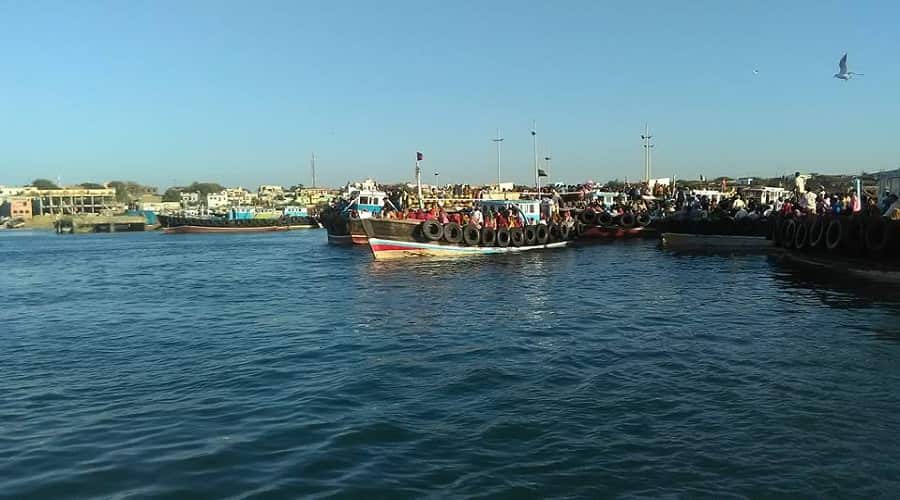
If Dwarka Beach has already charmed you, brace yourself, because Bet Dwarka is arguably the most memorable stop on this list. Surrounded by striking temples and wide coastline, this island is reached only by boat from Okha.
Here, spirituality and everyday island life sit side by side. Local boat operators offer short marine-life viewing trips, and the temple’s serenity draws deep devotion.
This temple is believed to be around 500 years old and shows fine Hindu architectural detailing. The short ferry crossing itself, with the coastline receding behind you, adds a real sense of occasion that the mainland temples don’t quite match.
- Location: Bet Dwarka, Gujarat 361345
- Timings: 9:00 AM to 9:00 PM
- Sightseeing & Things to Do: Seashell shopping, boat rides, palace ruins linked to Krishna’s queens, Shankhoddhar Teertha, Mira Bai Temple, Radhika Rani Temple, Dwarkadhish Temple, Dandi Hanuman Temple
- Required time: 3–4 hrs
- Ferry Cost: Approx. ₹10 per person (subject to change)
- Best time to visit: October to March
- How to reach: Nearest railway station: Okha Railway Station (5 km); nearest airport: Jamnagar (~150 km)
Gopi Talav
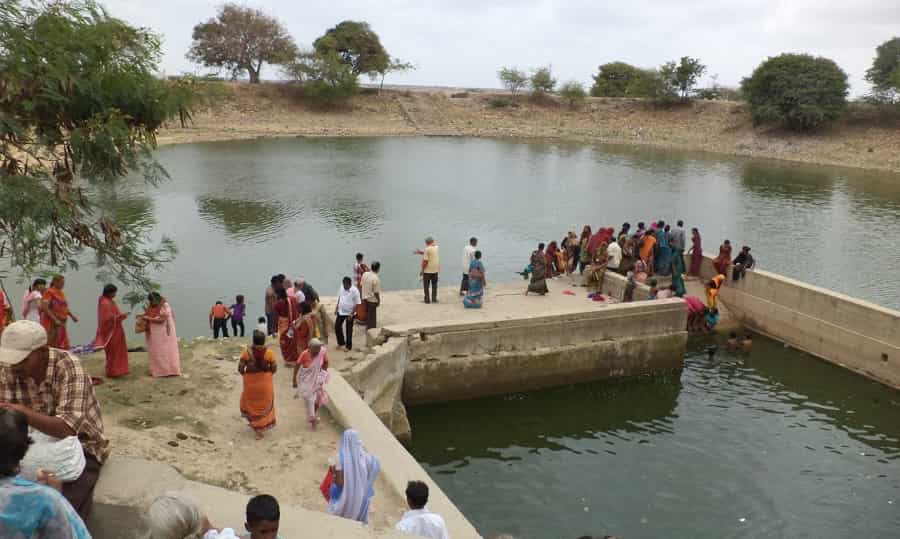

Gopi Talav is a pond that carries deep significance from the age of Lord Shree Krishna. Legend holds this is the same pool where the Gopis once bathed.
Countless playful, devotional stories about Krishna are tied to this spot, which is why it remains a compelling stop for devotees today, not just a scenic pond.
Pilgrims apply the yellow sand from its shoreline to their forehead as a tilak, considering it auspicious — a simple ritual even if you can’t take a dip yourself. The site is quiet and rarely crowded, making it a good breather between the bigger temple stops on a Dwarka itinerary.
- Location: Samlasar Village, Bet Dwarka Road, Dwarka
- Timings: 7:00 AM to 7:00 PM
- Required time: 1–2 hrs
- Best time to visit: During festivals
- How to reach: Nearest railway station: Dwarka Railway Station (20 km); nearest airport: Jamnagar (~130 km)
Dwarka Lighthouse
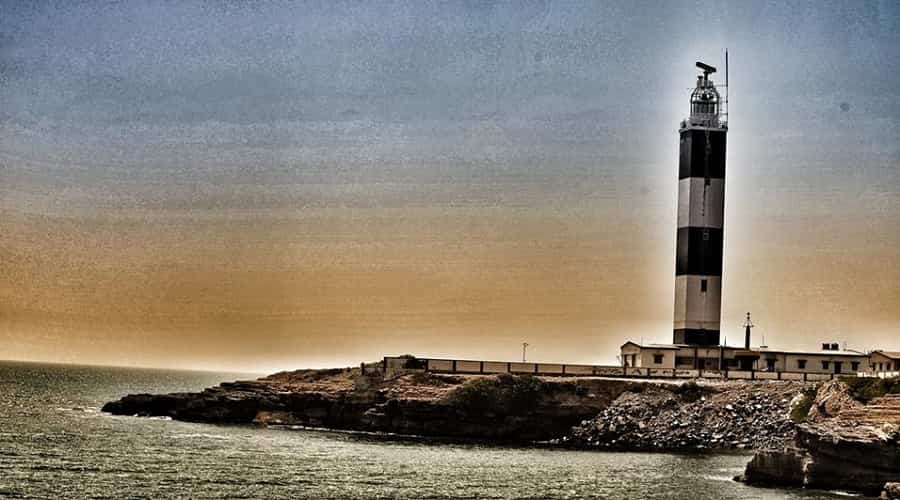
Dwarka Lighthouse is one of the most photographed places to visit in Dwarka. The current 43-metre tower was built between 1960 and 1962, replacing a smaller 19th-century oil-lamp structure — making it a mid-20th-century engineering landmark rather than a 19th-century one, as sometimes reported. It stands close to where the Gomti River meets the Arabian Sea.
The lighthouse is open to visitors for a short daily window rather than all day, so plan around that. If you time it right, the climb rewards you with a sweeping view of Dwarka’s coastline as the sun sets over the Arabian Sea — a good reason to carry a camera.
- Location: Dwarka Lighthouse, Dwarka, Gujarat 361335
- Timings: 4:00 PM to 6:00 PM (public visiting window)
- Things to Do: Sunset views, photography, coastal panoramas
- Required time: 30 minutes to 1 hr
- Best time to visit: Winter season
- How to reach: Nearest railway station: Dwarka Railway Station (~4.5 km); nearest airport: Porbandar (~105 km)
Samudra Narayan Temple
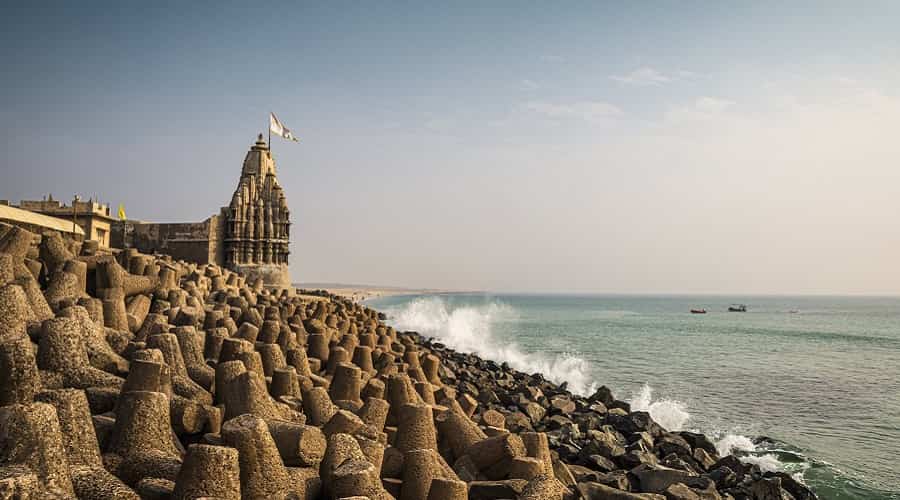
Samudra Narayan Temple is another sacred site that draws steady tourist footfall. Many visitors believe that touching its piousness helps clear impurities from life, which keeps the pilgrimage traffic steady here.
Just behind Dwarkadhish Temple, the sacred Gomti River flows past this temple’s location, and pilgrims make it a point to visit the river whenever they’re in the area. The temple is dedicated to Goddess Gomati and is known for its five wells, each holding naturally sweet water despite the salty land around it — plus a stone marked with a chakra symbol, believed to represent Lord Vishnu. Idols of Mira Bai, Lord Varuna, and Samudra Deva are also enshrined here.
- Location: Dwarka, Gujarat
- Timings: 6:15 AM to 9:00 PM
- Ideal for / Things to Do: Worship of Goddess Gomati, Gomti River darshan, Mira Bai temple, Lord Varuna temple, the five wells
- Required time: 1 hr
- Entry fee: No entry fee
- Best time to visit: Winter months
- How to reach: Nearest railway station: Dwarka Railway Station (3 km); nearest airport: Porbandar (~105 km)
Dandi Hanuman Temple
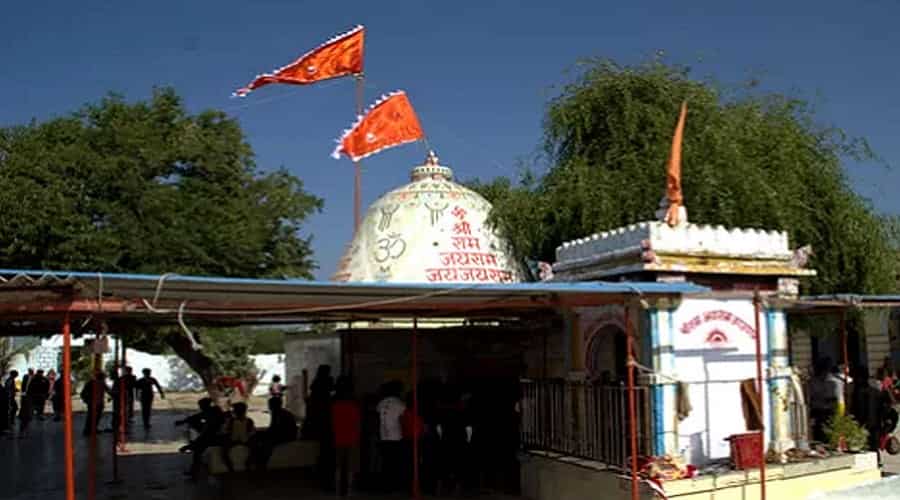
Bet Dwarka is an island packed with temples, and Dandi Hanuman Temple sits on its eastern side as one of the most storied. Devotees who wish to make special offerings can arrange accommodation here, and the temple carries a calm, holy feel. Inside sits an idol connected to Hanuman’s son.
According to Ramayana legend, during the Lanka war, Ahiravana — an ally of Ravana ruling over Patal Lok (the underworld) — is said to have abducted Lord Ram and his brother Lakshman and taken them there. Hanuman is believed to have rescued them by travelling to Patal Lok himself and meeting his own son, Makardhwaja, who had been guarding the underworld’s gates. This temple marks the spot local tradition associates with that reunion.
Hanuman Jayanti is celebrated here with real grandeur. During Dussehra, celebrations here honour Lord Krishna rather than Lord Ram, which is unusual and worth knowing before you visit. It’s one of the Pancha Dwarka temples and a worthwhile stop for anyone exploring Bet Dwarka.
- Location: Bet Dwarka, Gujarat 361330
- Timings: 6:00 AM to 8:00 PM
- Ideal for / Things to Do: Hanuman Jayanti, Dussehra, Ram Navami
- Required time: 30 min–1 hr
- Entry fee: No entry fee
- Best time to visit: November to March
- How to reach: Nearest railway station: Dwarka Railway Station (~33 km); nearest airport: Porbandar (~128 km)
More Sacred Sites & Landmarks Near Dwarkadhish Temple
Beyond the main list, a cluster of smaller but genuinely worthwhile sites sits within walking distance of Dwarkadhish Temple. These rarely make older Dwarka guides, but locals and repeat visitors rate them highly:
Gomti Ghat: Right behind Dwarkadhish Temple, Gomti Ghat is where pilgrims take a holy dip before temple darshan, at the point where the Gomti River meets the Arabian Sea. It’s a quiet, reflective spot even during the busier temple hours, and a good place to watch the evening aarti crowd gather.
Sudama Setu (Currently Closed): Sudama Setu is a pedestrian suspension bridge over the Gomti, named after Krishna’s childhood friend Sudama, opened in 2016 to connect the temple side with Panchkui Tirth. Important update: the bridge has been closed since 2022, so please check its current status locally before planning a visit around it.
Bhadkeshwar Mahadev Temple: Perched on a small rocky hillock on Dwarka’s western coastline, this Shiva temple is known for its dramatic setting — at high tide, sea water rushes around its base, which devotees see as a natural abhishek. Low tide is the easiest time to visit on foot; entry is generally free.
ISKCON Dwarka & Gita Mandir: For a different flavour of devotion, ISKCON Dwarka and the nearby Gita Mandir (dedicated to the Bhagavad Gita) are both worth a short visit if you have extra time in town, offering a calmer, less crowded alternative to the main temple circuit.
Somnath Temple: A Worthwhile Day Trip from Dwarka
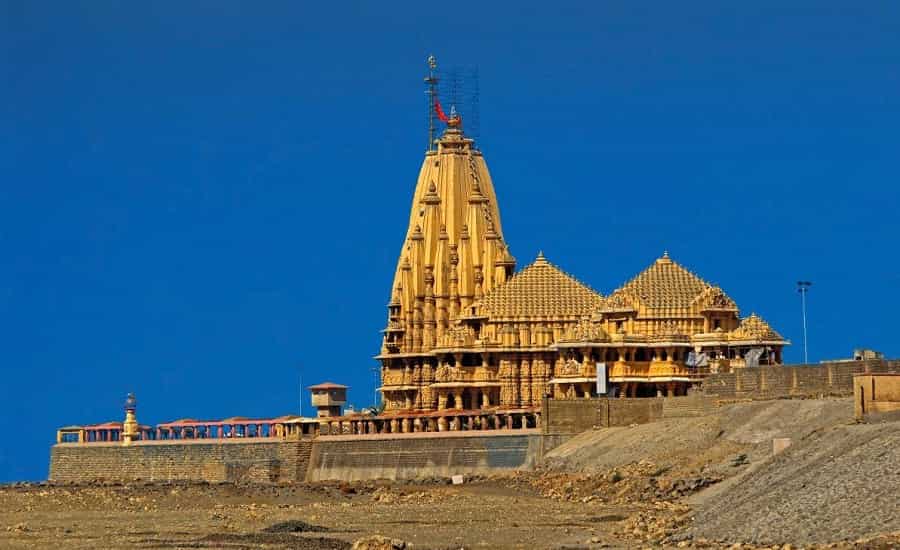

Somnath Temple isn’t technically in Dwarka — it’s a separate pilgrimage city about 233 km away (roughly 145 miles) via NH-51, not the 387 km sometimes quoted, and the drive takes about 4 to 5 hours by road. Still, it’s popular enough as a combined trip that it belongs on this list as a nearby extension rather than a Dwarka-local attraction.
One of the 12 Jyotirlingas, Somnath has a history of being destroyed and rebuilt as many as six times. A well-known legend tied to the Jyotirlinga myths describes a dispute between Lord Brahma and Lord Vishnu over who was supreme; Lord Shiva appeared as an endless pillar of light to settle it, and Vishnu’s honesty in admitting he couldn’t find its end is why Vishnu continues to be worshipped where Brahma largely isn’t. Guided Somnath–Dwarka tour packages are widely available for travellers who want a detailed, guide-led visit to both cities.
- Location: Veraval (Somnath), Gujarat
- Timings: 6:00 AM to 10:00 PM
- Ideal for / Things to Do: Spirituality, Shivratri, Triveni Sangam, camel ride, beaches
- Required time: 1–2 hrs (plus travel time from Dwarka)
- Entry fee: No entry fee
- Best time to visit: November to March
- How to reach: Nearest railway station: Veraval Railway Station (5 km); nearest airport: Diu Airport (~90 km); road distance from Dwarka: ~233 km via NH-51
Quick Reference
Compare timings, ideal duration, and distance from Dwarka town at a glance.
| Place | Timings | Time Needed | Distance from Dwarka |
| Dwarkadhish Temple | 6:00 AM–9:30 PM | 1–2 hrs | In town |
| Nageshwar Jyotirlinga | 6:00 AM–9:30 PM | 1–2 hrs | ~17 km |
| Rukmini Devi Temple | 7 AM–12 PM & 4–8:30 PM | 45 min–1 hr | ~2 km |
| Dwarka Beach | 6 AM–8 PM (daylight) | 1–2 hrs | 1 km |
| Shivrajpur Beach | 8 AM–6 PM | 2–4 hrs | ~12 km |
| Bet Dwarka (Dwarka Beyt) | 9 AM–9 PM | 3–4 hrs | By ferry from Okha |
| Gopi Talav | 7 AM–7 PM | 1–2 hrs | ~20 km |
| Dwarka Lighthouse | 4 PM–6 PM | 30 min–1 hr | ~4.5 km |
| Samudra Narayan Temple | 6:15 AM–9 PM | 1 hr | In town |
| Dandi Hanuman Temple | 6 AM–8 PM | 30 min–1 hr | ~33 km (Bet Dwarka) |
| Somnath Temple (day trip) | 6 AM–10 PM | 1–2 hrs + travel | ~233 km |
Sample 2-Day Dwarka Sightseeing Itinerary
New to the city and unsure how to sequence your Dwarka trip? Here’s a practical two-day route covering the main temples, the island, and the coast:
- Day 1 morning: Start at Dwarkadhish Temple for morning darshan, then walk to nearby Samudra Narayan Temple and Rukmini Devi Temple.
- Day 1 afternoon: Relax at Dwarka Beach, then head to Dwarka Lighthouse in time for its 4–6 PM visiting window and sunset.
- Day 2 morning: Travel to Nageshwar Jyotirlinga Temple, then continue to Bet Dwarka by ferry from Okha, covering Bet Dwarka temple, Dandi Hanuman Temple, and Gopi Talav en route.
- Day 2 afternoon: Wrap up at Shivrajpur Beach for water sports or a relaxed sunset, especially if travelling with family.
- Optional Day 3: Extend to Somnath Temple as a full-day trip (~233 km each way), ideally with an early start.
Best Time to Visit Dwarka
Monsoon and peak summer aren’t ideal for visiting Dwarka — temperatures and humidity both climb, making sightseeing uncomfortable. You can still visit in early or late summer, but winter is clearly the best season. Winters here aren’t harsh, so you can explore the city pleasantly, with average temperatures ranging between roughly 15°C and 30°C from October to March.
How to Reach Dwarka
Dwarka is a major pilgrimage destination, and millions of tourists visit annually, so transport infrastructure is well developed. The city is accessible by all major modes of transport, though rail is often the most convenient, since Dwarka Railway Station sits just minutes from the town centre.
By air, both Jamnagar and Porbandar airports serve Dwarka, and which one to pick depends on your priority: Porbandar is geographically closer to Dwarka town (~105 km) and to attractions like the lighthouse and Dwarkadhish Temple, while Jamnagar (~135–140 km) generally offers better flight frequency and connectivity from major Indian cities. By road, Dwarka is well connected to major Gujarat cities: Ahmedabad is about 450 km away (roughly 8 hours by car), and Rajkot is around 220 km.
Local Culture, Food & Shopping in Dwarka
A Dwarka trip isn’t only about temple darshan. The local market near Dwarkadhish Temple is worth a slow walk — look for Bandhani sarees, beadwork jewellery, and handloom textiles typical of coastal Gujarat.
For food, stick to simple, fresh Gujarati thalis and street snacks near the temple square; being a pilgrimage town, most eateries here are vegetarian. Trying dhokla, khaman, and fafda alongside your temple visits rounds out the experience nicely.
If you enjoy local festivals, try to time a visit around Janmashtami (Krishna’s birthday) or Maha Shivratri at Nageshwar Jyotirlinga — both bring the city’s culture and devotion to life in a way a regular weekday visit won’t show you.
Practical Tips for Visiting Dwarka
- Dress modestly at temples: cover shoulders and knees; men often prefer a dhoti or simple shirt-and-trousers, women a saree, salwar kameez, or similar modest outfit.
- Photography is usually restricted inside temple sanctums, including at Dwarkadhish Temple — check signage before taking photos.
- Carry your own drinking water, especially for Bet Dwarka and Shivrajpur Beach, where facilities can be basic outside peak season.
- Book the Bet Dwarka ferry early in the day; queues build up quickly during festivals and winter weekends.
- If visiting during Janmashtami (Krishna’s birthday, August/September), expect large crowds and book accommodation well in advance.
- Carry cash for small vendors, ferry tickets, and temple donation boxes — card and UPI acceptance is inconsistent outside the main market.
- Avoid weekend afternoons at Dwarkadhish Temple if you dislike crowds; early morning darshan (soon after 6 AM opening) is noticeably quieter.
- Basic paid parking is available near Dwarkadhish Temple and at Shivrajpur Beach; auto-rickshaws are the easiest way to get around town itself.
- Mobile network coverage (Jio, Airtel, BSNL) is reliable in Dwarka town but can weaken on Bet Dwarka island and around Gopi Talav — plan accordingly if you need to stay connected.
- Watch your belongings around temple crowds and be cautious of monkeys near Bet Dwarka temples, who can snatch food or loose items.
Frequently Asked Questions
Is Dwarka worth visiting?
Yes. It combines a major Krishna pilgrimage site, a genuine island excursion to Bet Dwarka, and a Blue Flag beach in one compact, easy-to-plan trip.
Can Dwarka be covered in one day?
The core temples can be rushed through in a day, but two days lets you properly add Bet Dwarka and a beach without feeling hurried.
What are the top places to visit in Dwarka?
Dwarkadhish Temple, Nageshwar Jyotirlinga, Bet Dwarka, Rukmini Devi Temple, and Shivrajpur Beach are the most popular places to visit in Dwarka.
How many pillars does Dwarkadhish Temple have?
The main structure is supported by 72 pillars, not 60 as some older articles state.
Is Somnath Temple located in Dwarka?
No. Somnath is a separate pilgrimage city about 233 km from Dwarka, usually visited as a day trip or extended tour.
What is the best time to visit Dwarka?
October to March offers the most comfortable weather, with temperatures between roughly 15°C and 30°C.
How do I reach Bet Dwarka from Dwarka?
Take a taxi or bus to Okha, then a short ferry ride (about ₹10 per person) across to Bet Dwarka island.
Is Bet Dwarka safe to visit?
Yes, it’s a well-visited pilgrim island with regular ferry service, though it’s best to avoid the last ferry back to be safe on timing.
Is there an entry fee at Dwarkadhish Temple?
No, entry to Dwarkadhish Temple is free.
What are the visiting hours for Dwarka Lighthouse?
The lighthouse is open to the public only from 4:00 PM to 6:00 PM, not all day.
Which beach is better: Dwarka Beach or Shivrajpur?
Shivrajpur is better for swimming and water sports thanks to its Blue Flag status; Dwarka Beach is more convenient if you’re short on time and staying near the temple.
How far is Nageshwar Jyotirlinga from Dwarka?
It’s about 17 km from Dwarka town, on the route toward Bet Dwarka.
Is photography allowed inside Dwarka’s temples?
Generally no inside the main sanctum at Dwarkadhish Temple; check posted signage at each temple, as rules vary by site.
Is Dwarka good for a family trip?
Yes. Temples, beaches, and the Bet Dwarka boat ride all work well for families, especially between October and March.
Can senior citizens visit Dwarka’s temples easily?
Most main temples are accessible on foot with some walking and steps; Bet Dwarka requires a short ferry ride, which is manageable but worth planning around for mobility needs.
Which airport is closest to Dwarka?
Porbandar Airport (~105 km) is geographically closer, while Jamnagar Airport (~135–140 km) usually has better flight connectivity.
How many days are needed to see Dwarka properly?
Two days comfortably covers the main temples, Bet Dwarka, and at least one beach; a third day allows a Somnath day trip.
Is Rukmini Devi Temple worth visiting?
Yes. It’s a historically significant 12th-century temple just 2 km from Dwarkadhish Temple, considered part of a complete Dwarka pilgrimage.
How much cash should I carry in Dwarka?
Carry enough for ferry tickets, small temple donations, and local vendors, since card and UPI acceptance is inconsistent outside the main market.
Do I need a guide for Dwarka sightseeing?
Not essential, but guided Dwarka or combined Somnath–Dwarka tour packages can help first-time visitors cover temple history and legends more thoroughly.
Conclusion
Full of vibrancy, spirituality, and genuine coastal charm, Dwarka has its own distinct pull. Whether it’s the grandeur of Dwarkadhish Temple, the quiet devotion at Rukmini Devi Temple, the boat ride out to Bet Dwarka, or an afternoon at Shivrajpur Beach, the places to visit in Dwarka reward travellers who give the city more than a rushed half-day.
Here, you won’t need to search far for a sense of calm — this corner of Gujarat tends to hold onto it everywhere. Plan around the winter season, keep the practical tips above in mind, and Dwarka will likely earn a spot on your list of favourite Indian pilgrimage trips.
Also Reads on: