
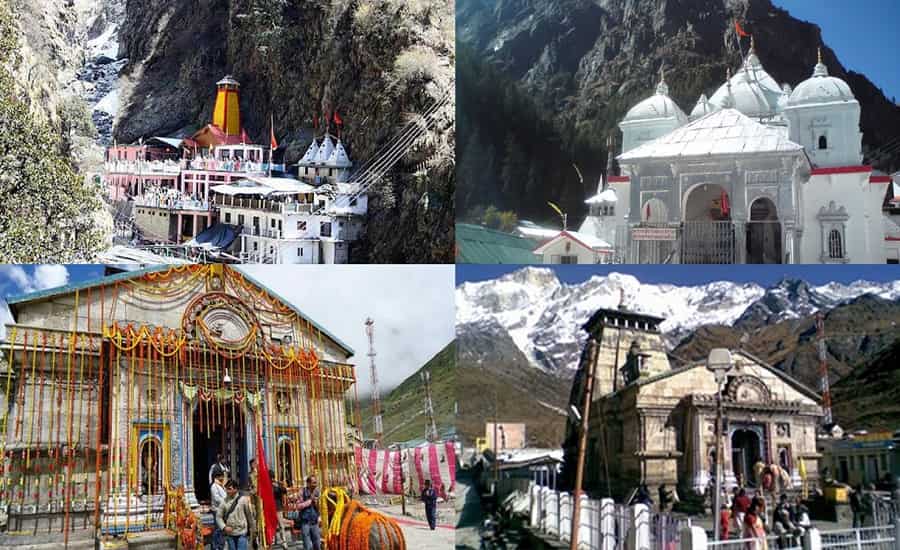
The Chardham Yatra of Uttarakhand is one of Hinduism’s most revered Himalayan pilgrimages, taking devotees to four sacred shrines nestled in the Garhwal Himalayas: Yamunotri, Gangotri , Badrinath and Kedarnath. Together, these four dhams are believed to offer a path toward moksha, or liberation from the cycle of birth and rebirth.
Tradition credits the 8th-century philosopher-saint Adi Shankaracharya with formalising this pilgrimage circuit. Lakhs of pilgrims undertake the Chardham Yatra each year between April and November, when the high Himalayan passes are open.
This guide covers 2026 opening and closing dates, registration, temple timings, darshan duration, costs, road versus helicopter planning, weather by month, packing, health advisories, and practical on-ground details for the Chardham Yatra of Uttarakhand.
Who Should Do the Chardham Yatra — and Who Should Be Cautious
- Good fit: fit adults and families comfortable with multi-day travel, moderate trekking (Yamunotri, Kedarnath), and high-altitude conditions
- Manageable with planning: senior citizens and those with mobility limits, using pony/palki/helicopter options for the trek sections
- Take extra caution: anyone with heart, lung, or blood pressure conditions, or in the later stages of pregnancy — consult a doctor and consider a medical certificate before travelling
Quick Overview
- Chardham Yatra: pilgrimage to Yamunotri, Gangotri, Kedarnath, and Badrinath
- Kapat opening 2026: confirmed as 19 April (Yamunotri, Gangotri), 22 April (Kedarnath), 23 April (Badrinath)
- Kapat closing 2026: tentative, expected early-to-mid November, confirmed closer to Vijayadashami
- Registration: mandatory and free; opens in early March 2026 via the official portal
- Duration: roughly 10–12 days by road, or 5–6 days using helicopter services
- Trek distances: Kedarnath 16–18 km one way from Gaurikund (varies slightly by source/route); Yamunotri approximately 5–6 km one way from Janki Chatti
- Approximate cost: ₹15,000 on a tight budget up to over ₹1,00,000 for a premium trip, per person
- Best time: May–June and September–October
- Official information: Uttarakhand Char Dham registration portal, Uttarakhand Tourism, and BKTC for Kedarnath/Badrinath-specific updates
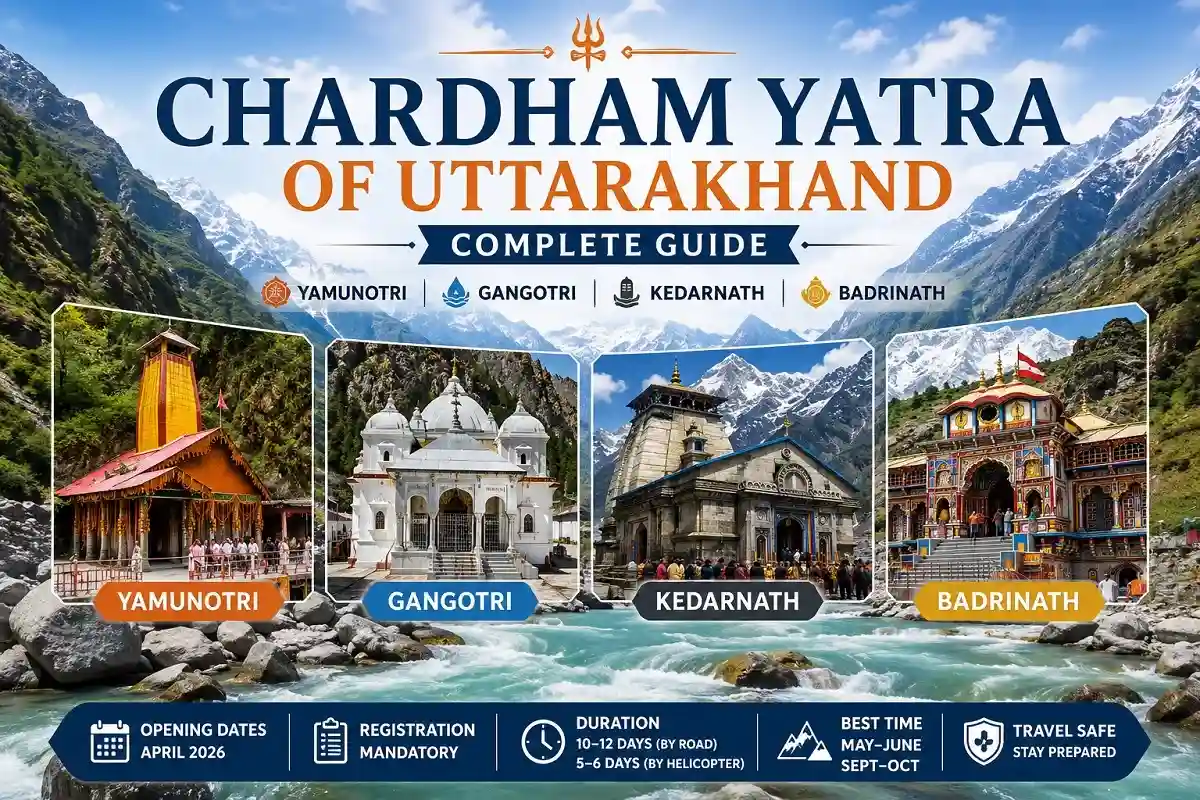

Chardham Yatra Kapat Opening and Closing Dates
| Dham | Deity | Opens 2026 | Closes 2026 (Tentative) | Altitude |
| Yamunotri | Goddess Yamuna | 19 April (confirmed) | ~11 November (tentative) | 3,293 m |
| Gangotri | Goddess Ganga | 19 April (confirmed) | ~10 November (tentative) | ~3,100 m |
| Kedarnath | Lord Shiva (Jyotirlinga) | 22 April (confirmed) | ~11 November (tentative) | 3,583 m |
| Badrinath | Lord Vishnu (Divya Desam) | 23 April (confirmed) | ~13 November (tentative) | 3,133 m |
Once the temples close for winter, each deity is ceremonially moved to a winter seat: the Yamunotri deity to Kharsali, Gangotri’s to Mukhba, Kedarnath’s to Omkareshwar Temple in Ukhimath, and Badrinath’s to Joshimath.
Temple Timings and Aarti Schedule
| Dham | Morning Darshan | Afternoon | Evening Aarti |
| Yamunotri | ~6:00 AM onward | Closes briefly midday | Evening aarti before dusk |
| Gangotri | ~6:00 AM onward | Open through the day | Evening Ganga aarti |
| Kedarnath | 4:00 AM onward | Open through the day | Evening aarti after sunset |
| Badrinath | 4:30 AM onward | Brief afternoon closure | Evening aarti, well attended |
Timings shift slightly by season and can change due to weather or administrative decisions — treat the above as a general guide and confirm locally on arrival.
How Long Does Darshan Take at Each Dham?
| Dham | Approx. Darshan Duration |
| Yamunotri | 30–60 minutes |
| Gangotri | 30–45 minutes |
| Kedarnath | 1–3 hours (crowd dependent) |
| Badrinath | 45–90 minutes |
These durations are approximate and depend heavily on crowd levels — expect longer waits during the May–June peak season and around major festivals.
Entry Fee and Puja Charges
Entry and general darshan are free at all four dhams. Optional special pujas — such as Rudrabhishek at Kedarnath or Maha Abhishek at Badrinath — carry separate charges that vary and are revised periodically, so confirm current rates with the respective temple trust rather than relying on a fixed figure. VIP or special darshan lines, where available, are typically arranged through the temple committee (BKTC) rather than informal agents.
Chardham Yatra Registration for 2026
Registration has been compulsory for every pilgrim visiting any of the four dhams since 2014, introduced after the 2013 Uttarakhand floods to help authorities track pilgrim movement and respond quickly during emergencies.
- Official Portal: registrationandtouristcare.uk.gov.in
- Mobile App: Tourist Care Uttarakhand
- WhatsApp and offline counters available in Haridwar, Rishikesh, Dehradun, and other entry points
- Registration is free — government registration and paid tour packages are two separate things; be cautious of anyone charging a fee for the basic e-pass itself
- You’ll receive a QR-coded pass checked at multiple checkpoints; keep both printed and digital copies
- Biometric verification may also apply at some entry points
The Four Sacred Dhams: Highlights and Nearby Attractions
1- Yamunotri — Source of the Yamuna
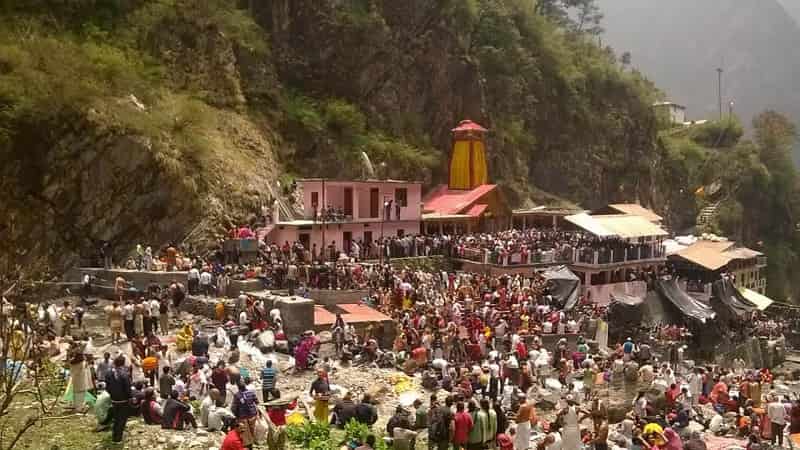

Dedicated to the goddess Yamuna at roughly 3,293 metres, reached by a 5–6 km trek from Janki Chatti. The Surya Kund hot spring (around 88°C) is where pilgrims traditionally cook rice as prasad. Nearby: Hanuman Chatti and Kharsali, the deity’s winter seat village.
2- Gangotri — Source of the Ganga
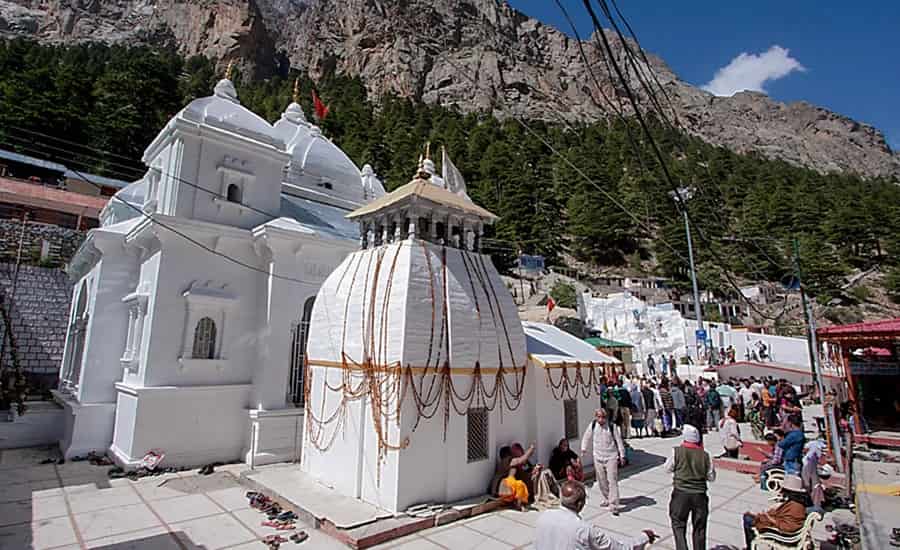
At around 3,100 metres, Gangotri is directly road-accessible from Uttarkashi, roughly 100 km away — no trekking required for the main temple. Nearby: Harsil, a scenic army-cantonment town, and Mukhba, the winter seat of the Ganga deity.
3- Kedarnath — The Himalayan Jyotirlinga
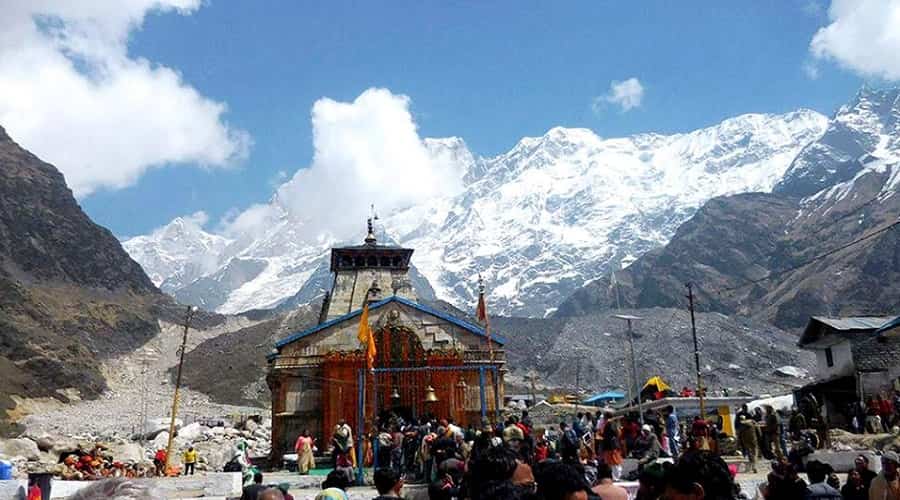

The most demanding of the four, at approximately 3,583 metres, reached by a 16–18 km trek (figures vary slightly by source and exact route) from Gaurikund, typically 5–7 hours uphill. Helicopter services operate from Phata, Sersi, Sitapur, and Guptkashi. Nearby: Bhairavnath Temple and Triyuginarayan, believed to be the site of Shiva and Parvati’s wedding.
4- Badrinath — The Final Dham
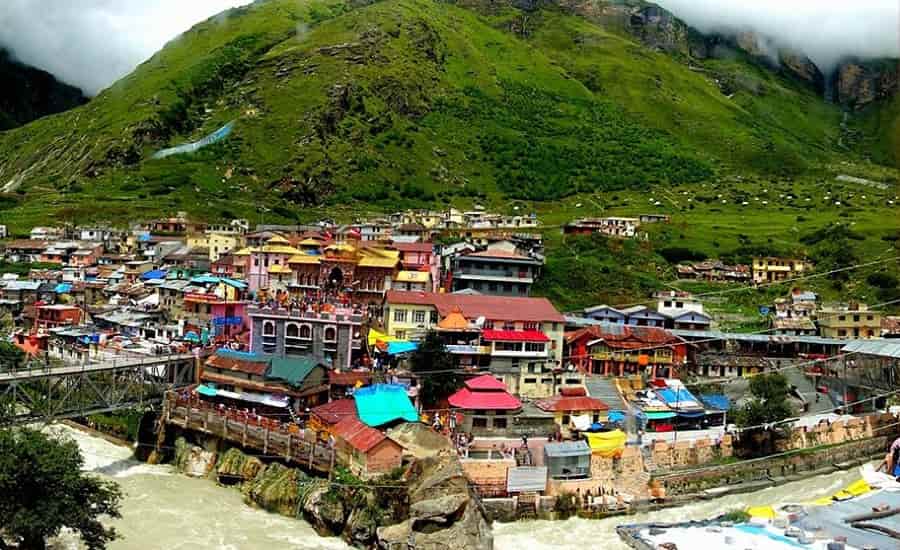
Dedicated to Lord Vishnu at roughly 3,133 metres, directly road-accessible from Joshimath (about 56 km). Mana Village, 3 km away, is officially promoted by Uttarakhand Tourism as India’s ‘First Village’ (rather than the older ‘last village’ framing, based on which end of the map you start from) and is home to Bheem Pul and Vyas Gufa. The Tapt Kund hot spring is the traditional spot for a purifying bath before darshan.
Chardham Yatra Route: Distance and Travel Time
Most pilgrims begin from Haridwar or Rishikesh and follow the traditional west-to-east sequence: Yamunotri, then Gangotri, then Kedarnath, and finally Badrinath. Treat all driving times below as approximate — mountain roads, landslides, and seasonal traffic, especially during monsoon, can significantly affect journey times.
- Haridwar → Barkot (Yamunotri base): ~235 km, 7–8 hrs
- Barkot → Janki Chatti → Yamunotri (trek): ~45 km + 5–6 km trek
- Barkot → Uttarkashi: ~85 km, 3 hrs
- Uttarkashi → Gangotri (round trip): ~100 km one way, 3–4 hrs each way
- Uttarkashi → Guptkashi (Kedarnath base): ~185 km, 6–7 hrs
- Guptkashi → Gaurikund → Kedarnath (trek): ~35 km + 16–18 km trek
- Guptkashi → Badrinath (via Joshimath): ~190 km, 6–7 hrs
- Badrinath → Haridwar (return): ~320 km, 8–9 hrs
Chardham Yatra Weather by Month
| Month | Typical Day Temp | Notes |
| April–May | 10–20°C (higher altitudes cooler) | Opening season; occasional late snow at higher dhams |
| June | 15–25°C | Warmest window; also the most crowded |
| July–August | 12–20°C, wet | Monsoon; landslide risk on mountain roads |
| September | 10–18°C | Clearer skies, thinner crowds; a strong choice |
| October | 5–15°C | Cooling fast; good visibility |
| Early November | Below 10°C, often near freezing at altitude | Final days before winter closure |
Snow is still possible at higher elevations early in the season (April–May), and landslide risk rises sharply during the monsoon (July–August) — check IMD weather advisories and road-condition updates before departure, and be ready to adjust your schedule.
Road vs Helicopter: Which Should You Choose?
| Factor | By Road | By Helicopter |
| Time | 10–12 days for the full circuit | 5–6 days for the full circuit |
| Cost | Lower overall | Significantly higher, especially for all four dhams |
| Physical effort | Higher — includes trekking to Yamunotri and Kedarnath | Lower — flights replace most trekking |
| Weather risk | Landslide/road-closure risk in monsoon | Flight cancellations possible in poor weather |
| Best suited for | Budget travellers, trekkers, flexible schedules | Senior citizens, limited time, mobility concerns |
Chardham Yatra Cost: Budget Calculator
| Tier | Accommodation & Transport | Approx. Cost Per Person |
| Budget | Dharamshalas, GMVN rooms, shared taxis/buses | ₹15,000–₹25,000 |
| Standard | Private guesthouses, twin sharing, private cab/package | ₹30,000–₹50,000 |
| Premium | Better hotels, private car, puja bookings | ₹60,000–₹1,00,000 |
| Kedarnath by helicopter only | Standard accommodation elsewhere | ₹45,000–₹70,000 |
| Full circuit by helicopter | Good hotels throughout | ₹1,20,000 and above |
These figures cover the yatra circuit itself; travel to Haridwar from your home city, puja fees, and personal expenses are typically additional. Pony, palki (palanquin), and pithu (porter) charges for the Kedarnath and Yamunotri treks are set by local unions and revised periodically — expect a few thousand rupees for pony or palki services on the Kedarnath trek, and confirm current rates on-site rather than in advance.
Chardham Yatra by Helicopter
Helicopter services can cut the journey to Kedarnath down to around 8–10 minutes in the air from helipads at Phata, Sersi, Sitapur, or Guptkashi.
- Book only through official, government-authorised booking channels — scam booking sites are unfortunately common during peak season
- Baggage allowance and weight limits vary by operator — check before booking, especially if travelling with medical equipment
- Passengers should generally report well before departure; exact reporting time is operator-dependent
- Flights are weather-dependent and cancellations happen; refund and rescheduling terms vary by operator, so read the policy before paying
- A yatra registration e-pass is still mandatory even if you’re travelling by helicopter
- Peak May–June slots can sell out two to three weeks in advance
Self-Drive and Road Trip Guidance
- Mountain roads are narrow and winding in places — avoid night driving on the hill sections
- An SUV with good ground clearance is preferable to a hatchback for comfort on rougher stretches, though both can complete the route in good conditions
- Fuel stations are available in Haridwar, Rudraprayag, Guptkashi, and Joshimath, but can be sparse on remoter stretches — top up before continuing
- EV charging infrastructure is expanding in Uttarakhand but coverage is inconsistent on hill routes — verify charging point availability along your specific route before relying on it
- Bike riders should carry rain gear and plan fuel stops carefully, given the terrain and unpredictable mountain weather
Money, Connectivity, and Practical Logistics
- Cash: carry sufficient cash, since UPI and card payments can be unreliable in remote stretches with poor connectivity
- ATMs: available in Haridwar, Rishikesh, Uttarkashi, Guptkashi, and Joshimath, but not guaranteed at smaller stops
- Mobile network: coverage from major operators is reasonable in towns but becomes patchy or unavailable in higher, remoter stretches — download offline maps in advance
- Parking: available near most dhams (paid in many locations), with vehicles typically required to stop before the final trek sections at Yamunotri and Kedarnath
- Cloakrooms/lockers: available at some trek starting points for shoes and luggage — useful before the Kedarnath and Yamunotri treks
Health, Safety, and Altitude Sickness (AMS)
All four dhams sit at high altitude, and Acute Mountain Sickness (AMS) is a real risk, particularly at Kedarnath and Badrinath.
- Common AMS symptoms: headache, nausea, dizziness, breathlessness, and unusual fatigue
- Who’s at higher risk: those with heart, lung, or blood pressure conditions, older travellers, and anyone ascending too quickly without acclimatisation
- When to descend: if symptoms worsen or don’t improve with rest, descend immediately rather than pushing on
- A basic medical check-up before the trip is strongly advised for senior citizens and those with pre-existing conditions; some operators request a medical fitness certificate
- Medical camps and oxygen support are available at some points along the route during peak season through government or operator arrangements, but shouldn’t be relied on as guaranteed — carry any personal medication you need
- Nearest hospitals/medical facilities are generally found in Haridwar, Uttarkashi, Guptkashi, and Joshimath; smaller stops may only have basic first-aid support
Packing List for the Chardham Yatra
- Heavy woollens, thermal wear, and a down jacket — temperatures near Kedarnath can drop to 2–5°C at night, even in May
- Rain gear: poncho and a rain cover for your backpack, especially if travelling in the monsoon shoulder months
- Sturdy trekking shoes with ankle support, plus a walking stick for the Kedarnath and Yamunotri treks
- Sunscreen, sunglasses, and a hat — UV exposure is stronger at altitude
- Gloves and a warm cap for early-morning and high-camp cold
- Basic medicines: ORS sachets, any doctor-prescribed altitude medication, first-aid essentials
- A power bank and torch, given inconsistent electricity and network in remoter stretches
Women Travellers and Solo Pilgrims
The Chardham Yatra is undertaken by large numbers of women and solo travellers each year, including in organised group tours that offer a built-in support network. Basic precautions apply as with any Himalayan travel: stick to registered accommodation, keep family or friends updated on your itinerary, and prefer daylight travel on mountain roads.
Families with Kids and Pregnant Travellers
Families with young children generally manage the road-accessible dhams (Gangotri, Badrinath) more easily than the trekking sections at Yamunotri and Kedarnath, where pony or palki options can help. Pregnant travellers, particularly in later stages, should consult a doctor before planning any high-altitude trekking and consider road-accessible dhams or helicopter options where feasible.
Food, Water, and Accommodation
Vegetarian food, including langar-style community meals at some stops, is widely available along the route; stick to freshly prepared, hot food and bottled or properly filtered water to avoid stomach upsets. Accommodation ranges from GMVN (Garhwal Mandal Vikas Nigam) guesthouses and dharamshalas to private hotels — book through official GMVN channels or reputed platforms, and reserve well ahead for the May–June peak season.
Responsible Tourism and Temple Etiquette
- Uttarakhand enforces plastic bans along much of the yatra corridor — avoid single-use plastic and carry a reusable bottle
- Dress modestly at all temples; footwear is removed before entering the sanctum
- Photography and drone use are restricted in and around temple complexes and some eco-sensitive zones — check locally before flying a drone
- Dispose of waste properly; carry back what you can’t dispose of responsibly on the trail
Common Mistakes to Avoid on the Chardham Yatra
- Registering late and finding preferred travel dates unavailable
- Booking accommodation too late for the May–June peak season
- Skipping acclimatisation and pushing straight to high altitude
- Packing too much for a trek-heavy itinerary — pack light for the Kedarnath and Yamunotri legs specifically
- Not carrying rain gear, even outside the official monsoon months
- Assuming ATMs and network will be available everywhere — carry sufficient cash
Emergency Contacts and Official Resources
- Police/Emergency: 112
- Uttarakhand Tourism helpline and the official Char Dham registration portal for real-time advisories
- BKTC (Badrinath-Kedarnath Temple Committee) for Kedarnath and Badrinath-specific updates, including darshan and puja bookings
- IMD (India Meteorological Department) for weather advisories before and during travel
- State disaster management authority updates during monsoon season, for landslide and road-closure information
Chardham Yatra for Senior Citizens
Gangotri and Badrinath are both directly road-accessible, making them manageable for most senior pilgrims without additional arrangements. Yamunotri’s 5–6 km trek and Kedarnath’s longer 16–18 km trek are more demanding, and pony, palki, or helicopter options are worth arranging in advance for older travellers, along with a medical fitness certificate where advised by a doctor.
History and Spiritual Significance of the Chardham Yatra
The word ‘dham’ translates roughly to ‘abode’ or ‘seat,’ and each of the four shrines is considered a residence of the divine within the Himalayas. Adi Shankaracharya is traditionally credited with organising this circuit in the 8th century CE, though local worship at these sites is generally understood to predate his time by centuries. Completing the Chardham Yatra is traditionally believed to help cleanse sins and bring a pilgrim closer to moksha — a matter of belief and tradition rather than something independently verifiable.
Chota Char Dham vs the Original Char Dham of India
This Uttarakhand circuit is often called the ‘Chota Char Dham’ to distinguish it from the older, pan-India ‘Char Dham’ — Badrinath, Puri (Odisha), Rameshwaram (Tamil Nadu), and Dwarka (Gujarat). Badrinath is the only site shared between both circuits. The Uttarakhand circuit is geographically compact and can be completed in under two weeks, while the original Char Dham spans the length of India and typically takes considerably longer.
Frequently Asked Questions
Q: When does the Chardham Yatra 2026 start?
A: It begins on 19 April with the kapat opening of Yamunotri and Gangotri, followed by Kedarnath on 22 April and Badrinath on 23 April.
Q: Is Chardham Yatra registration mandatory in 2026?
A: Yes, registration is compulsory for all pilgrims and is completely free through the official portal.
Q: How many days does the Chardham Yatra take?
A: Around 10–12 days for a road-based trip from Haridwar and back, or 5–6 days using helicopter services throughout.
Q: What is the trek distance to Kedarnath?
A: Approximately 16–18 km one way from Gaurikund, typically taking 5–7 hours uphill.
Q: How much time does darshan take at Kedarnath?
A: Roughly 1–3 hours, depending heavily on crowd levels.
Q: Is temple entry free on the Chardham Yatra?
A: Yes, general darshan is free at all four dhams; optional special pujas carry separate, variable charges.
Q: Can I do the Chardham Yatra solo?
A: Yes, many pilgrims travel solo or join group tours for added convenience and support.
Q: Can I self-drive the Chardham Yatra?
A: Yes, self-driving is common, though mountain roads require caution, and night driving on hill sections should be avoided.
Q: Is mobile network available throughout the Chardham Yatra route?
A: Coverage is reasonable in towns but becomes patchy or unavailable in remoter, higher-altitude stretches.
Q: Do I need to carry cash on the Chardham Yatra?
A: Yes, since UPI and card payments can be unreliable in remote areas with poor connectivity.
Q: Which dham should the Chardham Yatra start from?
A: Most pilgrims follow the traditional west-to-east order, starting at Yamunotri and finishing at Badrinath.
Q: Is the Chardham Yatra safe during the monsoon?
A: It’s generally best avoided in July–August due to landslide risk; September–October is a safer post-monsoon alternative.
Q: What is the dress code at the Char Dham temples?
A: Modest clothing is expected, and footwear is removed before entering the temple sanctum.
Q: Are pony and palki services available for the treks?
A: Yes, at Yamunotri and Kedarnath, with rates set by local unions and subject to periodic revision.
Q: What should I do if I get altitude sickness symptoms?
A: Rest immediately and descend if symptoms worsen — don’t continue ascending with AMS symptoms.
Q: Are senior citizens able to complete the Chardham Yatra?
A: Yes, especially with pony, palki, or helicopter support for the trekking sections and a doctor’s clearance beforehand.
Q: How do I reach Haridwar from Delhi for the Chardham Yatra?
A: By train (around 5 hours), by road via NH 334 — formerly numbered NH 58 — (4–5 hours), or by flying to Dehradun’s Jolly Grant Airport and taking a taxi onward.
Q: Is Mana Village really the last village in India?
A: It’s promoted by Uttarakhand Tourism as India’s ‘First Village’ rather than ‘last village,’ depending on which direction you approach from — both framings refer to the same border-area village.
Q: What is the best time for the Chardham Yatra?
A: May–June for full operations and pleasant weather, or September–October for clearer skies and thinner crowds.
Q: How much does the Chardham Yatra cost?
A: Roughly ₹15,000–25,000 for a budget trip, up to ₹1,00,000 or more for a premium trip, per person, excluding travel to Haridwar.
Conclusion
The Chardham Yatra of Uttarakhand remains one of India’s most demanding and deeply rewarding pilgrimages, weaving together river-source shrines, a Himalayan Jyotirlinga, and one of Vishnu’s most sacred temples into a single Himalayan journey. With registration mandatory, weather and altitude playing a real role in trip comfort, and costs ranging widely by travel style, a little preparation — from checking temple timings to packing the right gear — goes a long way toward a safe and meaningful Chardham Yatra in 2026.