If you see the dances of Ladakh, they have a touch of Tibetan Buddhism. Many of the dances are performed with masks, and they are accompanied by regional music featuring the beats of drums and other traditional instruments, which create graceful and sweet melodies. Ladakh offers some very attractive forms of performing art that successfully showcase imagination. The dances of Leh Ladakh are an inseparable part of this historically rich state.
All these dance forms are performed by the local people during various festivals, occasions, and celebrations. They have special dances for different occasions such as marriage ceremonies, the celebration of birth, and crop harvesting. When you visit Leh Ladakh, try to attend any local celebration, where you will get to see these dances. The dances have a unique aura that will make you feel a part of the performance, even if you are sitting miles away from it.
1- Spawo Dance
- Origin: Originates from the Ladakh region, India.
- Theme: Depicts the courage and valor of martyrs.
- Inspiration: Influenced by the martial arts of the Ladakh valley.
- Performance: Involves colorful costumes and rhythmic music.
- Cultural Significance: A tribute to warriors who sacrificed their lives for the integrity of the land.
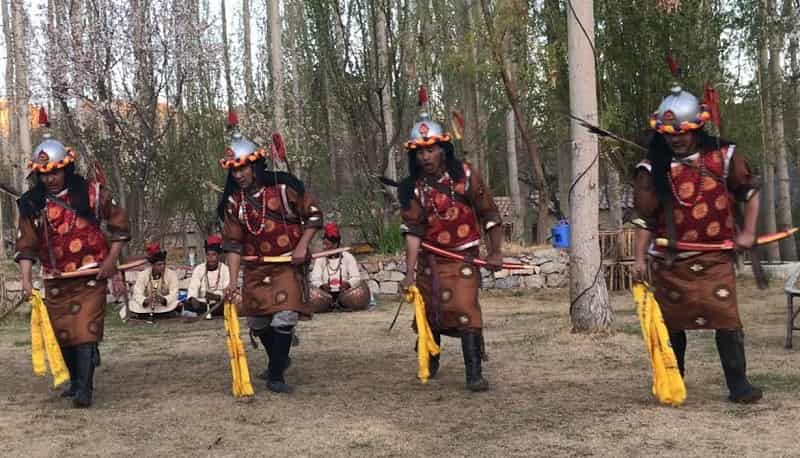

The Spawo dance is an integral part of Ladakhi culture and is highly appreciated as a folk dance form. It is one of the oldest forms of folk dances in the Ladakh region. The dance form depicts the courage of the martyrs and is inspired by the major martial arts of the Ladakh valley.
History
The Spawo dance is one of the best-known folk dances from Ladakh. It originated exclusively in the Ladakh union territory of India and is greatly influenced by the martial art forms practiced in the region.
Description
The Spawo dance is a folk dance performed by the people of the Ladakh region. Ladakh has a very interesting history as it lies along the Line of Control between India and Pakistan. The two countries have witnessed a lot of conflict and political tensions in the region. Ladakh is a beautiful area and a major tourist destination, attracting millions of tourists who visit to enjoy its natural beauty and witness the rich culture and traditions of the people.
There is a glorious history of martyrs who fought for the welfare of the region. These martyrs are considered extremely courageous people who were willing to sacrifice their lives for their motherland. The Spawo dance is highly inspired by the martial arts of Ladakh. It portrays tremendous courage and is performed with pleasant music and colorful costumes. Props are also used in this dance, which is highly appreciated and acclaimed by curators and dance-loving audiences around the world. The Spawo dance is also seen as a tribute to the powerful warriors who once fought and sacrificed their lives for the integrity of the land.
2- Shone Dance
- Performance Area: Primarily performed in rural Ladakh.
- Occasions: Traditionally performed during festive occasions.
- Music: Accompanied by songs that enhance the richness of the dance.
- Cultural Significance: Associated with the Mons, an ancient people of Ladakh.
- Evolution: Once performed exclusively during royal events.
Earlier, the Shone dance had a royal touch and was only performed during festive occasions. There are many songs sung during this dance, which add richness to the performance. This dance is of the Mons, and people perform it only in the rural parts of Ladakh.
3- Drugpa-Rches
- Community: Performed by the Dards, an Aryan-origin group.
- Region: Popular in the Gorkhan and Drass areas of Ladakh.
- Costumes: Feature silver ornaments and colorful flowers.
- Instruments: Uses large drums called Surna and Daman.
- Lifestyle: The Dards are mainly vegetarians and are known as nomads.
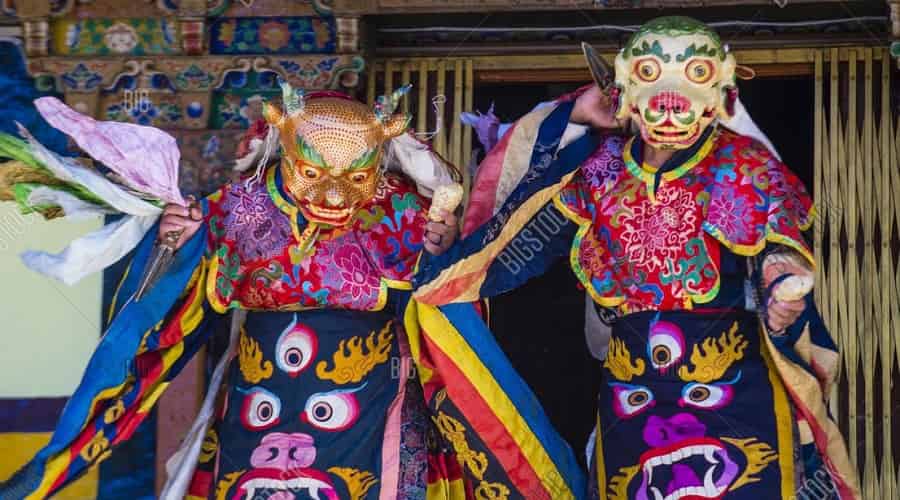

This dance form is presented by the Dards, people who belong to Aryan origin. The Dards are situated in the Gorkhan and Drass areas of the Ladakh region. These explorers are called Drugpas, which means “nomads.” These people are generally vegetarian, and the costumes they make for their festivals are adorned with silver ornaments and colorful blooming flowers. For this dance, they use very large drums called Surna and Daman to create rhythmic music.
4- Jabro Dance
- Community: Performed by the nomadic communities in Ladakh.
- Origin: Has Tibetan roots.
- Occasions: An integral part of the Ladakhi Losar (Tibetan New Year) celebrations.
- Instruments: Accompanied by the Damian and flute.
- Dance Style: Both men and women participate in the rhythmic and sweet dance.

This dance is performed by nomadic communities, with its origins in Tibet. They live in the high hills of the Changthang area, located in Ladakh. The Jabro dance is presented by Ladakhi men and women during almost all their festivals and other celebratory occasions. Jabro dance is an important part of the Ladakhi Losar celebrations, which mark the Tibetan New Year. During this dance, sweet and rhythmic songs are sung, accompanied by musical instruments such as the Damian (a stringed instrument similar to a guitar) and the flute.
5- Bagstonrches
- Occasions: Performed during Ladakhi marriage ceremonies.
- Duration: The dance takes place over several weeks.
- Participants: Both the bride and groom take part in the dance.
- Instruments: Accompanied by Daman and Surna for harmonious tunes.
- Significance: Adds to the festive and sweet atmosphere of a wedding.
The Ladakhi marriage dance, known as Bagstonrches, takes place for many weeks during the marriage ceremonies. In this dance, both the bridegroom and the bride participate. This marriage dance is performed to the tunes of songs, which are accompanied by harmonious tunes created by instruments such as the Daman and Surna. These instruments create sweetness in the dance performance, contributing to the wedding atmosphere.
- Know About: Shyok River
6- Lamas Dances
- Performance: Performed by monks and Lamas in religious monasteries.
- Spirituality: Depicts the struggle between good and evil.
- Masks: Masks are used for characterization in the performance.
- Occasion: Especially performed during the Losar festival (Tibetan New Year).
- Cultural Aspect: Includes Tantric practices and is spiritually significant.
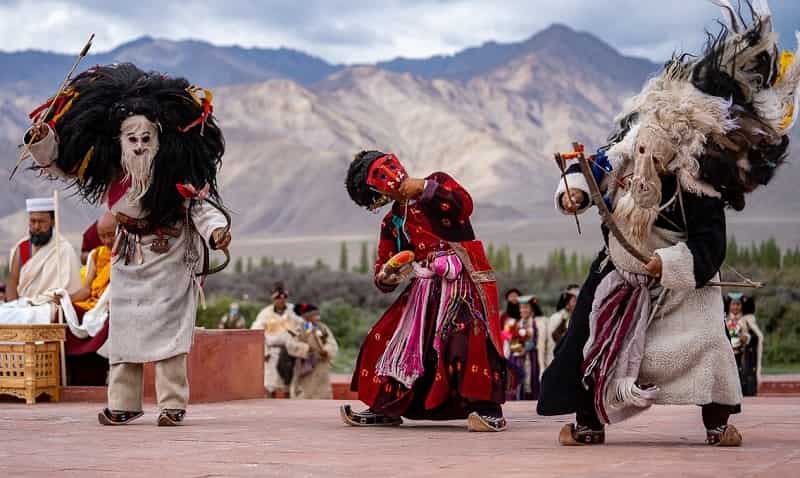

Some of Ladakh’s best dance forms are performed by the monks and the Lamas in religious monasteries. Lamas’ dances have a spiritual and angelic aura and often include several practices of Tantrism. These dances are presented with a lot of attractive decorations and a festive atmosphere, especially during Losar, their New Year festival. Through these dances, they portray the struggle between evil and god. Masks are used in the performance for characterization.
7- Koshan Dance
- Location: Famous in the Leh area of Ladakh.
- Unique Aspect: Performed while riding horses.
- Costumes: Dancers wear Peraks, silver ornaments.
- Music: Accompanied by rich, melodious music.
- Movement: Slow, graceful, and majestic movements during the performance.
This dance form is very famous in the Leh area of Ladakh. The uniqueness of this dance is that it is performed during horse riding, and the person who rides the horse is known as Landak. The dances of Ladakh are majestic and colorful. The movements of the Koshan dance are slow and pleasant, and the dance is complemented by rich music. The dancers wear Peraks (silver ornaments), which add to the richness of the performance.
- You May Also Like to Read: Popular Places to visit in Ladakh
8- Yak Dance
- Theme: Depicts the relationship between a yak and its handlers.
- Costumes: Two performers wear yak skins during the dance.
- Movement: Involves synchronized movements like jumping, turning, and running in a circle.
- Storyline: A milkmaid is ignored by the yak, but the milkman takes control of it.
- Cultural Significance: Represents the lifestyle and bond with yaks in Ladakhi culture.

The theme of the Yak dance is very interesting and unique. In this dance, two people wear the skin of the yak and perform the dance using elegant and synchronized movements. They jump, sit, turn, and run in a circle with perfect coordination. In the performance, the milkmaid approaches the yak but is ignored. Later, the milkman arrives, hits the yak with a lash, and takes control of the animal, leading it away.
9- Tukhstanmo
- Occasion: Performed during the blooming of new flowers.
- Region: Popular in the Bakhamul, Zanskar, and Nubra valleys.
- Name: Also known as the “Flower Dance.”
- Dedication: Dedicated to the deities.
- Timing: A seasonal dance performed during springtime.
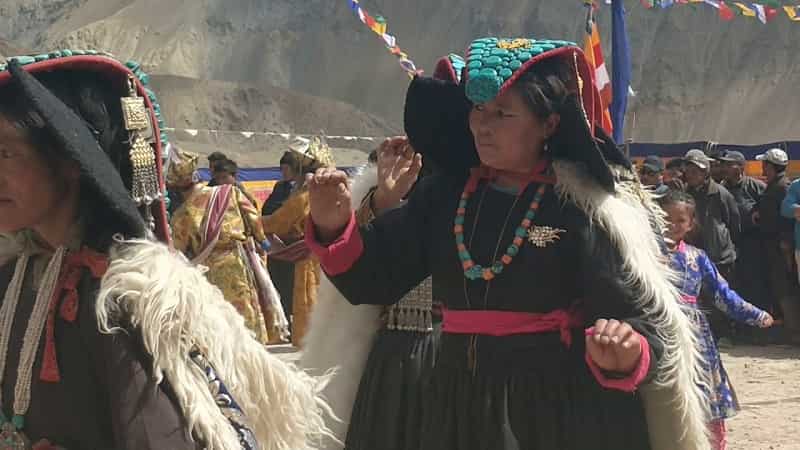

Tukhstanmo is a seasonal dance form performed in the Bakhamul and Zanskar areas. It is also known as the Flower Dance and is quite famous in the Nubra valley. This dance is performed when the new blossoms of flowers appear, and it is dedicated to the deity.
10- Surahi Dance
- Alternate Name: Also called Chang Rches.
- Performance: Dancers carry a Chang pot on their heads.
- Movement: Dance involves balancing the pot while performing rhythmic movements.
- Occasion: Performed during festive and celebratory occasions.
- Cultural Significance: Showcases the skill and coordination of the dancers.

The Surahi dance is also called Chang Rches. In this dance, the performers carry a Chang pot on their heads while performing the dance.
- Must Read: Offbeat Things To Do In Ladakh