By the windows of the mountain railways of India, sceneries pass by in a surreal experience. These narrow-gauge rail lines were built in the British era for scenic trips around hill stations. Three of them today hold UNESCO World Heritage status.
The Darjeeling Himalayan Railway (established 1881) is aptly called the ‘Toy Train’. The moment you step inside its narrow compartment, your sense of scale shifts. The view outside only adds to the magic.
This 2026 guide to the mountain railways of India covers every major heritage line, with corrected facts, current operational status, and practical travel tips — reviewed against official Indian Railways and UNESCO data.
Key Facts — Mountain Railways of India at a Glance
| Detail | Information |
| Total UNESCO-Listed Lines | 3 — Darjeeling, Nilgiri, Kalka–Shimla |
| Oldest Line | Darjeeling Himalayan Railway — opened 1881 |
| Only Rack Railway | Nilgiri Mountain Railway (Mettupalayam–Ooty) |
| Longest UNESCO Route | Kalka–Shimla Railway — 96.6 km |
| Shortest Heritage Route | Matheran Hill Railway — 21 km |
| Best Season | October to March (most routes) |
| Where to Book | IRCTC website/app, or station counters |
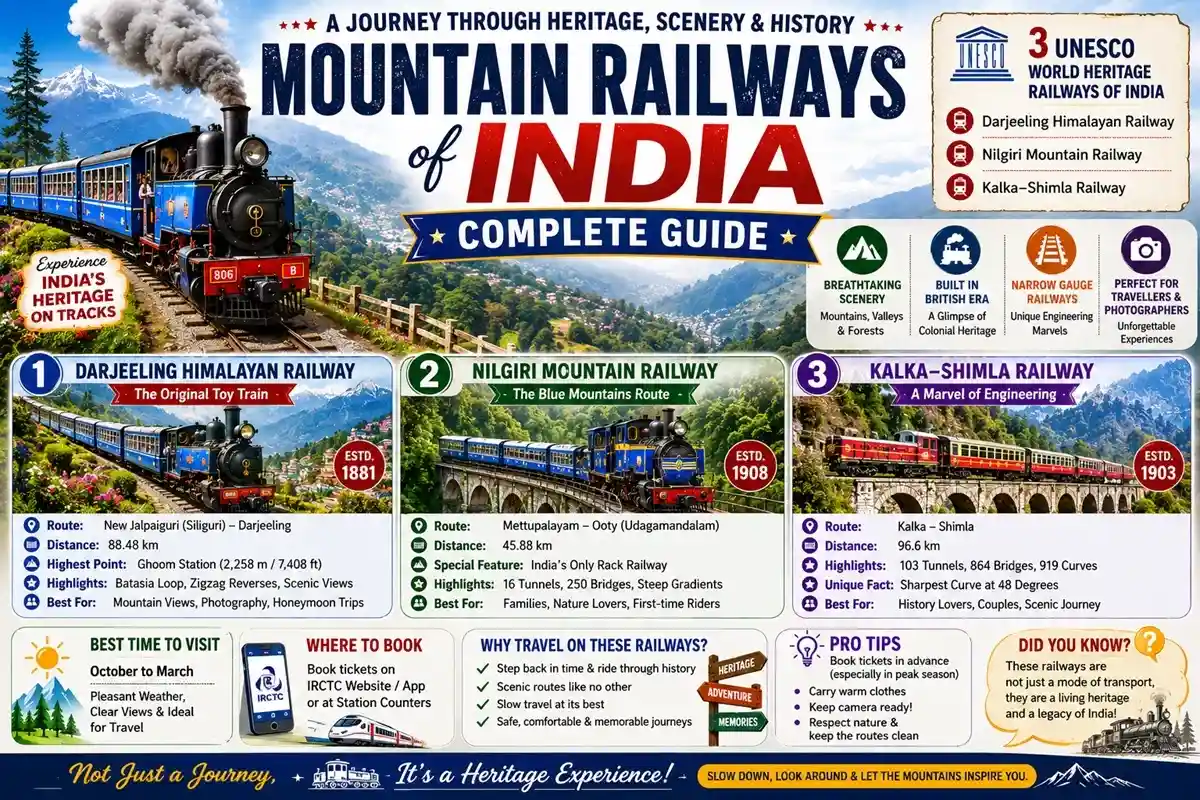

A Ride of Heritage — UNESCO World Heritage Mountain Railways
Three lines among the mountain railways of India are collectively designated by UNESCO as the ‘Mountain Railways of India’ World Heritage Site: the Darjeeling Himalayan Railway, the Nilgiri Mountain Railway, and the Kalka–Shimla Railway.
Each was inscribed in a different year. The Darjeeling Himalayan Railway was recognised first, in 1999. The Nilgiri Mountain Railway followed as an extension in 2005. The Kalka–Shimla Railway joined the list in 2008.
Other heritage narrow-gauge lines exist too. The Matheran Hill Railway (Maharashtra, 1907) and the Kangra Valley Railway (Himachal Pradesh, 1929) are both on UNESCO’s tentative list — meaning they could be officially inscribed in future.
2026 update — Kashmir Railway: The Jammu–Baramulla line is not a narrow-gauge mountain railway like the others. It is a modern broad-gauge railway, fully completed in 2025, connecting the Kashmir Valley to India’s rail network for the first time. It includes the Chenab Bridge, the world’s highest railway arch bridge — a remarkable engineering feat, even though it isn’t part of the historic ‘toy train’ family.
Original heritage engines, some over 100 years old, still run on these routes. Most regular passenger services now use diesel traction, while steam locomotives are generally kept for heritage and joy rides. The Victorian-style interiors of the small compartments add to the time-travel feeling of the journey.
Kalka–Shimla Railway — UNESCO Inscribed 2008
| UNESCO Status | Inscribed 2008 |
| Route | Kalka to Shimla, Himachal Pradesh |
| Distance | 96.6 km |
| Built | 1898–1903 |
| Tunnels / Bridges | 103 tunnels, 864 multi-arch bridges |
| Curves | 919 curves; sharpest at 48 degrees |
| Journey Time | Approximately 5–6 hours |
| Best For | Couples, photographers, history lovers |
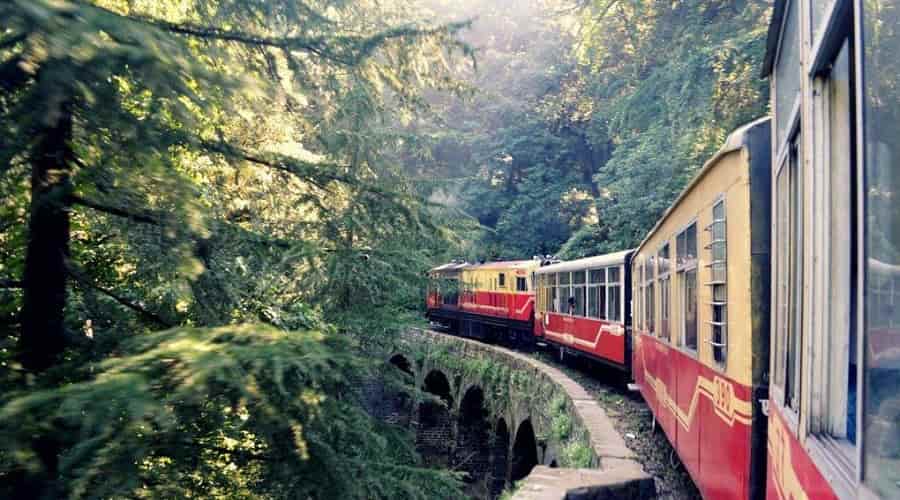

The Kalka–Shimla Railway is a popular ride for tourists travelling to Himachal Pradesh. Running through the Shivalik Hills, the 96.6-km trip crosses 864 multi-arch bridges and 103 tunnels.
Most travellers start by counting bridges and tunnels, then simply lose count in the scenery. Since the railway connects hill stations, the weather stays pleasant through most of the year.
There are 919 curves on the route, the sharpest bending at 48 degrees. The Barog Tunnel is the longest on the line.
According to local legend, the engineer overseeing its construction, Mr. Barog, began digging from both ends of the hill. When the two sides failed to meet correctly, he was so devastated that he reportedly took his own life. He was buried beside the tunnel he built, and locals still share this story with curious travellers today.
- Also Reads on: Guide to Enjoying Snowfall in Shimla
Nilgiri Mountain Railway — The Blue Mountains Route
| UNESCO Status | Inscribed 2005 (extension of the Darjeeling Railway site) |
| Route | Mettupalayam to Ooty (Udagamandalam), Tamil Nadu |
| Distance | 45.88 km |
| Built | 1891–1908 (first proposed in 1854) |
| Elevation Gain | 326 m to 2,203 m |
| Tunnels / Bridges | 16 tunnels, 250 bridges |
| Unique Feature | India’s only rack-and-pinion railway |
| Best For | Families, nature lovers, first-time toy train riders |
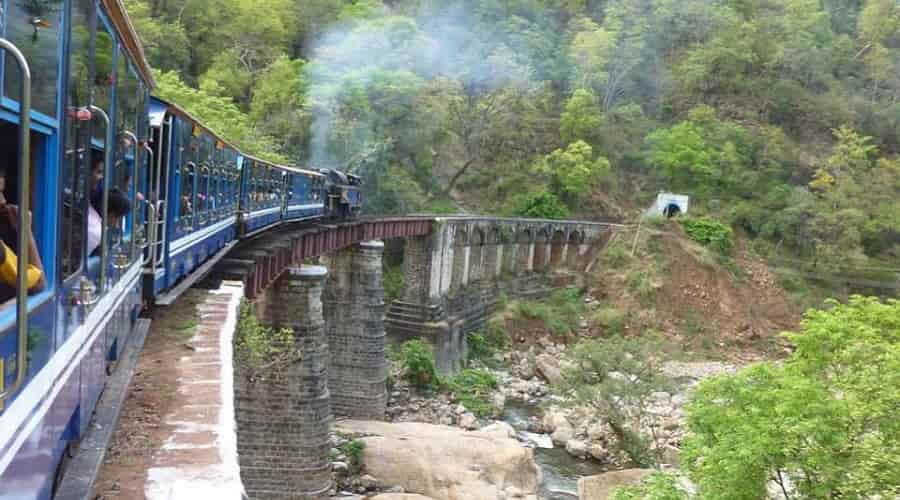
The Nilgiri Mountain Railway is technically unique — it is the only ‘Rack Railway’ in India. The track uses a Rack and Pinion system, designed specifically to help steam locomotives climb the steepest gradients safely.
This World Heritage track on the ‘Blue Mountains’ began service in 1908. Several original steam locomotives remain in heritage operation today. The route passes through dense forests, 250 bridges, and 16 tunnels — figures confirmed by Indian Railways’ own published records.
2026 note: The Nilgiri Mountain Railway celebrated its 125th anniversary in 2024, cementing its place as one of South India’s most cherished heritage rides.
- Also Reads on: 10 Awesome Hill Stations in Tamil Nadu
Darjeeling Himalayan Railway — The Original Toy Train
| UNESCO Status | Inscribed 1999 — the first railway property in Asia on the World Heritage List |
| Route | New Jalpaiguri (Siliguri) to Darjeeling, West Bengal |
| Distance | 88.48 km |
| Built | 1879–1881 |
| Notable Station | Ghoom Station — 2,258 m (7,408 ft) |
| Unique Feature | Zigzag reverses and loops, including the famous Batasia Loop |
| Best For | Mountain views, photography, honeymoon trips |
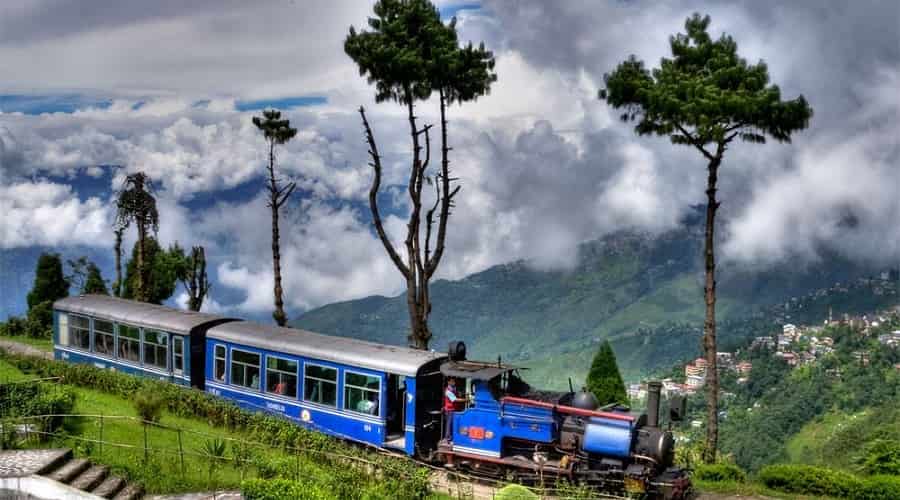
Booking is generally easy, though advance reservation is strongly advised in peak season (April–June and October–December). The Darjeeling Toy Train runs about 88 km from New Jalpaiguri to Darjeeling.
Ghoom Station, at 2,258 metres (7,408 ft), is the highest point on this line and one of India’s highest operational heritage railway stations. It remains a defining highlight of the journey.
The track’s signature features are its zigzag bends and loops. The most famous, the Batasia Loop, opens up a sweeping view of the valley and the Kanchenjunga range below.
Panoramic points along the route carry dramatic nicknames like ‘Sensation Corner’ and ‘Agony Point’ — names that capture exactly how thrilling this ride above the valley feels.
- Exploring Darjeeling? Explore our Best Places to Visit in Darjeeling guide
Matheran Hill Railway — Asia’s Only Automobile-Free Hill Station Train
| UNESCO Status | On UNESCO’s tentative World Heritage list |
| Route | Neral to Matheran, Maharashtra |
| Distance | 21 km |
| Built | 1900–1907 |
| Unique Feature | Only motorised access to the car-free Matheran hill station; the ‘One Kiss Tunnel’ |
| 2025–26 Status | Closes annually for monsoon (June–October); resumed November 6, 2025 |
| Best For | Weekend trips from Mumbai/Pune, families with kids |
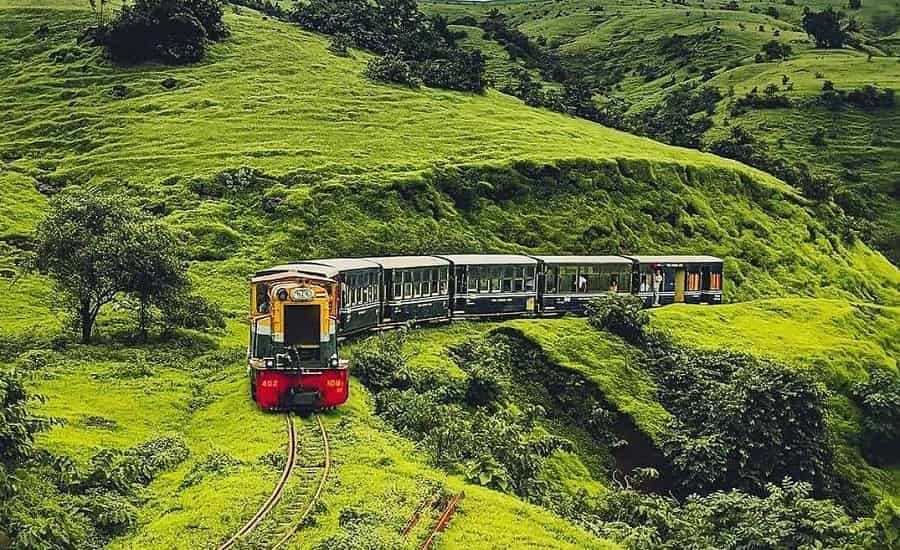

The Matheran Hill Railway covers just 21 km, but it loses none of its charm for the modest length. The little engine looks straight out of a children’s storybook, winding through dense forest along the way.
The Horseshoe Embankment is a highlight, revealing the train’s full curve to passengers. The only tunnel on this short route is nicknamed the ‘One Kiss Tunnel’ — short enough to guess why.
Important 2026 travel note: Matheran Hill Railway typically closes from June to October due to monsoon landslide risk. In 2025, heavy rainfall extended the closure; full service resumed on November 6, 2025. Always check current status with Central Railway before visiting between June and early November.
- Must Read: Most Popular Hill Station in Maharashtra
Lumding–Silchar Hill Section — Assam’s Historic Mountain Route
| Original Status | Metre-gauge heritage line through Cachar Valley, Assam |
| Current Status (2026) | Converted to broad-gauge; the heritage narrow-gauge section is decommissioned |
| Conversion Completed | 2014–2015 |
| Historic Length | Approximately 225 km (Lumding–Badarpur Hill Section) |
| Historic Tunnels / Bridges | 37 tunnels, 586 bridges (original metre-gauge line) |
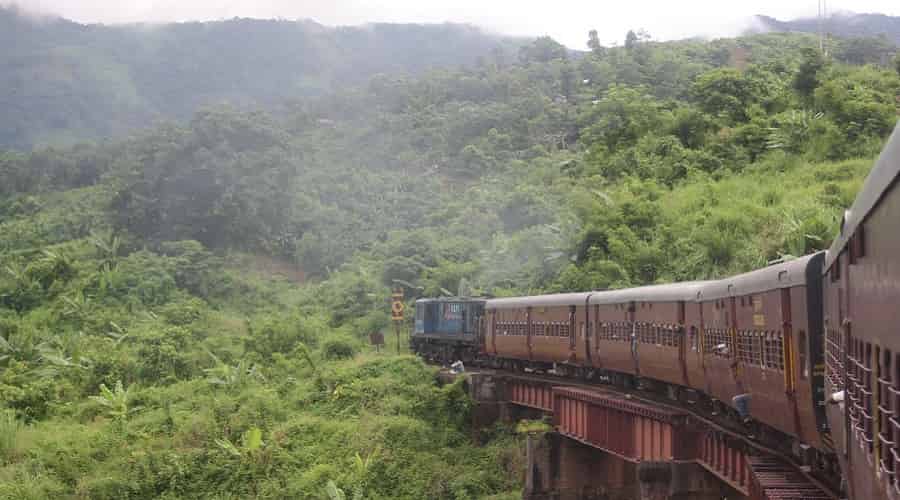
This historic route once connected Lumding to Silchar through the scenic hill town of Haflong in Assam’s Cachar Valley. It ran through 37 tunnels and 586 bridges across roughly 225 km of difficult hill terrain, with 24 stations along the way — once considered one of Indian Railways’ most spectacular mountain lines.
Critical 2026 update: This metre-gauge mountain railway no longer exists in its original heritage form. Indian Railways converted the entire route to broad-gauge between 2014 and 2015 as part of a national gauge-unification programme. A short 47-km heritage stretch around Haflong was once proposed for tourist preservation by the Assam government, but it has not been restored to passenger service. Travellers seeking a heritage toy train ride in Northeast India will not currently find one operating on this route.
Mountain Railways of India — Quick Comparison Table
| Railway | State | Length | UNESCO Year | 2026 Status |
| Darjeeling Himalayan | West Bengal | 88.48 km | 1999 | Operational |
| Nilgiri Mountain | Tamil Nadu | 45.88 km | 2005 | Operational |
| Kalka–Shimla | Himachal Pradesh | 96.6 km | 2008 | Operational |
| Matheran Hill | Maharashtra | 21 km | Tentative list | Seasonal (closed Jun–Oct) |
| Kangra Valley | Himachal Pradesh | 164 km | Tentative list | Operational |
| Lumding–Silchar (historic) | Assam | ~225 km | Not listed | Converted to broad-gauge (2014–15) |
| Kashmir Railway | J&K | ~272 km | Not applicable (broad-gauge) | Fully completed 2025 |
Practical Travel Information for Mountain Railways of India
| Railway | Nearest Airport | Approx. Fare | Family-Friendly | Photography |
| Darjeeling | Bagdogra | ₹150–₹1,500 (joy ride to full route) | Yes | Excellent — Batasia Loop |
| Nilgiri | Coimbatore | ₹50–₹545 (class-dependent) | Yes | Excellent — tea estates |
| Kalka–Shimla | Chandigarh | ₹40–₹1,000+ (Shivalik Deluxe higher) | Yes | Excellent — Barog Tunnel area |
| Matheran | Mumbai (Pune also close) | ₹50–₹250 | Yes | Good — Horseshoe Embankment |
Fares are approximate 2026 estimates and vary by class and season — always confirm current pricing on IRCTC before travelling. Most of these routes are suitable for senior citizens and young children, though Matheran and Kalka–Shimla involve some walking at smaller stations.
How to Book Tickets for Mountain Railways of India
- Book online via the IRCTC website or app — search the specific toy train (e.g., ‘Nilgiri Mountain Railway’, ‘Darjeeling Toy Train Joy Ride’) under reserved or unreserved ticketing
- Darjeeling Himalayan Railway: Joy rides from Darjeeling to Ghoom can be booked at the DHR counter or online; the full New Jalpaiguri–Darjeeling journey needs advance reservation
- Nilgiri Mountain Railway: Book the Mettupalayam–Ooty passenger service via IRCTC; demand is very high in summer — book 60–90 days ahead
- Kalka–Shimla Railway: Several daily trains, including the Shivalik Deluxe Express; book early for the glass-roofed deluxe coaches
- Matheran Hill Railway: Tickets available at Neral station or via the UTS app; service is curtailed during monsoon — always verify before travelling
Joy Ride vs Full Journey — Which Should You Choose?
A joy ride covers a short, scenic stretch — ideal for families with young children or travellers short on time. The full journey covers the entire route and gives the complete heritage experience, but takes several hours and requires advance booking.
- Choose a joy ride if: you have under 2 hours, are travelling with toddlers, or just want a taste of the experience
- Choose the full journey if: you want the complete UNESCO heritage experience and have a full day to spare
Best Time to Visit Mountain Railways of India
October to March offers the most reliable weather across most routes. Summer (April–June) is peak season for Darjeeling and Shimla — book well ahead. Avoid the monsoon (June–September) for Matheran and the Nilgiri ghat sections, where landslide risk causes frequent delays.
Related Topics: Heritage Railways and Hill Station Travel in India
Narrow Gauge vs Broad Gauge — What’s the Difference?
Narrow-gauge tracks (typically 610mm–1000mm) are cheaper to build and better suited to sharp mountain curves, which is why colonial-era hill railways used them. Broad-gauge (1,676mm) carries more passengers at higher speeds and is now standard across most of India’s mainline network, including the new Kashmir Railway.
Steam vs Diesel on Heritage Routes
Steam locomotives once powered every mountain railway in India. Today, diesel handles most regular passenger services for reliability and cost, while steam engines are preserved for select heritage runs — particularly popular on the Darjeeling and Nilgiri lines for photography and nostalgia.
Other Hill Stations Connected by Heritage Rail
Beyond the main UNESCO trio, hill station rail tourism in India also includes shorter heritage stretches and joy rides at various Indian Railways heritage parks and museums, which showcase preserved steam locomotives from these very lines.
Frequently Asked Questions — Mountain Railways of India
1. How many mountain railways of India are there?
India has three UNESCO-listed mountain railways — Darjeeling, Nilgiri, and Kalka–Shimla — plus other heritage lines like Matheran and Kangra Valley.
2. Which mountain railways of India are UNESCO World Heritage Sites?
Darjeeling Himalayan Railway (1999), Nilgiri Mountain Railway (2005), and Kalka–Shimla Railway (2008) form the UNESCO ‘Mountain Railways of India’ site.
3. What is the oldest mountain railway in India?
The Darjeeling Himalayan Railway, opened in 1881, is India’s oldest hill passenger railway.
4. Is the Matheran Hill Railway open all year?
No. It typically closes June to October for monsoon safety. In 2025, service resumed on November 6 after an extended closure.
5. How do I book tickets for India’s toy trains?
Book through the IRCTC website or app. Popular routes sell out fast in peak season, so book 60–90 days ahead.
6. Is Ghoom the highest railway station in India?
Ghoom is the highest station on the Darjeeling Himalayan Railway and one of India’s highest operational heritage railway stations, at 2,258 m.
7. Is the Kashmir Railway part of the mountain railways of India?
No. It is a modern broad-gauge line, fully completed in 2025, separate from the historic narrow-gauge UNESCO toy train lines.
8. What happened to the Lumding–Silchar toy train in Assam?
It was converted to broad-gauge between 2014 and 2015. The original heritage narrow-gauge service no longer runs.
9. Which is the only rack-and-pinion railway in India?
The Nilgiri Mountain Railway between Mettupalayam and Ooty is India’s only rack-and-pinion railway.
10. What is the best time to visit the mountain railways of India?
October to March is best for most routes. Avoid monsoon months (June–September) for Matheran and Nilgiri ghat sections.
11. How long is the Kalka–Shimla Railway journey?
The 96.6-km route takes around 5 to 6 hours by regular passenger train.
12. Are steam engines still used on India’s mountain railways?
Mostly for heritage and joy rides. Regular services run on diesel; steam is preserved for special runs, especially on Darjeeling and Nilgiri.
13. Which mountain railways are on UNESCO’s tentative list?
The Matheran Hill Railway and the Kangra Valley Railway are both on UNESCO’s tentative World Heritage list.
14. What is unique about the Darjeeling Himalayan Railway route?
Its dramatic zigzag reverses and loops, especially the Batasia Loop, let the train gain height while showing off sweeping Himalayan views.
15. Can families and children enjoy mountain railway rides in India?
Yes. Slow speeds, scenic views, and short joy rides on the Darjeeling, Nilgiri, and Matheran lines make them ideal for all ages.
16. Which mountain railway in India has the most tunnels?
The Kalka–Shimla Railway has the most, with 103 tunnels along its 96.6-km route.
17. Which is the best toy train in India for first-time visitors?
The Nilgiri Mountain Railway is a great first choice — shorter, scenic, family-friendly, and easy to book from Coimbatore.
18. Can foreign tourists travel on India’s mountain railways?
Yes, foreign tourists can book tickets the same way as domestic travellers, through IRCTC or station counters, though some quotas may differ.
19. What is the approximate cost of a toy train ride in India?
Fares range from around ₹40 for short joy rides to ₹1,000+ for deluxe coaches on longer UNESCO routes like Kalka–Shimla.
20. Which mountain railway is best for photography?
The Darjeeling Himalayan Railway’s Batasia Loop and the Kalka–Shimla Railway’s Barog Tunnel area are among the most photographed spots on any Indian toy train route.
Conclusion: Riding the Mountain Railways of India in 2026
India offers a wide variety of travel experiences, and the mountain railways of India remain among the most enchanting. From the UNESCO-listed Darjeeling, Nilgiri, and Kalka–Shimla routes to the seasonal charm of Matheran, each toy train journey is a living piece of 19th-century engineering history still running today.
Whether you’re chasing Himalayan views from Ghoom Station, counting bridges through the Shivalik Hills, or watching tea gardens roll by on the Blue Mountains route, these heritage hill trains promise an unforgettable ride. Plan around the right season, book early, and let these timeless toy trains carry you through some of India’s most spectacular landscapes.