A distinguishing characteristic of India is that for every deity, there are multiple temples of different shapes, sizes, appearances, and structures. It is very easy to differentiate one temple from another, as each carries a different identity and characteristics that make it more than just a place of worship. Yes, the primary objective of the people who constructed these temples was to provide a place of worship, yet they unknowingly left us priceless pieces of architecture that worshippers visit to pray, photographers visit to capture, archaeologists to survey, historians to study, and several groups and organizations use the temple to conduct religious programs during specific festivals. The list of these so-called multipurpose temples is incomplete without mentioning the Brihadeeswarar Temple of Tamil Nadu, an eleventh-century temple dedicated to Lord Shiva.
Location
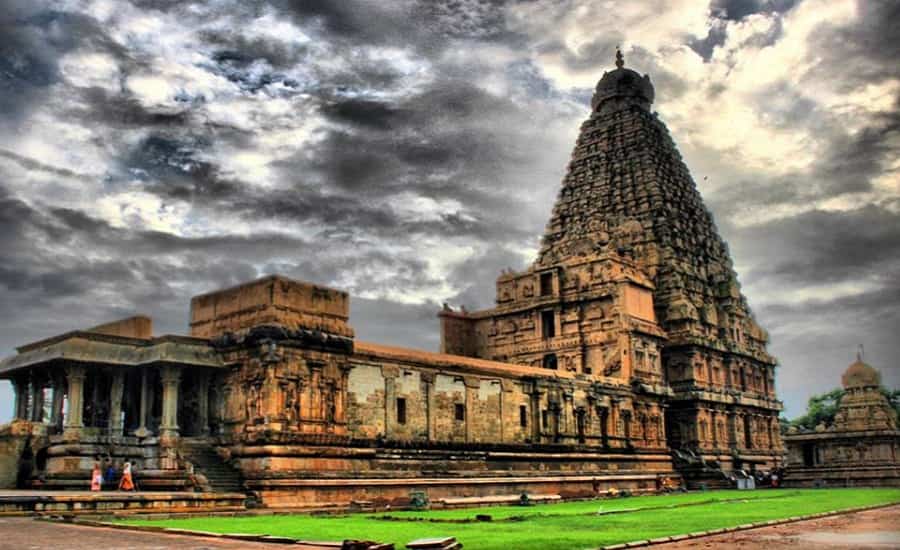
The Brihadeeswarar Temple, also known as the Raja Rajeshwara Temple, Rajarajeswaram, and Peruvudaiyar Kovil (in the local language), is located in the Thanjavur district of Tamil Nadu.
History
The temple dates back to the eleventh century. Built by an emperor of the Chola Dynasty, Rajaraja Chola I, the temple is a magnificent example of large-scale construction projects executed in the history of India. It is believed that the temple was built to carry out a celestial command given to the Chola king in his dreams. The structure represents the wealth and richness of the Chola Dynasty and the talent of the architects involved in the project. This royal temple was the place where many of the royal ceremonies were held.
The temple is said to have been built within a span of five years, starting in 1004. Built entirely out of granite, the base of this temple rises to a height of five meters from the ground. Above this base, statues of various avatars of Lord Shiva have been installed. A kalash weighing 81.28 tonnes was placed atop the shrine. The statue of Nandi, Shiva’s vehicle, has been carved out of a huge piece of rock and weighs approximately twenty tonnes. The Shivling installed in the temple is 3.7 meters in height. With an outer precinct measuring 240 by 125 meters, the temple is believed to be the largest temple in India.
The temple complex, built on the banks of a river, appears like a guarded fortress with channels of water filling the moats. The temple was more than just a place of worship ever since it was built. It is said that around 1,000 workers and 400 dancers were employed at the temple. The workers included musicians, accountants, scholars, craftsmen, priests, and housekeeping staff.
It is believed that the figure carved atop the sanctum sanctorum is a European figure, which was a sign that Europeans would be coming to India, though archaeologists feel that this might be just a hoax. Another popular belief is that the gopuram, the monumental tower in the temple complex, never casts its shadow on the ground. It is also believed that the Kumbam that sits atop this tower, weighing 60 tonnes, was carved out of a single piece of granite.
Structure
The outer boundary of the temple is made of a wall measuring 270 meters by 140 meters. The main temple is located in the middle of a quadrangular structure that consists of two halls, sub-shrines, a sanctuary, and the statue of Nandi. Huge walls, leveled by intricately carved sculptures and pilasters, surround the main mandapa of the temple.
The sanctum sanctorum of the temple is where the Shivling and the image of Shiva are found. In the local language, the sanctum sanctorum is referred to as the “Karuvarai.” With extensive decorations at the entrance, this section of the temple is believed to have been built in a strategic location, as it was supposed to be a connecting link between the king and the gods. Statues of other deities are also given a prominent position in the temple premises. One can see large statues of Surya (Sun), Chandra (Moon), and other Hindu gods. The temple also features statues of the “Guardians of the Directions,” four of which have been preserved here.
What to See
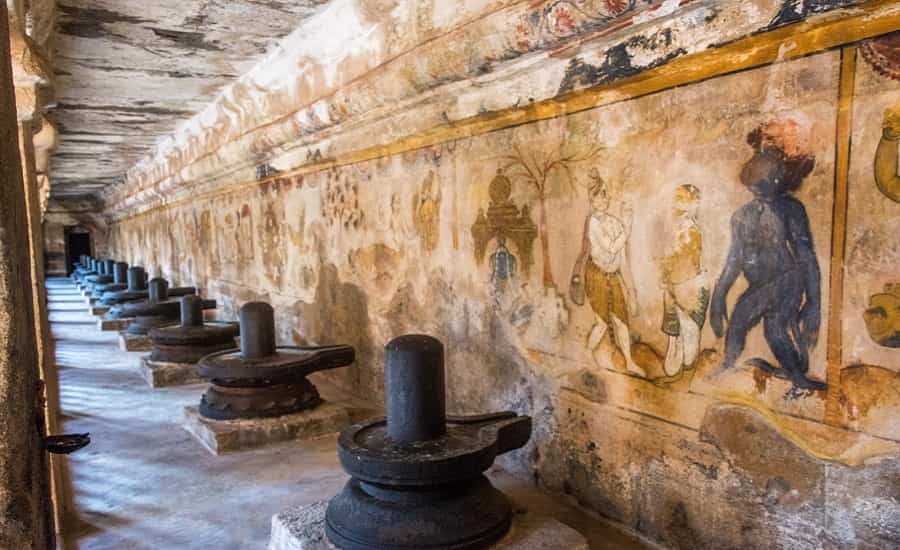
The temple is famous for its huge size, architectural precision, carvings, and murals that enhance its beauty. One can see various murals depicting Lord Shiva performing different actions. The artists of that period decorated the walls with profound detailing.
As some of the murals were severely damaged due to continuous accumulation of soot and smoke from oil lamps and camphor, the rulers of the Tanjavur Dynasty decided to put some paintings to maintain the beauty of the place. These paintings have now been put on display for visitors at the pavilion.
Eat, Drink, Collect
Tourists can eat at one of the many regular and high-end restaurants in the town, according to their taste and budget. Some popular spots include Raja Raja House, Hotel Sangam, Thevars, Rice Bowl, Mullai, Marutham, etc. Several restaurants and hotels have a bar attached where you can find the liquor of your choice. Though high-end brands might not be available, regular brands of whiskey, beer, and other alcoholic drinks are easily available.
Tourists should head to the Poompuhar Art Gallery, where they can purchase bronze idols, artistic plates, and paintings.
It is easy to find a hotel in Thanjavur according to one’s budget, thanks to its popularity as a tourist destination.
Best Time to Visit
The best time to visit Brihadeeswarar Temple is from October to March when the temperature is relatively low, making it easier for tourists to explore the temple and the town. The monsoon season extends from June to September, during which the climate can sometimes become humid, yet tourists can still make short trips to explore the temple and the town.
How to Reach
The closest airport to Thanjavur is at Tiruchirappalli. This is an international airport with direct flights from Kuala Lumpur, Colombo, Chennai, Singapore, and Dubai.
Thanjavur enjoys rail connectivity with many parts of the state and neighboring states through broad and narrow-gauge railway lines. Direct trains to and from Allahabad, Madurai, Ernakulam, Coimbatore, Mysore, Jabalpur, and many other important centers in India help you reach here easily.
State-run and private buses from Bangalore, Chennai, Kumbakonam, Pondicherry, and other towns help you reach this town within 9 to 12 hours.
Once you reach Thanjavur, you can travel in an auto rickshaw or a tourist cab, both of which are cheaper modes of commuting. You can also commute around in a cycle rickshaw, a relatively slow means of transport, which will help you notice the beauty of the surrounding areas while traveling.