The Char Dham of India is a sacred Hindu pilgrimage circuit of four temples — Badrinath, Puri, Rameshwaram, and Dwarka — spread across the north, east, south, and west of the country. Hindu tradition holds that visiting all four at least once in a lifetime helps devotees move closer to moksha, or spiritual liberation.
This is the original Char Dham circuit, distinct from the more recently popularised ‘Chota Char Dham’ of Uttarakhand (Yamunotri, Gangotri, Kedarnath, and Badrinath), a separate regional circuit that happens to share Badrinath with this one.
This guide covers each dham’s history, significance, timings, travel duration, and estimated cost for planning a Char Dham of India pilgrimage in 2026.
Char Dham of India: Quick Comparison
| Dham | State / Region | Deity | Darshan Timings |
| Badrinath | Uttarakhand (North India) | Lord Vishnu (Badrinarayan) | Varies seasonally; temple opens only May–Nov |
| Puri (Jagannath) | Odisha (East India) | Lord Jagannath (Krishna/Vishnu) | Early morning to late night, with breaks for rituals |
| Rameshwaram | Tamil Nadu (South India) | Lord Shiva (Ramanathaswamy) | Morning and evening sessions, varies seasonally |
| Dwarka | Gujarat (West India) | Lord Krishna (Dwarkadhish) | Morning and evening sessions, varies seasonally |
Who Established the Char Dham of India?
The Char Dham pilgrimage tradition is traditionally attributed to the 8th-century philosopher Adi Shankaracharya, who is credited with reviving and organising Hindu pilgrimage practice across India by establishing four principal monastic centres (mathas) near these four sites.
This gave the Char Dham of India a structured, pan-Indian identity that ties together Vaishnavite sites (Badrinath, Puri, Dwarka) and a Shaivite site (Rameshwaram) into a single pilgrimage tradition.
The Four Dhams by Region
- North India: Badrinath (Uttarakhand) — dedicated to Vishnu
- East India: Puri (Odisha) — dedicated to Jagannath, a form of Krishna/Vishnu
- South India: Rameshwaram (Tamil Nadu) — dedicated to Shiva
- West India: Dwarka (Gujarat) — dedicated to Krishna
Badrinath — Uttarakhand
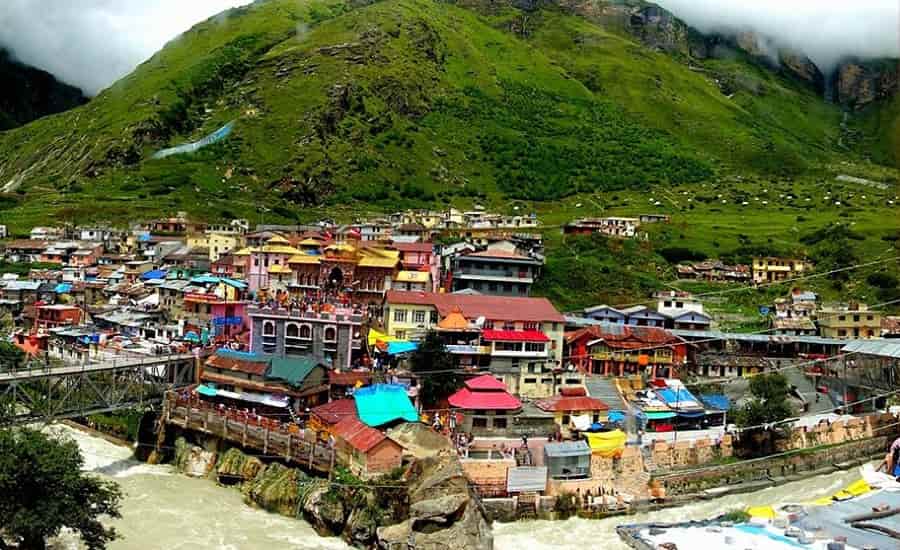
Badrinath sits at an altitude of 3,133 metres in Chamoli district, Uttarakhand, dedicated to Lord Vishnu in his Badrinarayan form. It’s one of the 108 Divya Desams, the sacred Vaishnavite shrines celebrated in early Tamil devotional texts.
Badrinath is the only one of the four original Char Dham sites that also features in the separate Chota Char Dham circuit of Uttarakhand. The temple is open only from around late April/May to November, closing for winter due to heavy snowfall. Pilgrims visiting during the May–June peak season often report several hours of waiting time for darshan, so plan accordingly.
Puri (Jagannath Temple) — Odisha
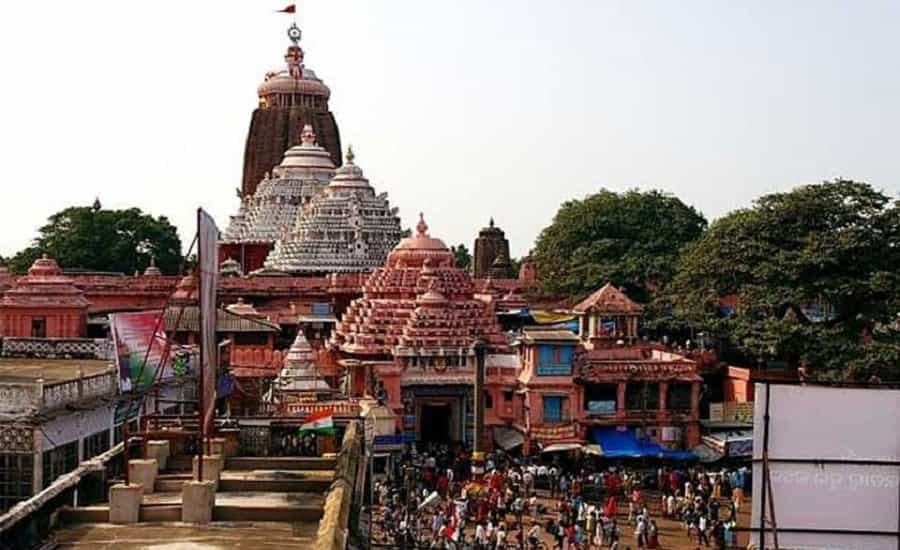
Puri, on the coast of Odisha, is home to the Jagannath Temple, dedicated to Lord Jagannath — worshipped here as a form of Lord Vishnu/Krishna — along with his siblings Balabhadra and Subhadra. The current temple structure dates to the 12th century, built under King Anantavarman Chodaganga Deva, making it roughly 800–870 years old; the worship tradition itself is believed to be considerably older.
The temple’s wooden idols are ceremonially replaced in a ritual called Nabakalebara, historically occurring at intervals of around 12 or 19 years based on the Hindu lunar calendar, rather than on a fixed yearly cycle.
Puri’s most famous event, the Rath Yatra (Chariot Festival), takes place on Ashadha Shukla Dwitiya — the second day of the bright fortnight of the Hindu month of Ashadha, typically falling in June or July, not on Janmashtami. On this day, the three deities are taken in giant wooden chariots from the Jagannath Temple to the Gundicha Temple along Puri’s Grand Road. Crowds during Rath Yatra regularly run into the hundreds of thousands, so expect a packed, high-energy atmosphere rather than a quiet darshan. Entry fees for the museum or special darshan lines can change over time, so check current rates with the temple administration before your visit.
- Suggested to Read: Popular Fair and Festivals of Orissa
Rameshwaram (Ramanathaswamy Temple) — Tamil Nadu
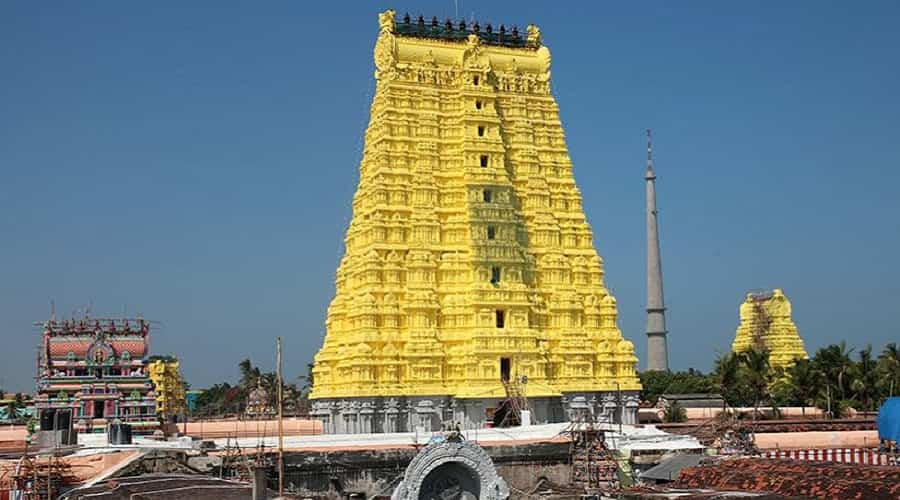
Rameshwaram, on Pamban Island off the coast of Tamil Nadu, is home to the Ramanathaswamy Temple, dedicated to Lord Shiva. According to legend, Lord Rama worshipped Shiva here to seek forgiveness for killing Ravana, a Brahmin, before returning from Lanka.
The temple is one of the twelve Jyotirlingas of Lord Shiva and is known for its long pillared corridors, among the longest in any Hindu temple in India.
Dwarka (Dwarkadhish Temple) — Gujarat
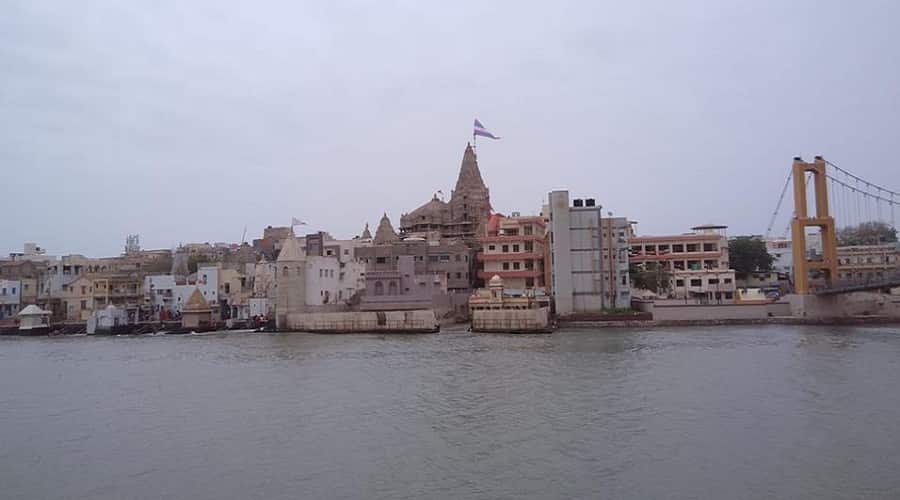
Dwarka sits on the coast of Saurashtra, Gujarat, and is home to the Dwarkadhish Temple, dedicated to Lord Krishna as king of Dwarka. Tradition holds that the original temple was built by Vajranabha, Krishna’s great-grandson, over Krishna’s residence. Historical dating of the original shrine varies widely among archaeological, textual, and traditional sources, and the current structure reflects rebuilding in the 15th–16th centuries.
The temple is counted among the 108 Divya Desams and remains one of the most visited pilgrimage sites on India’s western coast.
Char Dham of India vs Chota Char Dham
These two circuits are often confused, but they’re quite different in scale and origin:
| Feature | Char Dham of India | Chota Char Dham |
| Number of sites | 4 | 4 |
| States covered | 4 (Uttarakhand, Odisha, Tamil Nadu, Gujarat) | 1 (Uttarakhand only) |
| Typical duration | 12–20 days for the full circuit | 7–12 days |
| Origin | Ancient, pan-India pilgrimage tradition | A more recently popularised regional circuit |
| Overlap | Badrinath is shared between both circuits | Shares Badrinath with the original Char Dham |
How Many Days Are Needed for the Char Dham of India?
Trip length depends heavily on how many dhams you’re combining and how you travel between them:
| Route | Typical Duration |
| Single dham visit | 2–3 days, including travel |
| Two dhams combined (e.g. Puri + Rameshwaram) | 6–8 days |
| Full Char Dham circuit (all four) | 12–20 days, depending on travel mode and rest days |
Because the four sites sit in opposite corners of the country, most pilgrims combine road travel near each dham with flights between regions rather than attempting to drive the entire circuit.
Char Dham of India: Estimated Travel Cost
Costs vary widely by travel style and season. As a rough per-person guide for the full circuit:
| Travel Style | Approximate Budget (per person, full circuit) |
| Budget (trains, dormitories/basic lodges) | ₹40,000–80,000 |
| Comfort (flights + mid-range hotels) | ₹80,000–1,50,000 |
| Luxury (private transport, premium stays) | ₹2,00,000 and above |
Best Time to Visit the Char Dham of India
October to March suits Puri, Rameshwaram, and Dwarka best, avoiding the peak summer heat. Badrinath can only be visited between roughly May and November, when the temple is open; May–June and September–October are the most comfortable months there, avoiding both winter closure and the heaviest monsoon rains.
How to Reach Each Dham
- Badrinath: Nearest airport is Dehradun (Jolly Grant); Rishikesh (Yog Nagari Rishikesh) is currently the nearest major railhead, with road connections onward to Badrinath — check for updates on rail extensions closer to your travel date
- Puri: Nearest airport Bhubaneswar; Puri has its own railway station; well connected by road within Odisha
- Rameshwaram: Nearest airport Madurai; Rameshwaram has its own railway station, connected to major Tamil Nadu cities and beyond
- Dwarka: Nearest airports are Jamnagar and Porbandar; Dwarka has its own railway station and is connected by Gujarat’s state and national highway network
Travel Tips for the Char Dham Yatra
- Dress modestly at all four dhams; some temples expect traditional attire, especially inside the inner sanctum
- Photography is generally restricted inside the inner sanctum at all four temples
- Book Badrinath travel well in advance during peak season (May–June, September–October), when accommodation fills up quickly
- Carry cash for donations and small purchases, as card acceptance can be limited near temple areas
- Senior citizens and those with mobility concerns should check each temple’s accessibility options (wheelchair access, VIP or priority darshan lines) in advance, as facilities vary by site
- If combining multiple dhams in one trip, plan for flights between regions — the four sites are spread across opposite corners of India and aren’t practical to cover by road alone
Which Dham Should You Visit First?
There’s no fixed religious rule on order, though many pilgrims following the traditional clockwise route start at Badrinath in the north, then move to Puri (east), Rameshwaram (south), and finish at Dwarka (west). Others simply start with whichever dham is most accessible from their home city.
Sources and Further Reading
This guide draws on temple administration information, state tourism resources, and established religious and historical references for the Char Dham of India, cross-checked for consistency rather than taken from a single source. For date-sensitive details — festival dates, darshan timings, entry fees — always confirm directly with the relevant temple administration (Badrinath-Kedarnath Temple Committee, Shri Jagannath Temple Administration, Ramanathaswamy Temple, and Dwarkadhish Temple Trust) closer to your travel date.
Frequently Asked Questions
Q: What are the four dhams in the Char Dham of India?
A: Badrinath (Uttarakhand), Puri (Odisha), Rameshwaram (Tamil Nadu), and Dwarka (Gujarat).
Q: Who established the Char Dham of India?
A: The tradition is credited to the 8th-century philosopher Adi Shankaracharya, who organised Hindu pilgrimage practice around these four sites.
Q: Is the Char Dham of India the same as the Chota Char Dham?
A: No. The Chota Char Dham is a separate, shorter Uttarakhand circuit; only Badrinath overlaps between the two.
Q: Why is the Char Dham pilgrimage important?
A: Hindu tradition holds that visiting all four dhams helps devotees move closer to moksha, or spiritual liberation.
Q: Which Char Dham should be visited first?
A: There’s no fixed rule, though many pilgrims follow a clockwise route starting at Badrinath in the north.
Q: How many days does the Char Dham of India take?
A: About 2–3 days per dham, or roughly 12–20 days for the full four-site circuit, depending on travel mode.
Q: What is the estimated cost of a Char Dham yatra?
A: Roughly ₹40,000–80,000 for a budget trip, up to ₹2,00,000 or more for a luxury circuit, per person.
Q: When is the Puri Rath Yatra held?
A: On Ashadha Shukla Dwitiya, typically in June or July — not on Janmashtami.
Q: How old is the Jagannath Temple in Puri?
A: The current structure dates to the 12th century, roughly 800–870 years old, though the worship tradition is believed to be older.
Q: Who built the Dwarkadhish Temple?
A: Tradition credits Vajranabha, Lord Krishna’s great-grandson, with building the original temple.
Q: What is the altitude of Badrinath?
A: Approximately 3,133 metres above sea level in Chamoli district, Uttarakhand.
Q: When does the Badrinath temple open and close each year?
A: Typically from around late April or May to November, closing for winter due to heavy snowfall.
Q: Which Jyotirlinga is at Rameshwaram?
A: The Ramanathaswamy Temple houses one of the twelve Jyotirlingas of Lord Shiva.
Q: What is the best time to visit the Char Dham of India?
A: October to March for Puri, Rameshwaram, and Dwarka; May–June or September–October for Badrinath.
Q: Can senior citizens complete the Char Dham yatra?
A: Yes, but they should check accessibility options and priority darshan facilities at each temple in advance, as these vary by site.
Q: Can the four dhams be visited in a single trip?
A: Yes, but most pilgrims combine road travel with flights between regions, since the sites are spread across opposite corners of India.
Q: Is there a dress code at the Char Dham temples?
A: Yes, modest and often traditional attire is expected, particularly near the inner sanctum.
Q: Is photography allowed inside the Char Dham temples?
A: Generally not inside the inner sanctum, though outer courtyards usually allow photography.
Q: How often are the Jagannath Temple idols replaced?
A: Through the Nabakalebara ritual, historically at intervals of around 12 or 19 years based on the Hindu lunar calendar.
Q: Why is Badrinath part of both Char Dham circuits?
A: Its ancient significance made it a natural inclusion in both the original all-India Char Dham and the more recent regional Chota Char Dham of Uttarakhand.
Conclusion
The Char Dham of India — Badrinath, Puri, Rameshwaram, and Dwarka — represents one of Hinduism’s oldest and most significant pilgrimage circuits, traditionally linked to Adi Shankaracharya and tied to centuries of devotion, mythology, and architectural heritage. Whether you’re planning a single dham visit or the full yatra, checking current timings, festival dates, and travel routes in advance will make for a smoother, more meaningful pilgrimage.