For Indians, temples and gods play a vital role in their lives. People blindly have faith in God and pray for the betterment of their lives. You will find thousands of temples in India, many of which are renowned for one reason or another. In the west of Bengal, Kolkata, there is a famous temple where people flock from every corner of India and even from around the world. This famous attraction is the Kali Temple of Dakshineswar.
The Origin of the Temple
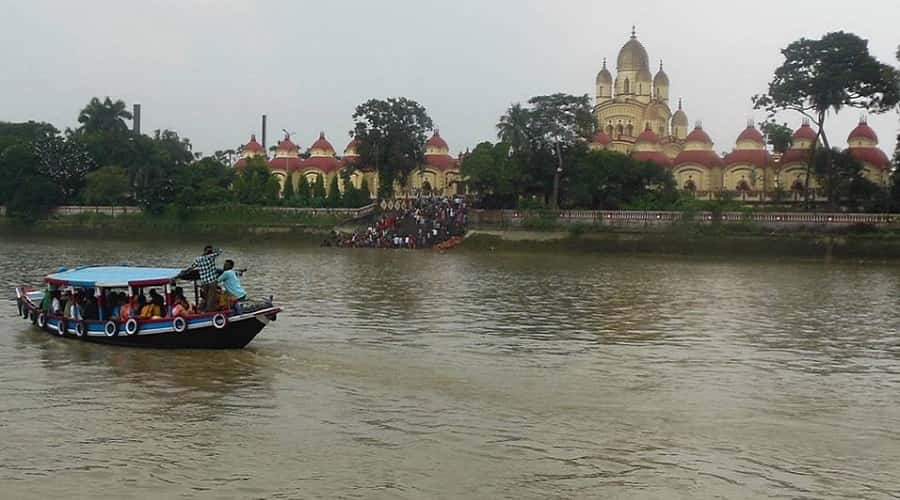
The Dakshineswar Kali Temple is a Hindu temple dedicated to Goddess Kali, built by the wealthy widow Rani Rashmoni between the years 1847 and 1855. She built this temple because of a dream she had about Goddess Kali. The temple was initially cared for by the head priest, whose responsibilities were passed on to his younger brother, Ramakrishna, after his death. The day Ramakrishna started his service at the shrine, he was filled with an unusual form of love for God, known in Hinduism as Maha-Bhava.
Ramakrishna’s Devotion and Spiritual Trances
Ramakrishna fell in love with the deity so much that he completely forgot about the outside world. Every moment he sat in front of the deity, he would fall to the ground, engrossed in spiritual trances, losing all other consciousness, and simply cry out and recall the goddess’ name as ‘Ma,’ meaning Mother. He would frequently fall into God-intoxication and was eventually relieved of his duties as the temple priest. However, he was still allowed to live in the temple compound. There is a rich history of the relationship between Goddess Kali and Ramakrishna. The Kali Temple of Dakshineswar became famous for the spiritual visions experienced by Ramakrishna.
- Suggested to Read: 10 Weekend Getaways from Kolkata
Architectural Features of the Temple
The 12-spired temple has a large courtyard, which is surrounded by 12 other temples, dedicated entirely to Lord Shiva. There is a belief that Ramakrishna had a vision of various gods and goddesses like Shiva, Radha-Krishna, Kali, Sita-Rama, Mohammed, and Christ in his dreams. His practice was to demonstrate intense devotion to each deity so they could manifest physically in front of him. It may seem strange when people listen to the history of the temple and the life of Ramakrishna, but they salute the innocent priest who lived and sacrificed his entire life in search of his mother goddess Kali. People believe that Goddess Kali resides in this temple and fulfills everyone’s wishes.
The Spiritual Significance of the Temple for Tourists
Tourists from India as well as from abroad visit this temple with deep, heartfelt wishes and beliefs. Exploring the Kali Temple of Dakshineswar is a unique experience that stands out in its form. This Bengali architectural structure has something that makes everyone curious to know more about the temple’s past and history. The temple was built in the traditional Nava-Ratna style, which is the nine-spire style of Bengal architecture. It is a three-story temple facing the southern direction. Standing high on a platform with stairs, the temple covers an area of 46 feet with an elevation of more than 100 feet.
The Structure and Layout of the Temple
The temple has a Garbhagriha, known as the sanctum sanctorum, which houses the idol of Goddess Kali. This deity is recognized as Bhavatharini. Goddess Kali is depicted standing on the chest of Lord Shiva, who is lying beneath her. The idol is placed on a silver-adorned thousand-petaled lotus. In addition to the 12 shrines of Shiva, the temple complex includes a shrine to Kali’s companion along the riverfront, one temple of Radha-Krishna, a bathing ghat on the river, a bookshop, and a shrine to Rani Rashmoni. There is a chamber located on the northwest corner, just ahead of the last Shiva temple out of the 11 other shrines. This is where Ramakrishna spent a substantial part of his life. Visitors are eager to see the location where Ramakrishna lived and explore the surrounding areas of the temple.
Ramakrishna’s Legacy and Continuing Pilgrimage
He died in 1886, at the age of 50, but his life, spiritual practices, and the Kali Temple of Dakshineswar continue to draw pilgrims from all over India and the world. The ecstatic trances he experienced are a major attraction that people love to explore and hear about. Many people still believe that Kali, Ramakrishna, and his wife Sarada Devi are still present at this religious destination, the Kali Temple of Dakshineswar.