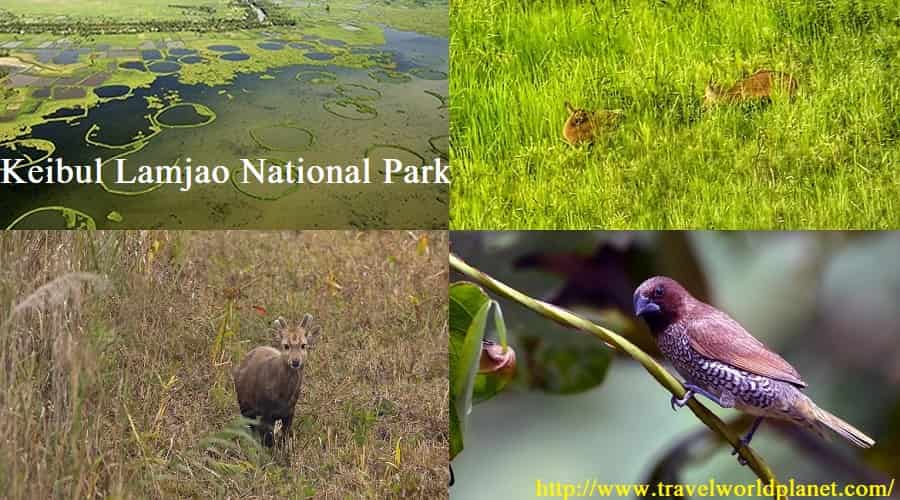
Keibul Lamjao National Park is one of the most prominent tourist destinations to experience the wildlife of Manipur. It is located about 53 kilometers from Imphal, the nearest town, and lies on the boundary of the Loktak Lake. This national park is the only floating park in the world, where you can halt at Loktak Lake. The lake is a stunning spot and serves as a natural habitat for the “Sangai” deer, which is renowned as the beautiful dancing deer of Manipur. Tourists from all around the world visit this park just to catch a glimpse of the Sangai deer, which thrive in this unique wetland ecosystem. The dancing deer is not only the main highlight of the national park but also one of the major attractions for visitors.
This draws thousands of tourists each year. Travelers come from various states, regions, and countries to experience a mesmerizing vacation. The park is home to several species of animals, some of which are rare and endangered. It preserves a wide range of otters and hog deer. Apart from the wildlife, Keibul Lamjao National Park also hosts several migratory birds and waterfowl, which can be observed from November to March. The park offers facilities for visitors to closely observe the animal and bird species. The Forest Department maintains two small rest houses and watchtowers for sightseeing within the park.
At a Glimpse:
- Location: Bishnupur district, Manipur, 53 kilometer from Imphal.
- Established: Year 1977, 28th March.
- Closest town: Imphal and Moirang.
- Coverage area: 40 square kilometer.
- Best season to visit: During the month of November to April.
- Main attraction: Sangai Deer (dancing deer of Manipur).
History and Unique Features of Keibul Lamjao National Park
The park spans an area of about 40 square kilometers and was established in 1977. Originally, it was known as a wildlife sanctuary in 1966, but it was officially designated as Keibul Lamjao National Park in 1977. This national park of Manipur is possibly the only floating sanctuary in the world. In addition to the 40 square kilometers of wetland, it features overgrown vegetation known as ‘Phumdi,’ which grows up to 1.5 meters. The park has several features that attract visitors from all over India and abroad. The main attraction of the park is its unique terrain and vegetation. Among all the mesmerizing spots, the highlight of Keibul Lamjao National Park is the Loktak Lake. The lake contains freshwater and is the largest lake in India, spanning approximately 6,475 hectares. A large portion of the water lies within the park, which leads to a rich diversity of vegetation.
The Sangai Deer: Symbol of Keibul Lamjao National Park
Flora
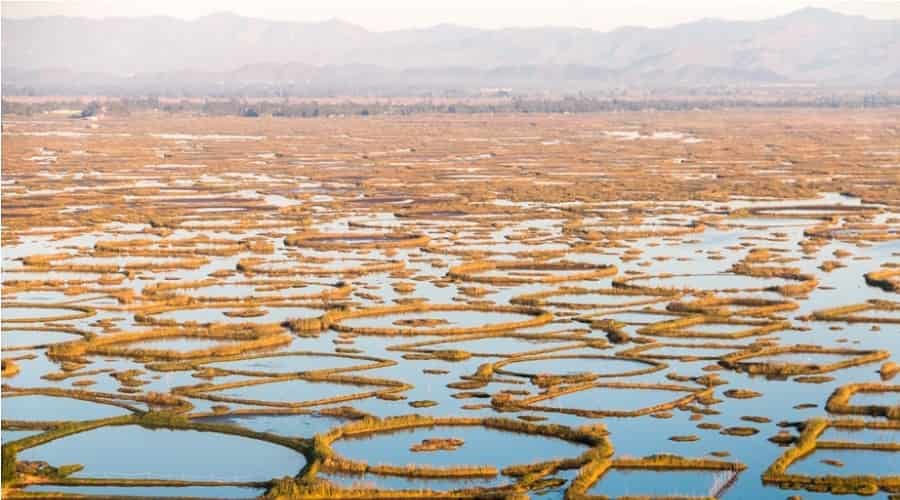
Keibul Lamjao National Park is home to a wide range of rare and endangered flora. It features unique floating marshes, the most prominent of which is ‘Phumdi.’ In the park, there are numerous types of vegetation that attract many tourists. Around 80% of the flora is submerged, and the vegetation grows to a height of 90 to 120 cm, covering the water’s surface. Historically, the most common vegetation in the national park included 15% Khoimon, 25% Singut, and 45% Tou. However, the plant composition has changed over time, and today, it includes a mix of protein-rich plants such as ishing kambong (Zizania latifolia) and hoop (Leersia hexandra), which make up around 24% of the flora. Many of the plant species found here are exclusive to Keibul Lamjao National Park, making it a botanist’s paradise.
Mammals
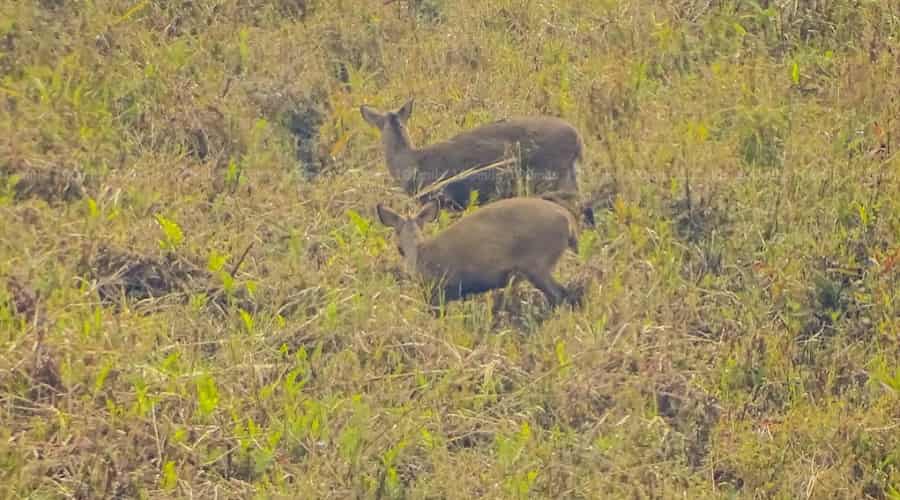
Keibul Lamjao National Park is renowned for its diverse wildlife, with several rare and endangered species residing here. One such species is the Thamin deer, also known as “Manipur’s dancing deer,” due to its graceful movement across the floating wetlands. Other deer species found in the park include the muntjac, sambar, and hog deer. The park is also home to various primates, such as the Rhesus monkey, Assamese macaque, and the Hoolock gibbon, which are mainly found in the western hillocks.
You may also encounter smaller animals like the small Indian civet (Viverricula indica), large Indian civet (Viverra zibetha), wild boar (Sus scrofa), and otter (Lutra lutra). The park is also known for its rare wild cats, such as the Temminck’s golden cat and marbled cat, though these species are elusive and not easily spotted. Tourists should be cautious as species like the Malayan bear and Himalayan black bear are also found in the park, often hunting for food.
Bird Life
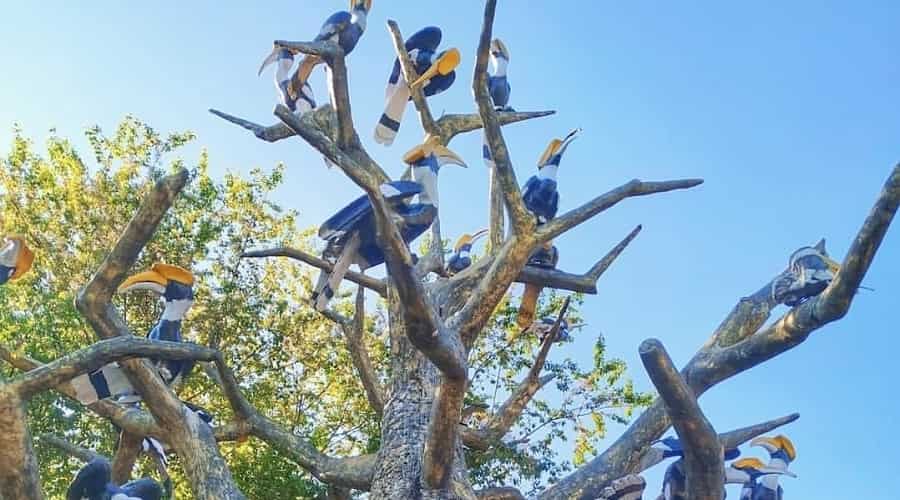
Keibul Lamjao National Park is a paradise for birdwatchers. Around 8% of the park is covered by forest, which provides a habitat for a variety of bird species. Some of the birds found here include waterfowl that migrate to the park during the winter months. The Hooded Crane is commonly seen near the valley of Manipur. The park is also home to several raptors, including the Shaheen Falcon and Black Eagle. The Green Peafowl, Bamboo Partridge, and Eastern White Stork can also be spotted here. One of the park’s most remarkable features is its hornbill population, with various species such as the Great Pied Hornbill, Pied Hornbill, Wreathed Hornbill, Rufous-Necked Hornbill, and Brown-backed Hornbill calling the park home. If you’re a nature lover or birdwatcher, Keibul Lamjao National Park is the perfect destination to explore.
Ideal Time to Visit
The best time to visit Keibul Lamjao National Park is from October to April. These months mark the start of winter and early summer in India. During this period, you can observe several migratory birds and mammals. The best times to explore the park are early in the morning or late afternoon, just before sunset. The summer months, starting from May, bring the monsoon season, which causes Loktak Lake to flood, making exploration difficult. The park is generally closed during the rainy season for safety reasons.
Where to Stay
Keibul Lamjao National Park offers accommodation options, including rest houses maintained by the Forest Department, which are ideal for those wishing to experience the wildlife of Manipur. For more private stays, there are several accommodations near the park that provide affordable options with full amenities.
Must Read: