There are shortcuts to happiness, one of which is traveling and exploring new places. Traveling has been an integral part of mankind. Ever since we became the inhabitants of this planet, we have traveled to near and far-off places for different pursuits. In the early days, humans traveled extensively, which gradually decreased as we started living in our homes and settled down with families. However, every now and then, the nomadic soul that possesses us pushes us to sail away from the mundane chores and embark on a journey to a new destination. This destination is usually different from the places we visit frequently, because only in this way can we break the monotony of routine life. The Purana Qila of Delhi is one such place where a tourist can spend time exploring the vastness of this old fort that was once the residence of a royal family.
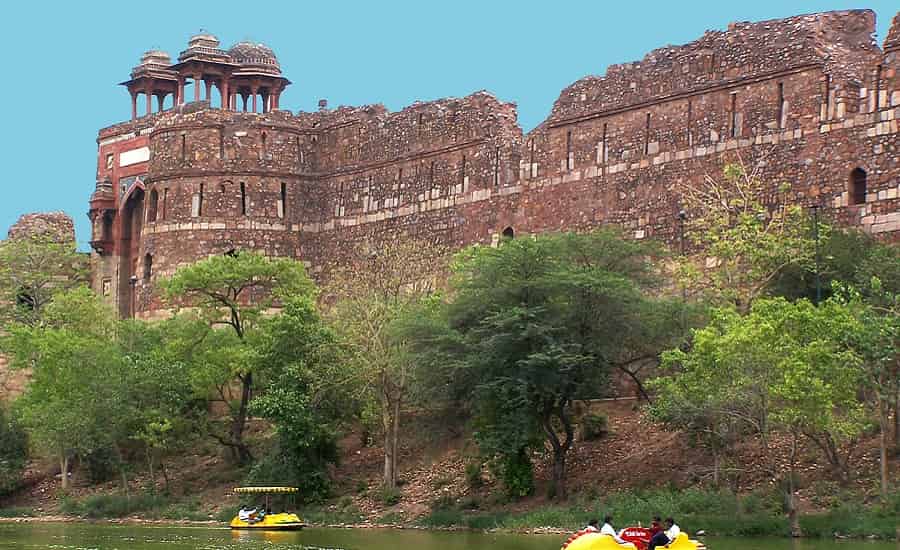
The Purana Qila, or the Old Fort, as it is referred to, is located on the banks of the Yamuna River in the National Capital Territory of Delhi. It is close to two major landmark sites of Delhi: India Gate and Humayun’s Tomb.
History
This historic fort was built by the Pandavas before the famous battle between the Pandavas and Kauravas took place. The fort is believed to be the first structure built in Delhi. It is thought that the fort is where the legendary city of Indraprastha was established by the Pandavas. This is supported by the village of Indrapat that existed here until 1913.
The fort was under the rule of Humayun for seven years starting in 1533. Humayun carried out renovations to the fort before occupying it. In 1540, he was defeated by Sher Shah Suri, an emperor of the Suri Dynasty, who renamed the fort Shergarh.
During Suri’s occupancy, several structures were added to the fort. However, Sher Shah ruled the fort for only five years before his death in 1545. Sher Shah’s son, Islam Shah Suri, took over the fort but left it after some time, as he considered Gwalior a safer place to establish his headquarters. He handed over the fort and the charge of the region to the army general Hemu. The region of North India was ruled by Adil Shah Suri after Islam Shah died in 1553, as Hemu was trying to end the rebellion taking place in East India. The fort was recaptured by Humayun in 1555, although he died the next year.
Hemu, upon learning that the fort had been recaptured by Humayun, rushed back to Delhi. He went on to capture Agra, Kanpur, and Itawah before facing the forces sent by Akbar. He defeated them and became the ruler of North India. He was titled Samrat Hem Chandra Vikramaditya after winning 22 battles in the northern region.
The fort came to be considered unlucky, as all the rulers who occupied it either lost their lives or were unable to sustain their rule for long periods.
The excavations carried out by the Archaeological Survey of India (ASI) helped discover artifacts dating back to the 10th century. These artifacts include pottery, painted grey ware, and other objects that indicate the occupation of various dynasties at the fort.
After India gained independence from British rule, the fort and Humayun’s Tomb served as refugee camps. The camp at the fort remained functional until early 1948, as the necessary transport arrangements to carry refugees to Pakistan took time.
In the 1970s, three theatrical acts produced by the National School of Drama used the ramparts of the fort as a backdrop.
Structure
The fort is surrounded by 1.5 kilometers of walls, which are 18 meters high. There were three entrances to the fort, of which only one is used today. The first is through the Bara Darwaza, or the Big Gate, which is still functional. The second entrance is through the south gate, known as Humayun’s Gate. The third entrance is the Talaqi Gate, also referred to as the Forbidden Gate. These gates are made of sandstone, equipped with bastions and overhanging balconies.
What to See
Though many of the structures are now in ruins, a trip to the fort will not spoil your mood.
One prominent structure at the fort is the Qila-i-Kuhna Mosque, the construction of which is credited to Sher Shah Suri. Built in 1541, this mosque represents pre-Mughal architectural patterns. Inside the mosque, there is a large prayer hall. The mosque also has a second storey, which was used by female worshippers, and the jharokha was meant for the royal family.
Sher Mandal is another well-preserved part of the fort. It is an octagonal, two-storey structure built of red sandstone. It was meant to be used as an observatory. This is the place where Humayun fell to his death from the second floor in 1556.
The mandal was also used as a library by Humayun during his lifetime, although tourists are no longer allowed entry.
The artifacts found during the excavations are now kept in a museum located at the gates.
Every evening, as the sun goes down, a light and sound show begins at the ramparts. This show is spectacular to watch and provides an interesting way to learn about the history of Delhi.
Eat, Drink, Collect
Delhi is famous for its ability to satisfy the appetites of tourists from almost all parts of the world. However, one must try Mughal and Frontier cuisine. Some of the most popular eating outlets in the city include Gulati Restaurant, Angeethi, Degchi, Delhi ka Angan at Hyatt Regency, and Karim’s, among others.
The restaurants and roadside eateries in Delhi ensure that tourists can grab a quick bite while on the move.
Delhi is a haven for shoppers. You can head to Rajouri Garden Market, Sarojini Nagar, Khan Market, Palika Bazaar, Chandni Chowk, Khari Baoli, Paharganj Market, Connaught Place, etc., to shop for apparel, housewares, seasonal clothing, traditional spices, rugs, jewelry, and much more.
Best Time to Visit
The best time to visit Purana Qila is between October and March. The fort remains open from 08:00 am to 06:00 pm throughout the year.
Visitors are free to use a still camera, but they must pay Rs.25 if they wish to use a video camera.
How to Reach
Purana Qila is located near the Delhi Zoo. The closest metro station is Pragati Maidan. Local trains, metro trains, state-run buses, and private cabs are available frequently, making it easy for tourists to commute to and from Purana Qila.
Delhi, being the national capital, is well-connected with major national and international destinations through a well-planned and developed rail, road, and air network. It is easy for a tourist from anywhere in the world to plan a quick trip to Purana Qila and other tourist destinations across the city without worrying about transportation.
- Also Read: Top Places to Visit In Delhi With Kids