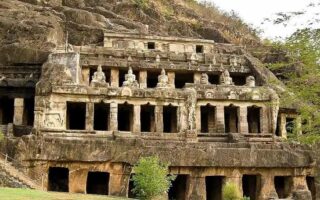
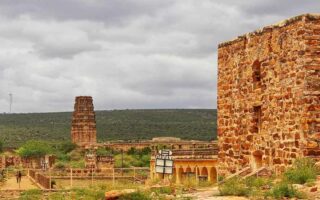
Ramappa Temple, also popularly known as the Ramalingeswara Temple, stands 77 km from the city of Warangal, which was the medieval capital of the Kakatiya Empire in the southern Indian state of Andhra Pradesh. The Kakatiya kings ruled over Andhra Pradesh for nearly 200 years, from the 10th to the 12th centuries. The temple, symbolizing their zeal and inclination towards art and architecture, is situated in a valley in Palampet village of Venkatapur Mandal (formerly known as the Mulug Taluk) in the Warangal district.
- Location: Palampet, Warangal District, Telangana (77 km from Warangal, 157 km from Hyderabad).
- Built by: Rudra Samani under King Kakati Ganapati Deva in 1213 CE.
- Dedicated to: Lord Shiva (Ramalingeswara).
- Named After: Sculptor Ramappa, a Vishwakarma Brahmin.
- Style: Kakatiya architecture with intricate carvings.
- Timings: 6:00 AM to 6:00 PM (daily).
- Entry Fee: ₹25 (Indian citizens), ₹300 (foreign tourists).
- Best Time to Visit: October to March (cooler weather).
History
Located 157 km from Hyderabad, the state capital, Warangal is adorned with architectural marvels of the Kakatiya dynasty. The name Warangal means history, and keeping the honor of its name, it still preserves its medieval culture. Its historic glory lies in its giant fortress, which remained unaffected despite constant attacks by the Delhi Sultans in the 13th and 14th centuries, and the temples at Palampet. Today, the city and the valley have earned fame in the tourist circuit for its charming lakes, wonderful temples, mud-brick citadels, and wildlife sanctuaries.
An architectural marvel, the Ramappa Temple and its adjacent Ramappa Tank – a medieval engineering art piece of the 13th century – are exemplary works depicting the heights of architecture and art achieved during the Kakatiya era. The Ramappa Tank is a well-planned water pool, formed by a 2000-ft long earthen dam connecting a semi-circular series of hills, which create a lake.
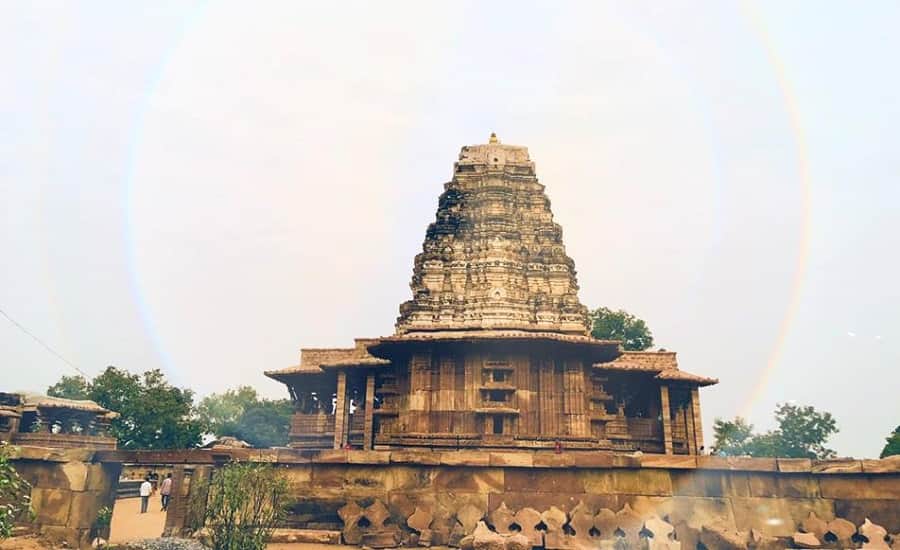
Perhaps the only temple in India to be named after its main sculptor, Ramappa – a Vishwakarma Brahmin Sthapathi from Karnataka – the temple was built by Chief Commander Rudra Samani under the patronage of King Kakati Ganapati Deva. An inscription found on the temple premises mentions the construction of the temple in 1213 CE. The inscription also refers to three other shrines, namely Kateswara, Kameswara, and Rudreswara, all dedicated to Lord Shiva. Currently, only the main Rudreswara shrine remains in good condition, with the other two in a ruined state.
The unique wonder of this temple is that, despite being made from light bricks that can float on water, the structure is so strong that it has withstood several wars, invasions, and natural calamities. The temple, a masterpiece of architecture, has earned several praises, including being called the “Brightest Star in the Galaxy of Medieval Temples in the Deccan.”
- Must Read: Famous Hindu Temples In Andhra Pradesh
Temple’s Architecture
Erected on a star-shaped platform 6 feet above ground, according to the cruciform plan, the entire temple complex is surrounded by a compound wall. It is designed based on classical patterns, with the temple elevated on a platform that demarcates the sacred rituals from the daily world. This elevated platform signifies the overcoming of the mundane and creates a dedicated space for spiritual functions.
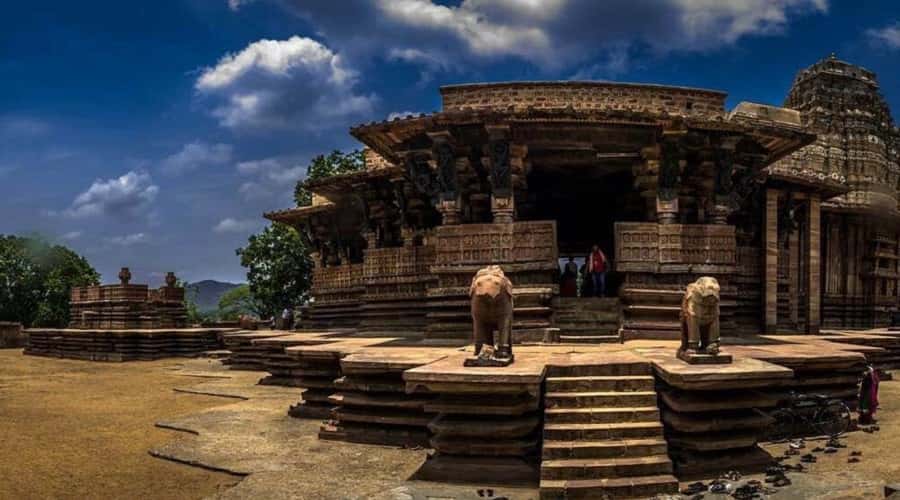
As you enter the temple, the Nandi Mandapam greets you with a nine-foot-high Nandi, the divine bull, and vehicle of Lord Shiva. Nandi is found in most Shiva temples, facing the deity. However, in Kakatiya temples, Nandi assumes an alert position, as if waiting for Lord Shiva’s command.
The sanctum is adorned with a Shikhara and surrounded by a Pradakshina path. The walls, pillars, and ceilings are decorated with intricate patterns and sculptural work. Looking up at the ceiling, you will notice that the columns divide the area into compartments. Just in front of the sanctum, there is a hall with many beautifully carved pillars, allowing space for light and ventilation for the pilgrims. There is also a Navrang Mandapam in front of the sanctum, which can be accessed through a separate entrance from the north.
The eastern side of the sanctum is enclosed with pilasters decorated with alternating Shikhara styles of Dravidian and Nagara architecture. The temple’s exterior walls exhibit carvings depicting scenes from Indian mythology, including rows of elephants, historic stories, and representations of Hindu, Buddhist, Jain, and Muslim themes. Another unique feature is the twelve women shrines atop the exterior pillars, which resemble the sculptures found in Karnataka’s Halebidu temples.
For art lovers, a single day is not enough to take in all the carvings within the temple.
Visiting what’s Inside the Temple
After entering the temple via a royal garden and passing the wall (as the main entrance is in ruins), you will find boards from the Archaeological Survey of India (ASI) explaining the temple’s significance. After crossing these boards, you will come across the Ranga Mandapam (Natya Mandapam) on your left. From here, you can move towards the inner temple, which has a small room called the Antharalam, accommodating up to 10 members at a time, for viewing and worshipping the Rudreswara (Shiva Lingam) in the sanctum. To its left, a screen depicts the Sapta Swaralu (Seven Musical Notes).
Originally dedicated to Lord Shiva, the temple later came to be known as Ramalingeswara, emphasizing Shiva’s role as the personal god of Lord Ram, the incarnation of Lord Vishnu. Kateswara and Kameswara are two smaller Shiva shrines located on the right and left sides of the main temple. The temple is designed to represent many aspects of Lord Shiva and his celestial abode, the Himalayas, emphasizing his divine transcendence beyond the worldly realm.
A kitchen is located to the right of the temple. There is also a large inscription between the Kateswara Temple and the main temple, written in a combination of Telugu and Kannada.
Natya Mandapam
The Natya Mandapam (Dance Hall) features a dance floor surrounded by black stone pillars on all four sides, which served as the base for the ceiling. You will see carvings of mythological events such as Samudra Manthan (Churning of the Cosmic Ocean), Mohini Avatar (Celestial Being Emerged from the Churning), Tarakasura Samharam (Killing of the Demon Tarakasura), Shiva Kalyanam (Shiva’s Wedding), and the Nataraja (Lord Shiva in Dance Pose) in the middle of the ceiling.
On the walls, there are carvings of three women with four legs, and the pillars are decorated with circular designs, dancing women, and minuscule holes so fine that only a needle could pass through. The carvings of the dancing women appear so lifelike that they seem ready to come alive. The brilliance of this artistry is beyond words, and even today, it retains its charm.
Days of Attraction
The festival of Maha Shivaratri is celebrated with great joy and enthusiasm here for three days. It marks the wedding of Lord Shiva to Goddess Parvati and typically falls in the months of March/April. The temple complex echoes with the chanting of “Om Namah Shivaya” (I bow to the Supreme and Eternal One) for all three days. Another important celebration takes place in the month of November during Kartika Masam (the Kartika month in the Hindu calendar).
Other Attractions
Ramappa Lake, located just 1 km from the temple, is a must-see. In Warangal, you can also visit the Warangal Fort, Thousand Pillar Temple, Kush Mahal, and Bhadrakali Temple.
Reaching the Temple
By Air: Hyderabad is the nearest airport, 157 km from Warangal.
By Train: Warangal is the nearest railway station, well-connected to major cities in the state.
By Road: Buses are available from major cities such as Secunderabad, Hyderabad, and Gowliguda.
Once in Warangal, you can take a bus to Palampet and then walk 1 km to reach the temple. If traveling from Hyderabad, you can easily plan a day trip, starting in the morning and returning by night.
Also Read: