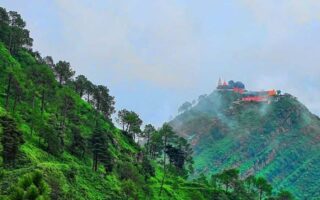
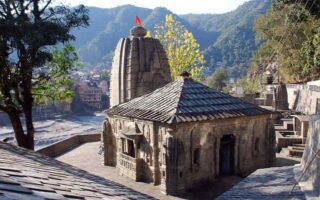
Himachal Pradesh is one of the most beautiful states, adorned by snowy mountains and a cool, calm environment. But it is not just a land of hill stations — it is also home to a number of historical monuments that tell the story of ancient India.
The forts and palaces of Himachal Pradesh have stood on this land for hundreds, and in some cases over a thousand, years. They have witnessed invasions, royal dynasties, and the layered history of both Himachal Pradesh and the wider Indian subcontinent.
Many ancient structures have lost parts of their roofs and original strength to earthquakes and time. Even so, travellers who come to Himachal Pradesh for its hill stations often fall in love with these royal ruins along the way.
This guide covers the most popular Himachal Pradesh forts and palaces, with verified facts, current visitor information, and the real history behind each one.
Key Facts
| Detail | Answer |
| Oldest Fort | Kangra Fort — local tradition places its origins thousands of years ago |
| Largest Fort | Kangra Fort — considered the largest in the Himalayan region |
| Highest-Altitude Fort | Kamru Fort, Kinnaur — approximately 2,600 m |
| Best Heritage Hotel Stay | Arki Fort — part of the palace is now a heritage hotel |
| ASI-Protected Fort | Kangra Fort |
| Total Major Forts Covered | 7 — plus several more under ‘Other Notable Forts’ below |
Forts and Palaces of Himachal Pradesh — Quick Comparison
Here is a side-by-side look at the most popular Himachal Pradesh forts and palaces before we explore each one in detail.
| Fort | District | Built / Era | Known For |
| Kangra Fort | Kangra | Traditionally thousands of years old; rebuilt over centuries | Oldest and largest fort in the Himalayas; ASI-protected |
| Nurpur Fort | Kangra | 11th century (founded); 16th century (rebuilt by Raja Basu) | Brij Raj Swami Temple; named after Empress Nur Jahan |
| Arki Fort | Solan | Capital from 1650; Diwankhana added 1830 | Heritage hotel; Mughal-Rajput frescoes |
| Sujanpur Fort | Kangra/Hamirpur border | 1758 | Barahdari Hall; Kangra School of miniature painting |
| Gondhla Fort | Lahaul & Spiti | Late 17th century | 8-storey structure; Thakur’s residence nearby |
| Kuthar Fort | Solan | Local estimates suggest roughly 800 years | One of the oldest forts in the region |
| Kamru Fort | Kinnaur | Ancient; rebuilt periodically | 2,600 m altitude; Kamakhya Devi idol; Sangla Valley |
Kangra Fort — The Oldest Fort in the Himalayas
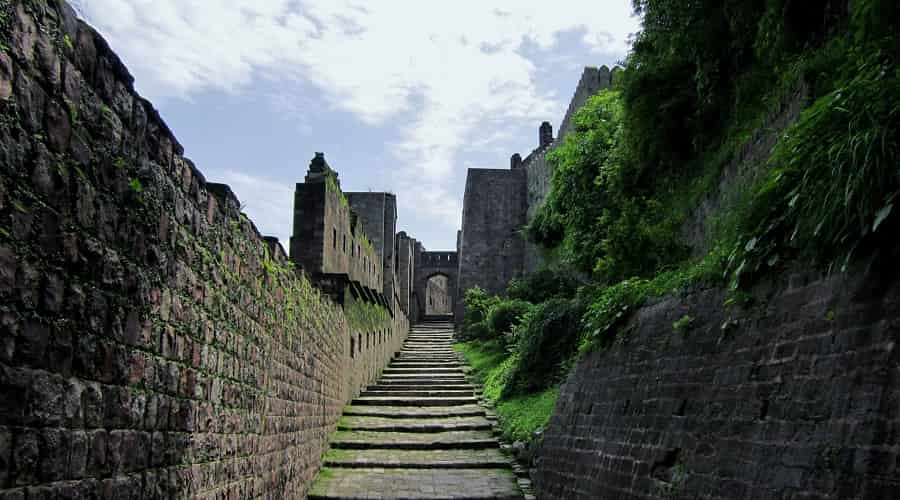
Quick Answer: Kangra Fort, in the Kangra valley, is widely considered the oldest and largest fort in the Himalayan region. It is now an ASI-protected monument with roots traced back, according to local tradition, several thousand years.
| Region | Himachal Pradesh, Kangra valley, near the old Kangra town |
| Special Features | Two Jain temples, temple of Ambika Devi, Lakshmi Narayan Temple, Sitlamata Temple |
| Built / Founded | According to local tradition and Katoch dynasty records, around 3,500 years old; fort structures rebuilt over centuries |
| Current Status | Protected and maintained by the Archaeological Survey of India (ASI) |
| Damaged By | Earthquake on April 4, 1905 |
Kangra Fort was historically the seat of the Katoch dynasty, one of the oldest ruling families of the Indian subcontinent and one of the most storied names among Himachal Pradesh forts and palaces.
Contrary to the idea that the Katoch ruled this fort for only a couple of centuries, historical and traditional accounts describe Katoch control over Kangra Fort across many centuries — interrupted at different points by Mughal, Sikh, Gurkha, and British forces.
Today, Kangra Fort is slowly weathering away due to natural calamities. The most damaging was the earthquake of April 4, 1905, which badly damaged its structures and forced the British garrison stationed there to leave.
The fort’s location is strategically clever. Built at the confluence of the Banganga and Patal Ganga (Manjhi) rivers, it is naturally protected on three sides by water, making an approach from those directions extremely difficult for any invading force.
Visitor tip: If you are also exploring nearby Dharamshala, Kangra Fort makes an easy half-day add-on to your Himachal itinerary.
- Also Reads on: Best Places to Visit in Kangra
Arki Fort — Heritage Hotel of the Baghal Rulers
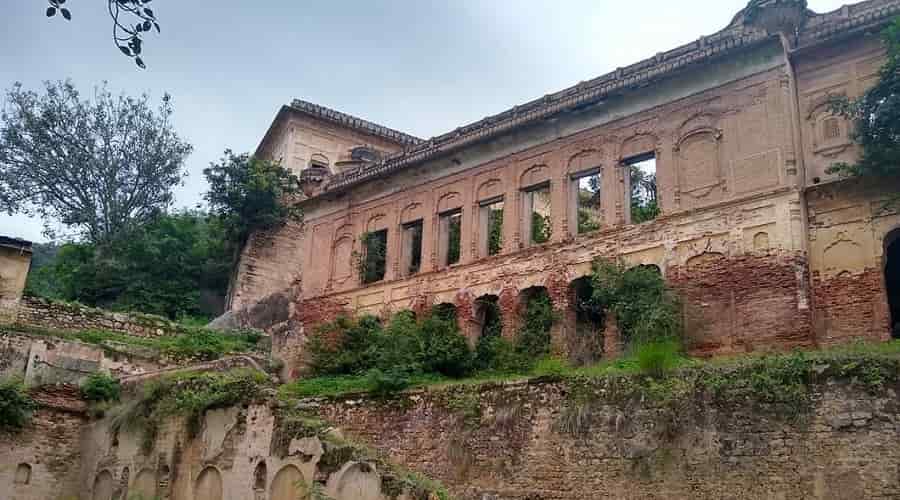
Quick Answer: Arki Fort, in Solan district, was the capital of the princely state of Baghal from 1650. Part of it now operates as a heritage hotel, with its 1830 Diwankhana hall being the architectural highlight.
| Region | Himachal Pradesh, Arki, Solan district |
| Worthy Spot | Heritage Hotel (Arki Palace / Padam Lakshmi Niwas) |
| Capital Since | 1650 AD, under Rana Sabha Chand |
| Diwankhana Added | 1830, under Rana Shiv Sharan Singh |
Arki Fort is one of the priceless treasures of Himachal Pradesh, displaying essential moments of history that unfolded on this land. The Arki village, within Solan district, was once the capital of the Baghal princely state, founded around 1643 and declared the state capital in 1650.
Gurkha forces used Arki Fort as a regional headquarters during the war years up to 1815–16, after seizing it from Rana Jagat Singh, the ruler of Baghal. He later recaptured it with British assistance.
In 1830, ruler Rana Shiv Sharan Singh established the Diwankhana, which made Arki Fort especially popular — and it remains the fort’s most celebrated architectural feature.
The architectural style blends Mughal and Rajput techniques, showing strong Rajasthani influence. The beautiful frescoes and murals are miniature paintings of the Pahari School, added later in 1850 by Raja Kishen Chand.
These frescoes are often described as one of the most accurate visual records of contemporary hill-life in this part of Himachal Pradesh and Punjab during that era.
Over time, parts of Arki Fort fell into disrepair and became the private property of the last ruling family, including Raja Rajendra Singh. A portion is now a heritage hotel, with well-kept rooms that retain a sense of the fort’s old grandeur.
From the hotel section, you can enjoy lovely views of snow-capped mountain ranges and nearby hill stations such as Kasauli, Shimla, and Subathu. Another section still serves as a residence for the former royal family.
Visitor tip: Planning a Shimla trip? Arki Fort sits roughly 40 km away and pairs well with a Shimla and Solan itinerary.
Sujanpur Fort — Home of the Kangra School of Painting
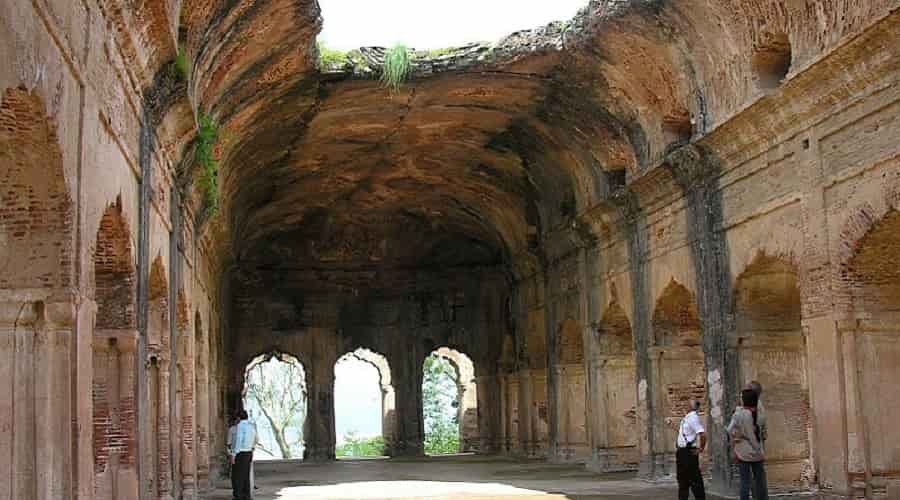
Quick Answer: Sujanpur Fort, known as Sujanpur Tira, was built around 1758 by Raja Abhay Chand of Kangra and later became the cultural home of the Kangra School of miniature painting under Raja Sansar Chand.
| Region | Himachal Pradesh, Kangra district (Sujanpur Tira) |
| Renowned As | Sujanpur Tira |
| Constructed By | Kangra’s King Raja Abhay Chand |
| Constructed In | 1758 |
Sujanpur Fort is located near the border of Kangra district and is famously known by its combined name, Sujanpur Tira. This fortress was constructed by Kangra’s King Raja Abhay Chand around 1758.
During the early 19th century, Sujanpur was home to the renowned Raja Sansar Chand, a famous patron of the Kangra School of miniature painting.
Sujanpur Fort has the Barahdari Hall, once used as a royal court. Visitors today can also see creative wall paintings and a few small shrines around the complex.
As British influence expanded in this area, Lambagraon became a Jagir town of the Kangra family. With the Beas River nearby, the area has graceful natural surroundings and is popular for riverside fishing.
Gondhla Fort — The Eight-Storey Guardian of Lahaul
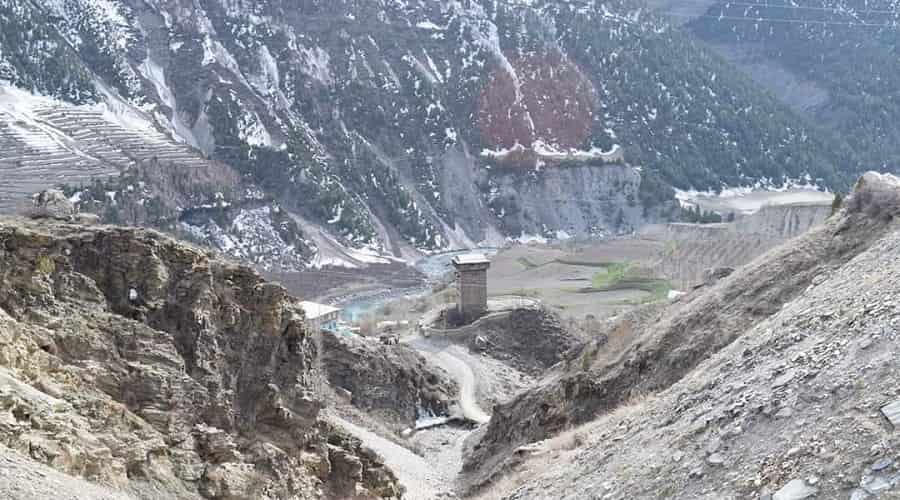
Quick Answer: Gondhla Fort, near Keylong in Lahaul & Spiti, is an eight-storeyed structure built in the late 17th century, once serving as a sub-divisional headquarters overlooking the road below.
| Region | Himachal Pradesh, district Lahaul & Spiti, about 18 km from Keylong |
| Constructed In | Late 17th century |
| Home Of | Gondla’s Thakur |
Gondhla Fort sits about 18 km from Keylong, on the right bank of the Chandra River. It once served as a sub-divisional headquarters, with an eight-storeyed structure that looks like it is guarding the road below.
If you visit during July, you may catch a regional fair where local Lamas dance and perform music — a strong example of living Lahauli culture rather than just historical ruins.
Nearby stands the house of Gondla’s Thakur, built in a construction style found nowhere else in the Lahaul valley. It is well worth combining with your fort visit.
Visitor tip: Gondhla Fort is best combined with a Lahaul & Spiti road trip, ideally between May and September when the high mountain passes are open.
Kuthar Fort — Among the Oldest Forts in the Region
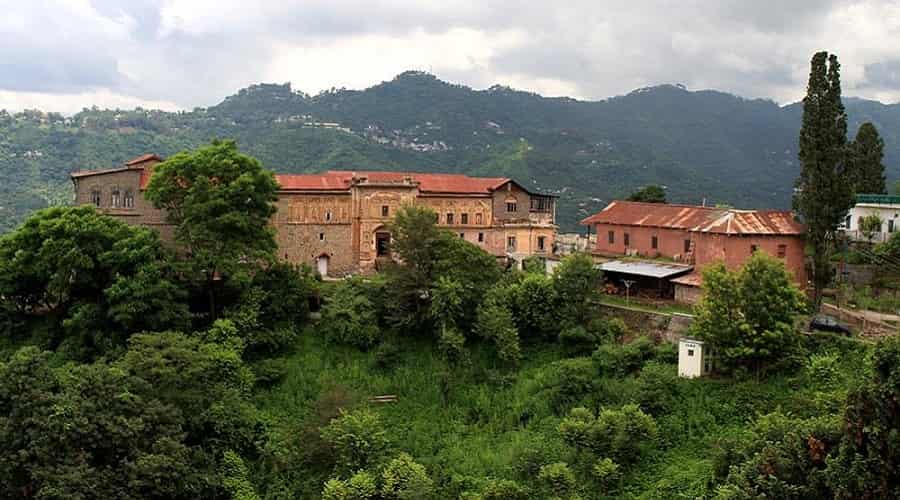
Quick Answer: Kuthar Fort, in Solan district, is one of the oldest forts in the region. Local historical estimates suggest it may be around 800 years old, making it far older than most surrounding structures.
| Region | Himachal Pradesh, district Solan, Kuthar |
| Dates Back | Local historical estimates suggest roughly eight hundred years |
| Nearest Airport | Jubbarhatti Airport, Shimla |
There is very little distance between Subathu and Arki, and within about an hour’s drive from Jubbarhatti Airport in Shimla, you can reach Kuthar Fort.
This is one of the oldest castles in Himachal Pradesh by local estimate, while many nearby structures are only a few decades old. Refreshing natural water springs run through the fort’s surrounding boundaries.
Kuthar Fort sits close to several attractive spots, including Kunihar, the Kasauli hill station, and Subathu’s Gurkha fort, making it easy to explore multiple destinations in one short trip.
Kamru Fort — Sangla Valley’s Sacred Sentinel
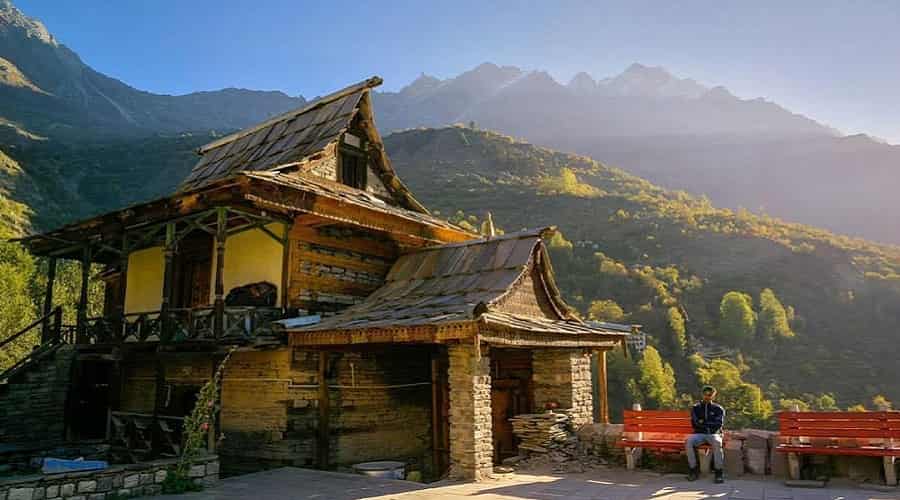
Quick Answer: Kamru Fort sits in Kinnaur district, about 2 km from Sangla Valley, at roughly 2,600 metres altitude. It houses an idol of Kamakhya Devi and the 15th-century Badrinath Temple.
| Region | Himachal Pradesh, Kinnaur district, about two kilometres from Sangla Valley |
| Rich By | Idol of Kamakhya Devi |
| Altitude | Approximately 2,600 metres above sea level |
| Distance from Shimla | Around 229 km |
| Special Characteristics | Lord Buddha’s image over the main gate of the fort |
Kamru Fort sits very close to Sangla, in Kinnaur district — an easily accessible spot, just about two kilometres from the valley. The setting is striking, with wide forests, snow-touched air, and views of the Baspa River.
The Baspa eventually joins the rushing Sutlej River at Karcham, a confluence that adds to the dramatic mountain scenery around the fort.
Deodar forests, snow-capped peaks, and fruit orchards surround Kamru Fort, which sits at around 2,600 metres altitude. If you are combining this with a Shimla trip, the distance between the two points is roughly 229 km.
An image of Lord Buddha greets visitors at the entrance gate. The fort itself rests on a base of dressed rock, with a wooden balcony on its main tower.
According to local tradition, the idol of Kamakhya Devi housed on the third floor of the tower was originally brought from Guwahati in Assam.
Within Kamru Fort also stands the Badrinath Temple, dating to the 15th century, where local communities periodically organise a fair in honour of the deity. During this fair, the goddess’s idol is ceremonially taken toward Gangotri — the source of the Ganga River, located in present-day Uttarakhand.
Visitor tip: Combine Kamru Fort with a Sangla Valley and Kinnaur itinerary — the fort works well as a half-day stop alongside Chitkul and Sangla village.
Nurpur Fort — Renamed for the Love of an Empress
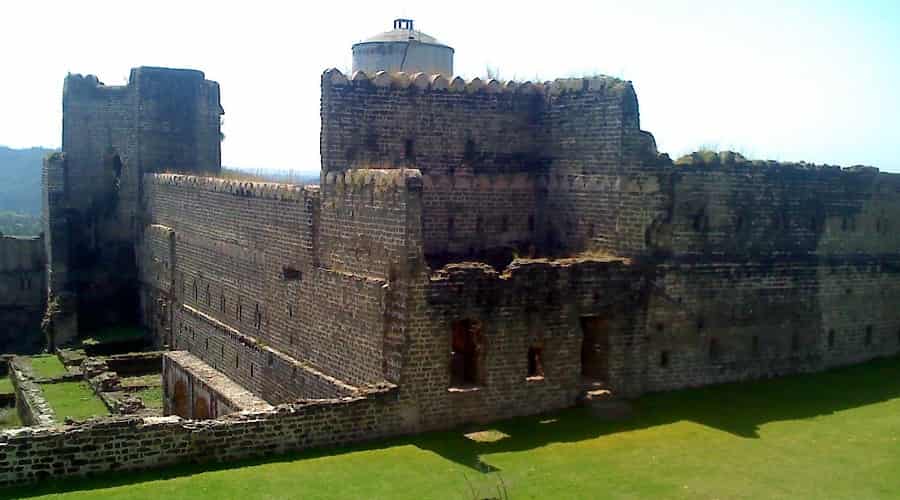
Quick Answer: Nurpur Fort, near Pathankot, was originally founded as Dhameri in the 11th century. It was rebuilt by Raja Basu around 1580–1613 and later renamed in honour of Empress Nur Jahan.
| Region | Himachal Pradesh, district Kangra, about 66 km from Dharamshala |
| Truly Called As | Dhameri |
| Founded By | Raja Jhet Pal, 11th century (c. 1064 AD) |
| Rebuilt By | Raja Basu (Basu Dev), late 16th century (c. 1580–1613) |
| Special Feature | Brij Raj Swami Temple — active shrine of Lord Krishna and Meera Bai |
From Pathankot, this fort is only about 24 km away; from Dharamshala, it’s around 66 km. Popular accounts often credit King Basu with building the fort, but the kingdom and its original structure were founded much earlier.
Historical records point to Raja Jhet Pal, a Tomar Rajput related to the rulers of Delhi, as the 11th-century founder. Raja Basu’s reign — roughly 1580 to 1613 — is when the fort reached its most celebrated, expanded form.
The original name of this fort and kingdom was Dhameri. It was renamed Nurpur in honour of Mughal Emperor Jahangir’s wife, Nur Jahan, who was said to be enchanted by the valley’s beauty during an early 17th-century visit, with most accounts placing the renaming around 1620–1622.
Inside the fort stands the historic Brij Raj Swami Temple, built in the 16th century — one of the few temples in India where idols of Lord Krishna and the saint-poet Meera Bai are worshipped together. The temple remains active for worship today, though parts of the surrounding fort complex were damaged by the British in 1849 and further affected by the 1905 earthquake.
Other Notable Forts and Palaces in Himachal Pradesh
Beyond the seven main forts covered above, Himachal Pradesh has several other historic citadels and royal residences worth knowing about for a fuller picture of the region’s heritage.
- Bushahr Palace (Padam Palace), Rampur Bushahr — former seat of the Bushahr royal family, known for its blend of Tibetan and Kinnauri architectural styles
- Naggar Castle, Kullu Valley — a stone-and-wood castle built by Raja Sidhi Singh in the 16th century, now a heritage hotel run by HPTDC
- Jubbal Palace, Shimla district — a 1930s palace designed by a French architect, blending Chinese, Indian, and European styles
- Mubarak Mandi-style royal residences and smaller Pahari hill forts scattered across Kangra and Mandi districts, many now in ruins but locally significant
These additional sites are not covered in full detail here but are worth adding to a longer Himachal Pradesh heritage trail, especially if you are travelling through Kullu, Rampur, or Jubbal.
Practical Visitor Information for Himachal Pradesh Forts
Planning to see these Himachal Pradesh forts and palaces in person? Here is the practical information you will need — though fees and timings can change, so confirm locally before you travel.
| Fort | Nearest Airport / Station | Entry Fee | Best Time to Visit |
| Kangra Fort | Gaggal Airport, Kangra (~16 km) | Nominal ASI ticket | March–June, Sept–Nov |
| Nurpur Fort | Pathankot Junction (~25–28 km) | Free / nominal | October–March |
| Arki Fort | Jubbarhatti Airport, Shimla (~40 km) | Free (heritage hotel area separate) | March–June, Sept–Nov |
| Sujanpur Fort | Gaggal Airport, Kangra | Free | October–March |
| Gondhla Fort | Bhuntar Airport, Kullu (~120 km) | Free | May–September |
| Kuthar Fort | Jubbarhatti Airport, Shimla (~1 hr) | Free | March–June, Sept–Nov |
| Kamru Fort | Jubbarhatti Airport, Shimla (229 km) | Free | April–October |
Visitor Tips for Exploring Himachal Pradesh Forts
What to Wear and Carry
- Comfortable walking shoes — most forts involve uneven stone steps and steep approaches
- Light layers for higher-altitude forts like Kamru and Gondhla, even in summer
- A basic first-aid kit and water bottle, especially for remote forts in Kinnaur and Lahaul & Spiti
Photography
Most fort exteriors and courtyards allow photography. Some temple interiors, particularly active shrines like the Brij Raj Swami Temple at Nurpur and the Kamakhya Devi sanctum at Kamru, may restrict photography out of respect for ongoing worship — always check with on-site staff first.
Parking and Access
Kangra, Nurpur, Arki, and Sujanpur forts have reasonable road access and basic parking nearby. Kamru and Gondhla forts involve a short uphill walk from the nearest motorable point, so plan extra time.
Nearby Stays and Food
Arki Fort itself offers heritage accommodation. For the other forts, nearby towns such as Kangra, Pathankot, Solan, Sangla, and Keylong have hotels and local eateries within easy reach — most are a 15–40 minute drive from the fort itself.
Best Time to Visit Himachal Pradesh Forts and Palaces
Choosing the right season makes a real difference when exploring Himachal Pradesh forts and palaces, since altitude and weather vary enormously across the state.
March to June and September to November suit most lower-altitude forts, including Kangra, Nurpur, Arki, and Sujanpur, which are accessible year-round though winter mornings can be foggy.
Higher-altitude forts such as Kamru Fort (2,600 m) and Gondhla Fort in Lahaul & Spiti are best visited between April and October, since heavy snowfall can block roads in winter.
Frequently Asked Questions
Here are quick answers to the most common questions travellers ask about Himachal Pradesh forts and palaces.
1. Which is the oldest fort in Himachal Pradesh?
Kangra Fort is widely considered the oldest and largest fort in the Himalayan region, with local tradition and Katoch dynasty records tracing its roots back roughly 3,500 years.
2. How long did the Katoch dynasty rule Kangra Fort?
Historical accounts describe Katoch control over Kangra Fort across many centuries, interrupted at various points by Mughal, Sikh, Gurkha, and British forces — not just a couple of hundred years.
3. What damaged Kangra Fort in 1905?
A severe earthquake on April 4, 1905, badly damaged Kangra Fort and forced the British garrison stationed there to abandon the site.
4. Who built Nurpur Fort?
Nurpur’s kingdom was founded in the 11th century by Raja Jhet Pal. Raja Basu significantly rebuilt and expanded the fort in the late 16th century, around 1580–1613.
5. Why was Nurpur Fort renamed from Dhameri?
The fort and town were renamed Nurpur in honour of Empress Nur Jahan, wife of Mughal Emperor Jahangir, who is said to have admired the valley around 1620.
6. Is the temple inside Nurpur Fort still active?
Yes. The Brij Raj Swami Temple, where Lord Krishna and Meera Bai are worshipped together, remains active for daily worship today.
7. Where is Kamru Fort located?
Kamru Fort sits in Kinnaur district, about two kilometres from Sangla Valley, at an altitude of roughly 2,600 metres.
8. What is special about Kamru Fort?
Kamru Fort houses an idol of Kamakhya Devi, said to have been brought from Guwahati, plus the 15th-century Badrinath Temple and a Lord Buddha image at its gate.
9. Is Arki Fort open for tourists to stay?
Yes. Part of Arki Fort operates as a heritage hotel, letting visitors stay within the historic property and see its Diwankhana and frescoes.
10. When was the Diwankhana of Arki Fort built?
Arki Fort’s celebrated Diwankhana hall was built in 1830 under ruler Rana Shiv Sharan Singh.
11. Who built Sujanpur Fort?
Sujanpur Fort, also called Sujanpur Tira, was built by Kangra’s King Raja Abhay Chand around 1758.
12. How many storeys does Gondhla Fort have?
Gondhla Fort in Lahaul & Spiti has eight storeys and once served as a sub-divisional headquarters.
13. How old is Kuthar Fort?
Local historical estimates suggest Kuthar Fort is around 800 years old, making it one of the oldest forts in the Solan region, though this is a traditional estimate rather than a documented date.
14. Is Kangra Fort protected by the Archaeological Survey of India?
Yes. Kangra Fort is currently maintained and protected by the Archaeological Survey of India (ASI) as a heritage monument.
15. What is the best time to visit Himachal Pradesh forts and palaces?
March to June and September to November suit most forts. Higher-altitude forts like Kamru and Gondhla are best visited between April and October.
16. Which fort is best for photography?
Kangra Fort and Kamru Fort are among the most photogenic, thanks to their dramatic river-confluence and mountain-valley settings respectively.
17. Can foreign tourists visit these forts?
Yes. Foreign tourists can visit all the forts covered here; ASI-protected sites like Kangra Fort may have separate ticket counters for foreign nationals.
18. Is parking available at these forts?
Basic parking is available near Kangra, Nurpur, Arki, and Sujanpur forts. Kamru and Gondhla require a short walk from the nearest parking point.
19. Which fort is most family-friendly?
Arki Fort is the most family-friendly option, thanks to its heritage hotel facilities, gardens, and relatively easy access compared to higher-altitude forts.
20. How many forts are there in Himachal Pradesh in total?
Himachal Pradesh has dozens of forts and fortified palaces across its districts; this guide covers the seven most historically significant, plus several other notable ones worth exploring.
Conclusion
Among heritage destinations in North India, Himachal Pradesh forts and palaces stand out for combining dramatic mountain settings with centuries of layered royal history.
These structures are far more than scenic backdrops. From the ASI-protected ramparts of Kangra Fort to the sacred halls of Kamru Fort high in the Kinnaur hills, each one carries its own story of dynasties, sieges, devotion, and resilience.
Whether you are tracing the footsteps of the Katoch and Pathania dynasties, or simply seeking a heritage stay at Arki’s restored palace, these Himachal hill forts offer a side of the state that goes far beyond its famous hill stations. Plan around the right season, respect each site’s conservation status, and let these royal monuments add real depth to your Himachal Pradesh itinerary.