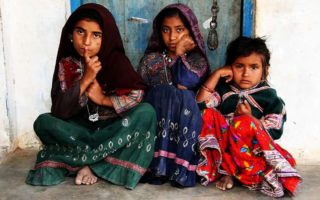
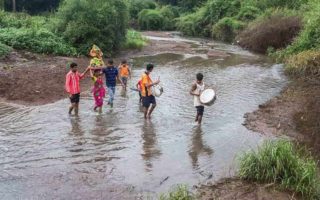
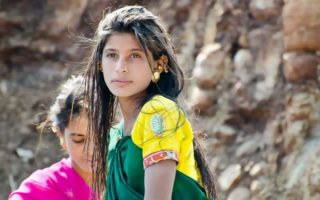
Gujarat’s tribal and pastoral communities tell stories that most visitors to the state never hear. The Charan — hereditary bards and genealogists whose literary tradition shaped Rajasthani and Gujarati culture for over a thousand years, and whose women became the goddesses worshipped across western India — and the Maldhari — semi-nomadic cattle herders who have lived inside the Gir Forest for over 125 years, alongside the world’s last wild Asiatic lions — are two of Gujarat’s most historically significant communities.
Both Charan and Maldhari tribes of Gujarat carry cultural legacies that go far beyond their traditional occupations. This guide covers both communities with verified facts: their origins, Scheduled Tribe classification, cultural practices, goddess traditions, and what a responsible visit to Maldhari communities in Gir Forest looks like today.

Charan and Maldhari Tribes of Gujarat: At a Glance
| Feature | Charan Tribe | Maldhari Community |
|---|---|---|
| Primary Identity | Hereditary bards, poets, genealogists, warriors | Semi-nomadic pastoral cattle herders (occupational group, not a single caste) |
| States | Rajasthan, Gujarat (primary); also Sindh and Balochistan, Pakistan | Gujarat (Gir Forest, Banni Grasslands of Kutch); parts of Rajasthan |
| ST Classification | ST only in Alech, Barda and Gir forest zones (notified Oct 1956); NOT universally ST | Not a single ST; constituent castes (Bharvad, Rabari) may have separate ST status |
| Language | Gujarati (daily); Dingal dialect (bardic literary tradition — also called Charani sahitya) | Gujarati; Kutchi; ‘Bhopa’ (Gujarati-Kachchi-Marwari mix in Kutch) |
| Religion | Predominantly Hindu; strong Shakti goddess tradition | ~90% Muslim; ~10% Hindu (Meghwal and Vadha Koli sub-groups in Gir) |
| Main Gujarat Location | All districts; dense in Kutch (Kachhela) and Saurashtra (Sorathia) | Gir Forest (Junagadh/Gir Somnath); Banni Grasslands (Kutch) |
| Livelihood (historical) | Bardic poetry, genealogy, cattle/horse breeding, military service | Cattle, buffalo, camel, sheep herding; dairy production; seasonal migration |
| Also Known As | Gadhvi (in forest zones); Kaviraj (poets); Deviputra (sons of goddesses) | Keeper of animal stock; Maal=livestock + Dhari=keeper (Gujarati) |
The Charan Tribe of Gujarat: History and Culture
Who Are the Charans?
The Charan (also Caran or Charana) are a Hindu community historically resident in Rajasthan and Gujarat, with smaller populations in Sindh and Balochistan, Pakistan. They are most widely known as hereditary bards and genealogists — the community that composed and preserved oral history, genealogical records, and literary culture for Rajput rulers across western India.
Members of the Charan caste occupied an unusual social position in medieval India: they were considered quasi-divine, inviolable, and their sworn testimony was treated as binding in oaths and treaties between rulers. This cultural reverence gave them significant social and economic leverage in the feudal structures of Rajputana and Saurashtra. They were also known to kings by the honorific ‘Kaviraj’ — king among poets.
Scheduled Tribe Status: The Important Distinction
The most frequently misrepresented fact about Charans is their Scheduled Tribe status. The correct position per the Ministry of Tribal Affairs official list:
- Charans are notified as Scheduled Tribe ONLY in the Nesses of the forests of Alech, Barda and Gir (notified October 1956).
- ST population in these specific zones: 2,481 (2001 Census, TRTI Gujarat) — 1,299 males and 1,182 females.
- Outside these specific forest zones, Charans are NOT Scheduled Tribe. In most of Rajasthan and broader Gujarat, Charans belong to the upper-caste/OBC category.
- In July 2020, the Gujarat government established a five-member commission to verify ST eligibility among Charans, Rabaris, and Bharvads in nesses — reflecting ongoing administrative disputes.
History: Bards, Warriors, and Administrators
Rajasthani and Gujarati literature from the early and medieval period up to the 19th century was composed predominantly by Charans. Their literary tradition — known as Charani sahitya — uses a specialized dialect called Dingal for bardic poetry. This is distinct from their everyday spoken Gujarati.
Charans played multiple simultaneous roles: court poets composing verse about rulers’ valor; genealogists maintaining royal family records; diplomatic mediators whose arbitration carried binding authority; and warriors who fought alongside Rajput patrons. In the Battle of Haldighati (1576), multiple Charans fought for Mewar against Mughal forces. In the 19th century, Charan lineages occupied senior bureaucratic positions in several Rajputana and Saurashtra princely states.
The Kachhela Charan sub-group from Kutch and Sindh specialized in horse breeding and trading. By the 18th century, this sub-group controlled much of the horse trade in the Bikaner kingdom, with their Mallani breed (from Barmer, Rajasthan) sought across the region. Charans also served as caravan escorts and border-crossing guides due to their perceived inviolable status.
The Charan Goddess Tradition
The Charan community’s most enduring cultural contribution may be the goddess tradition it has generated. Multiple Hindu goddesses widely worshipped across Rajasthan and Gujarat are believed to be Charan women who attained divine status:
- Khodiyar Mata — Born to Mamaniya Gadhvi (Charan) in the 7th–8th century CE near Bhavnagar; rides a crocodile as her vehicle; one of the most widely worshipped goddesses in Gujarat; kuldevi (clan deity) of the Gohil Rajputs and many Patel communities
- Karni Mata (Deshnoke, Rajasthan) — Patron saint of the Charan community; her famous temple is known for the sacred rats believed to be reincarnated devotees
- Bahuchara Mata (Bechraji, Mehsana) — Daughter of Charan Bapal Dan Detha; widely venerated in Gujarat; significant patroness of the hijra community
- Avad Mata (Tanot, Jaisalmer) — Patron of Jaisalmer and the Tanot border area; her temple survived Pakistan’s 1965 and 1971 bombings without damage
- Hinglaj Mata (Balochistan) — Revered by both Hindus and some Muslims; considered a Shakti Peeth; high religious significance for both communities in Pakistan’s Balochistan
This tradition of Charan women being deified as protective mother goddesses gave the community a quasi-divine status in medieval western India. Women of the Charan caste were — and in many areas still are — treated with the reverence extended to divine figures. The community’s term for itself, Deviputra (sons of goddesses), reflects this self-identity.
Charan Literary Heritage: Dingal and Charani Sahitya
Encyclopaedia Britannica describes Dingal as a specialized western Rajasthani dialect used exclusively by Charans for composing bardic poetry — ‘not used for any other purpose.’ Charani sahitya (Charan literature) encompasses thirteen recognized sub-genres, as classified by the Gujarati writer Zaverchand Meghani, covering heroic poetry, elegies, devotional verse, erotic poetry, and philosophical poetry.
Modern Rajasthani literature is widely considered to have begun with the works of Suryamal Misran, a Charan. The literary records maintained by Charan genealogists at three institutional locations — with the Raav genealogists, at the Pandaas of Haridwar, and with the kulguru at Ujjain — span 1,800 years of documented family history.
Charans Today
Most Charans today work in government service, agriculture, business, and professional roles. The bardic function has largely diminished since royal patronage ended with the abolition of privy purses in 1971. Some families maintain the genealogical records tradition. The Charan literary tradition continues through cultural organizations preserving Dingal poetry and Charani sahitya.
The Maldhari Tribe of Gir Forest: Gujarat’s Forest Cattle Herders
Who Are the Maldharis?
Maldhari is an occupational term, not a single caste. It comes from Gujarati: Maal (livestock) and Dhari (keeper), meaning ‘keeper of animal stock.’ It refers to several pastoral communities — Bharvad, Rabari, Ahir, and Charan — united by their shared semi-nomadic herding lifestyle across Gujarat’s forests and grasslands.
The Gir Forest Maldharis and the Banni Grassland Maldharis of Kutch are the two primary groups, with distinct cultural compositions. In Gir, Maldharis have been present for over 125 years, making them among the oldest established residents of the forest.
Key Facts: Maldharis in Gir Forest
| Detail | Information |
|---|---|
| Location | Gir Forest National Park and Wildlife Sanctuary, Junagadh / Gir Somnath district, Gujarat |
| Nesses (settlements) | 24 in Gir East (Wildlife Sanctuary); 30 in Gir West (Wildlife Sanctuary). No Maldhari settlements in the core National Park zone. |
| Population in Gir nesses | ~4,000 people with ~19,000 livestock |
| Gir National Park (2007) | ~8,400 Maldharis before relocation program; no Maldhari settlements remain in core NP zone |
| Duration in Gir | 125+ years; pre-dates the formal protected area |
| Settlement type | Mud-walled, thatched-roof homes; no electricity, running water, or schools in most nesses |
| Religion in Gir | Mixed Hindu and Muslim communities; specific composition varies by ness |
| Livestock | Primarily Gir cows and Banni buffaloes; also sheep, goats, camels, horses |
| Primary livelihood | Cattle herding, dairy production; historically supplied milk and cheese to local rulers |
| Relocation history | Gir Lion Project (1972): 592 of 845 families relocated before program stalled; Maldharis remain only in the Sanctuary zone, not core NP |
Maldharis in Banni Grasslands, Kutch
The Banni Grasslands of Kutch host a distinct Maldhari population, predominantly Muslim, spread across 48 hamlets in 19 Panchayats. The total Maldhari population across Gujarat is estimated at approximately 25,000, of which roughly 90% are Muslim and 10% Hindu.
Kutch Maldharis primarily raise Banni buffaloes, Kankrej cattle, horses, camels, sheep, and goats. They migrate seasonally in search of fodder and water. Women play a central role in livestock rearing, while men handle trading, milk sales to dairies, and grazing route selection.
Maldhari Lifestyle Inside Gir
Gir nesses are small settlements of mud houses inside the forest, with minimal infrastructure. Children often begin herding duties at a young age. The community’s generational knowledge of the forest ecosystem has made them among the most knowledgeable guides to Gir’s ecology.
The Maldhari relationship with the Asiatic lion is one of conservation biology’s most remarkable stories. Lions share the same forest and regularly prey on Maldhari cattle. Traditionally, a lion-killed cow is considered ‘prasad’ by many Maldharis — an offering from the forest in exchange for the right to live there. This attitude of acceptance, rather than retaliation, contributed significantly to the coexistence that underpins Gir’s conservation success.
Maldhari Ornaments and Craft
Maldhari women are recognized for distinctive jewelry and embroidery that serve as caste identity markers:
- Ivory bracelets — heavy, hourglass-shaped; many now use plastic replicas for daily wear, storing the originals in vegetable oil to prevent cracking
- Silver ear ornaments — large and heavy; Maldhari women’s ears are often stretched with multiple pieces from childhood
- Silver milking-hand rings — as milk drips over the ring during milking, it is considered an offering to the divine, replacing formal temple worship
- Embroidery — patterns vary by caste and are passed down through generations; some women earn income selling embroidery through handicraft cooperatives
Maldhari Festivals and Religious Practices
- Muslim Maldharis celebrate Eid-ul-Fitr, Eid-ul-Adha (Bakrid), and observe Ramzan; some communities revere Sufi saints at dargahs across Saurashtra
- Hindu Maldharis celebrate Hindu festivals including Janmashtami — in some communities, weddings are held only on Janmashtami (monsoon rains bring fresh grass near the village)
- The Bharvad sub-group (Hindu Maldhari) holds annual melas at sacred sites in Saurashtra
Maldhari and Conservation: A Complex Relationship
The Maldhari presence in Gir is one of India’s most studied conservation debates. Their 19,000 cattle compete with wild ungulates that form the Asiatic lion’s primary prey base. The Gir Lion Project (1972) offered voluntary relocation to Maldhari families outside the core park zone, with land, housing, and compensation. Of 845 original families, 592 were relocated before the program stalled due to resource shortfalls.
The Maldharis who remain in the Sanctuary (not the core National Park) continue their lifestyle. Their expertise in lion behaviour and forest ecology has made them valuable partners for wildlife tourism and conservation research. Several operators use Maldhari guides specifically for this knowledge.
How to Visit Maldhari Communities in Gir (Responsible Tourism)
| Detail | Information |
|---|---|
| Location | Sasan Gir, Junagadh district, Gujarat |
| How to reach Sasan Gir | By train: Sasan Gir station (Junagadh–Veraval line); By road: ~65 km from Junagadh, ~100 km from Veraval |
| Nearest airport | Keshod Airport (~45 km); Rajkot Airport (~165 km) |
| Best time to visit | October to June (park partially closed July–September monsoon); best wildlife and culture: December–March |
| Jeep safaris | Safaris in Gir Wildlife Sanctuary (not core NP) pass near some Maldhari nesses on select routes |
| Responsible tourism | Nesses are private settlements; enter only with a licensed guide and forest department permission; photograph residents only with explicit consent |
| Cultural experience | Some eco-tourism initiatives offer guided ness visits with community participation and direct financial benefit to families; ask your operator |
FAQs
Q1. What is the Charan tribe known for in Gujarat?
Charans are hereditary bards, poets, genealogists, and historians who shaped Rajasthani and Gujarati literary culture for over a thousand years. They composed Charani sahitya in the Dingal dialect, served as court historians for Rajput rulers, and their women became goddesses (Khodiyar Mata, Karni Mata, Bahuchara Mata) worshipped across western India.
Q2. Are Charans a Scheduled Tribe in Gujarat?
Only in specific zones. Charans are notified as ST only in the Nesses of the forests of Alech, Barda and Gir (notified October 1956). ST population: 2,481 per 2001 Census (TRTI Gujarat). Outside these zones, Charans are not ST. A Gujarat government commission was set up in July 2020 to verify eligibility among Charans in nesses.
Q3. What does ‘Maldhari’ mean?
Maldhari comes from Gujarati: Maal (livestock) + Dhari (keeper) = ‘keeper of animal stock.’ It is an occupational term, not a single caste. It refers to several pastoral communities — Bharvad, Rabari, Ahir, and Charan — who share a herding lifestyle in Gujarat’s forests and grasslands.
Q4. Where do the Maldhari tribes live in Gujarat?
Maldharis live primarily in Gir Forest (Junagadh district; 54 nesses — 24 in Gir East, 30 in Gir West, with ~4,000 people and ~19,000 livestock) and Banni Grasslands of Kutch (48 hamlets, 19 Panchayats). Total Gujarat Maldhari population: ~25,000 (90% Muslim, 10% Hindu).
Q5. What is a ‘ness’ in the Maldhari context?
A ness is a small Maldhari settlement inside the Gir Forest — mud-walled, thatched-roof homes with no electricity, running water, or schools in most cases. There are 54 active nesses in the Gir Wildlife Sanctuary (not inside the core National Park, from which Maldharis were relocated).
Q6. How do Maldharis coexist with Asiatic lions in Gir?
When a lion kills Maldhari cattle, many in the community traditionally consider it ‘prasad’ — an offering in exchange for the right to live in the lion’s forest — rather than cause for retaliation. This cultural acceptance of loss has been central to the conservation success at Gir, one of conservation biology’s most studied human-wildlife coexistence examples.
Q7. What religion do the Maldhari follow?
Approximately 90% of Maldharis (particularly in Kutch) are Muslim and 10% are Hindu. Gir Forest Maldharis include both. Muslim Maldharis celebrate Eid-ul-Fitr and Eid-ul-Adha; Hindu Maldharis celebrate Janmashtami and Hindu festivals. Religious practices vary by sub-group.
Q8. What is the Charan goddess tradition?
Charan women are venerated as mother goddesses across Rajasthan and Gujarat. Major goddesses of Charan origin include: Khodiyar Mata (rides a crocodile; kuldevi of Gohil Rajputs), Karni Mata (Deshnoke, Rajasthan), Bahuchara Mata (Bechraji, Gujarat), Avad Mata (Jaisalmer), and Hinglaj Mata (Balochistan). This tradition gave the Charan community its quasi-divine social status.
Q9. What language do Charans speak?
Charans speak Gujarati as their everyday language. Their bardic literary tradition uses Dingal — a specialized western Rajasthani dialect used exclusively for Charan poetry (Charani sahitya) and not for general conversation (Britannica describes it as ‘not used for any other purpose’).
Q10. Are Charans and Maldharis the same?
No. Charans are a specific Hindu caste of hereditary bards. Maldhari is an occupational term covering multiple pastoral castes including Bharvad, Rabari, Ahir, and Charan. Some Charans in the Gir Forest area may also be Maldharis by occupation, but they are entirely distinct communities.
Q11. Why were Maldharis relocated from Gir National Park?
The Gir Lion Project (1972) relocated Maldharis from the core National Park zone because their 19,000 cattle competed with wild ungulates for food and space, affecting lion prey availability. Of 845 original families, 592 were relocated before the program stalled. Maldharis now remain only in the Sanctuary zone, not the core National Park.
Q12. What handicrafts are Maldhari women known for?
Maldhari women are skilled embroiderers with patterns varying by caste and passed down through generations. They are also known for ivory bracelets (many now use plastic replicas daily) and silver ear and hand ornaments. Some earn income selling embroidery through handicraft cooperatives.
Q13. What is Dingal or Charani sahitya?
Dingal is a specialized western Rajasthani literary dialect used exclusively by Charans for composing bardic poetry. The broader tradition is called Charani sahitya — classified into thirteen sub-genres including heroic poetry, elegies, and devotional verse. The majority of early and medieval Rajasthani and Gujarati literary works were composed in this tradition.
Q14. Can tourists visit Maldhari nesses in Gir?
Some wildlife safari routes in the Gir Wildlife Sanctuary pass near nesses. Responsible visits require a licensed guide and forest department permission. Photography of Maldhari residents should only be done with their explicit consent. Some eco-tourism operators offer community-supported ness visits with direct financial benefit to families.
Q15. What is the total Maldhari population in Gujarat?
Approximately 25,000 across Gujarat: ~90% Muslim, ~10% Hindu. In Gir Forest: ~4,000 people in 54 nesses with ~19,000 livestock. In Gir National Park (2007 figure before further relocations): ~8,400.
Conclusion
The Charan and Maldhari tribes of Gujarat represent two of the most historically and ecologically significant communities in western India. The Charan community’s thousand-year literary tradition — Charani sahitya in Dingal dialect — shaped the cultural identity of Rajputana and Saurashtra, and its women became the mother goddesses of Gujarat and Rajasthan. The Maldhari’s 125-year presence inside Gir Forest has become inseparable from the story of Asiatic lion conservation, demonstrating that human-wildlife coexistence is possible when cultural values align with ecological reality.
For anyone visiting Gujarat, understanding these communities — through Gir Forest safaris that pass near Maldhari nesses, or through the goddess temples of Khodiyar Mata and Karni Mata that trace directly to Charan heritage — adds a layer of cultural depth that most tourist itineraries entirely miss. These are not historical artifacts but living communities whose traditions continue to shape Gujarat’s landscape, ecology, and spiritual life.
- Also Reads: Popular Scheduled Tribes in Gujarat