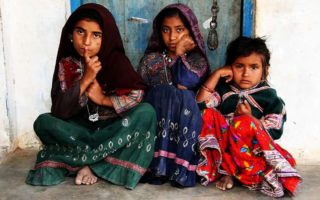
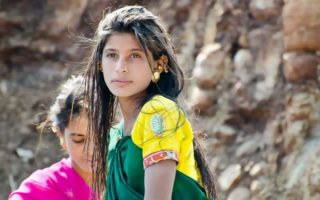
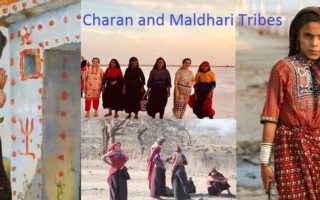
The Jath tribes of Gujarat are among the most culturally distinctive communities of western India. Known by various spellings — Jat, Jath, Jath — they have lived for centuries across the Banni grasslands and rugged terrain of Kutch, carrying their heritage in embroidered garments, folk music, and a way of life shaped by pastoral traditions.
Whether you are a traveller, a researcher, or a cultural enthusiast, learning about the Jath tribe opens a window into a living tradition that blends Islamic faith, Sindhi roots, and indigenous Gujarati identity.
At a Glance
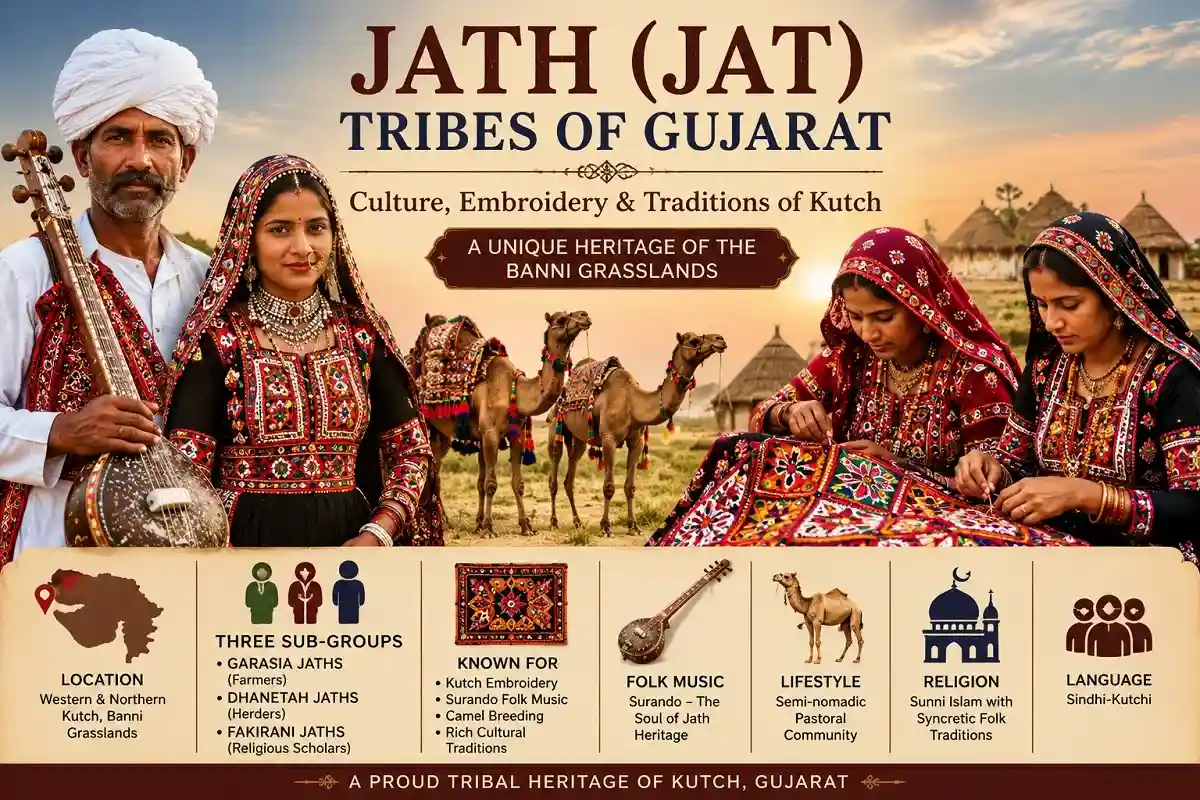
- Location: Western and Northern Kutch, Banni Grasslands, Gujarat
- Sub-groups: Garasia Jaths (farmers) · Dhanetah Jaths (herders) · Fakirani Jaths (religious scholars)
- Religion: Sunni Islam, with syncretic folk traditions, Hindu
- Language: Sindhi-Kutchi
- Popular Festivals: Eid ul-Fitr, Bakrid (Eid ul-Adha), Ramzan, Mai Bhambi Mela (Garasia Jaths)
- Known For: Kutch embroidery (abho, odhni), Surando folk music, camel breeding, semi-nomadic lifestyle
- Scheduled Tribe Status: The Jath/Jat community does not appear in the official Scheduled Tribes list for Gujarat under the Constitution (Scheduled Tribes) Order, 1950 and its amendments
- Primary Sources: People of India – Gujarat Vol. XXI (Anthropological Survey of India); Shrujan Trust, Kutch
History and Origin of the Jath Tribes
According to community oral traditions and several ethnographic records, the Jath (or Jat) community traces its origins to ancient pastoral tribes of the Indus delta region in Sindh. Some oral histories also mention migration through an area called ‘Half’, believed to be located in the Iranian plateau region, though this specific geographic claim is not uniformly agreed upon across all academic sources.
What is broadly documented is that several centuries ago — oral traditions often cite around the 16th to 17th century — the Jaths migrated eastward in search of new grazing lands, eventually settling across the regions of Sindh and Kutch.
After crossing the Rann of Kutch and settling in the Banni region, the community divided into three groups based on the livelihood each chose:
- Those who took up farming called themselves Garasia Jaths.
- Those who continued as cattle herders became the Dhanetah Jaths.
- Those who devoted themselves to studying the Quran became the Fakirani Jaths.
Some members of the Jath community remain in Sindh (now Pakistan) and are referred to as Sindhi Jats or Balochi Jats. After Partition in 1947, the Kutchi Jaths lost direct contact with their kinsmen across the border — a historical wound that still shapes their sense of identity.
Anthropologically, the Kutchi Jat are documented in People of India – Gujarat, Volume XXI (Anthropological Survey of India), pages 528–533, which remains one of the most cited academic references for this community.
Three Sub-Groups of the Jath Tribe in Kutch

1. Garasia Jaths
The Garasia Jaths are the farming sub-group. After settling in Kutch, they transitioned from nomadic herding to agriculture. Their embroidery style is particularly striking — characterised by heavily embroidered yokes (gagos) on their long red frocks (abho). According to researchers associated with the Shrujan Trust, Garasia Jath women have been stitching the same red frock design for around 600 years, believing it replicates the garment worn by their revered saint, Mai Bhambi. Selling this embroidery has traditionally been considered inappropriate, as it is seen as part of their spiritual identity.
2. Dhanetah Jaths
The Dhanetah Jaths are the largest sub-group. They continued the ancestral tradition of cattle herding and live throughout north-western Kutch, primarily across the Banni grasslands. Women manage the household and sustain the embroidery tradition, while men tend to the cattle.
The Dhanetah Jaths of Chaari Lake village are particularly celebrated for their fine patchwork embroidery.
3. Fakirani Jaths
The Fakirani Jaths chose a path of religious devotion and Quranic study. Traditionally, they occupy a distinct social position within the Jath community and generally practice endogamy — marrying within their own group. The Fakirani Jaths are also closely associated with camel breeding and with the Surando folk instrument.
Where do Jath Tribes live in Gujarat?
Most Jath communities are found in the Banni grasslands of northern Kutch, Gujarat. Key locations include Chaari Lake village (Dhanetah Jaths), Sumrasar (Garasia Jaths, site of the Mai Bhambi monument), and the Koteshwar-Lakhpat area (Fakirani Jaths). Jath communities also exist in Saurashtra (Halai Jat) and Banaskantha (Verai Jat).
Traditional Dress and Appearance of the Jath Tribe
Traditional Jath dress is one of the most visually striking aspects of their identity. Jath men generally wear black garments, and those tracing descent from the Pakistan-Sindh branch of the community are particularly identified by this.
Jath women wear the abho — a long embroidered dress — along with an odhni (head shawl). Young Jath girls are recognised by their distinctive plaits curving along the sides of their faces, and by the heavy, large gold or brass nose ring (nathli), which is both an ornament and a social identifier.
For the Garasia Jaths specifically, the red frock (abho) with its elaborately embroidered yoke carries deep spiritual meaning. Garacia Jat women also wear only red or black chunis (dupattas) as part of their traditional dress code.
Jath Embroidery – A Living Craft of Kutch
What is Jath embroidery known for?
Jath embroidery is one of the finest traditional embroidery styles of Kutch — celebrated for its jewel-like precision, tiny mirror (abhla) work, and devotional significance. Along with the embroidery of Sindh and the Phulkari of Punjab, Jath needlework is counted among the classical regional embroidery traditions of the Indian subcontinent.
Within the Jath community, each sub-group maintains a distinct embroidery style:
- Garasia Jath women heavily embroider the yokes of their abho dresses using counted cross-stitch with tiny mirrors. This sacred embroidery tradition, linked to their saint Mai Bamba, has been passed down for around six centuries.
- Dhanetah and Fakirani Jaths share a tradition of tiny bars of tight padded satin stitch combined with radiating circles of couched stitch.
- The Dhanetah Jaths of Chaari Lake village are particularly renowned for their outstanding patchwork designs.
Two major embroidery traditions exist in the Banni region of Kutch: the Lohanas of Khavada tradition, and the Jath and Mutwa tradition. Both carry strong influences of Sindh and Balochistan in their motifs and stitches, but have evolved into distinctly Kutchi styles over the centuries.
The Textile Museum of Canada holds examples of Jath embroidered dresses (abho) and wedding shawls (odhni) from the mid-nineteenth century, indicating the international recognition of this craft heritage.
The Garasia Jaths hold a unique belief: when an embroidered garment wears out, it is hung on a tree or washed away in a stream — never burnt or casually discarded. The elaborately embroidered yoke is considered sacred and is traditionally not sold.
Surando – The Folk Music of the Jath Community
Music is inseparable from Jath identity. The Surando is an ancient stringed folk instrument from Kutch, especially associated with the Fakirani Jat community. It is played with a bow (locally called Gaz or Gazi) strung with horsehair, and produces deeply resonant, soulful melodies.
The body of the Surando is crafted from lahiro wood, which gives it exceptional acoustic quality. The instrument is closely related to the Sarinda played in North India and Sindh, Pakistan — reflecting the Jath community’s cross-border cultural roots.
The Government of India’s Department of Posts has issued commemorative postage stamps on musical instruments of wandering minstrels, featuring the Surando among them. Osman Jat is widely recognised as one of the most renowned Surando musicians of recent generations.
Alongside the Surando, the Ghado (a clay pot used as a percussion instrument) is traditionally played as accompaniment. The Jaths sing folk songs in Sindhi-Kutchi, blending the musical traditions of two regions.
Religion, Beliefs and Spiritual Life
What religion do the Jath tribes follow?
Most Kutchi Jaths follow Sunni Islam. They celebrate Eid ul-Fitr, Bakrid (Eid ul-Adha), and observe the month of Ramzan. They also maintain folk spiritual traditions alongside Islamic practice, including reverence for local saints and elements of Shakti Puja — a characteristic of many Muslim pastoral communities across the Gujarat-Sindh-Balochistan cultural corridor, as documented in ethnographic studies.
Specific spiritual beliefs by sub-group:
- Fakirani Jaths revere Savla Pir — a spiritual figure also venerated by Muslim and Hindu nomads of western Kutch. The tomb of Savla Pir stands on a mud island in a creek near Koteshwar, Lakhpat.
- Garasia Jaths revere Mai Bhambi, a woman saint whose monument stands at Sumrasar. An annual mela (fair) is held there, drawing devotees from across the region.
The Jaths follow the custom of Bismillah and hold their Pirs (spiritual guides) in high reverence. They also contribute offerings to the tomb of a revered Jath woman saint referred to as ‘Mai’. Jaths do not observe Tazias during Muharram.
Economy and Livelihood of the Jath Community
The Jath community’s traditional economy has always revolved around livestock and pastoral activities. Each sub-group has a slightly different economic focus:
- Dhanetah Jaths are cattle herders and are the largest Jath sub-group. They live in the Banni grasslands with their cattle.
- Fakirani Jaths are particularly known for camel breeding. Their camels are considered among the finest in Kutch.
- Garasia Jaths transitioned to small-scale farming. A section of the Saurashtra Jat community also works as agricultural labourers.
Embroidery has also become an important economic activity — especially after the 2001 Gujarat earthquake, which displaced many communities and prompted a shift toward craft-based income. Organisations like the Shrujan Trust and Kala Raksha Trust have worked to connect Jath artisans to national and international markets, helping preserve both the craft and the community’s livelihood.
Traditional Cuisine and Food Customs
Jath food customs are shaped by their Islamic faith and pastoral way of life. Key food traditions include:
- Wedding feasts: Rice, ghee (gheo), mutton, wheat rotla, and vegetables — traditional staples of any Jath wedding meal.
- Ramzan specials: Biryani, Sheer Khurma (milk-based vermicelli dessert), Suji Seera (semolina sweet), and sweet rice are popular during Eid celebrations.
- Ramzan charity: During the month of Ramzan, Jaths observe a strong tradition of giving food to the poor.
The Jaths follow the custom of Bismillah before meals and adhere to halal dietary practices in keeping with Sunni Islamic tradition.
Women in the Jath Community
Women hold a central role in Jath cultural life. They are the primary keepers of the embroidery tradition — a skill that carries both economic and spiritual significance.
According to researchers at Shrujan Trust, Jath women have an equal say in the structural functioning of the household. The community is described as internally harmonious, with women playing an active role in decisions around craft production, family life, and community events.
The abho (embroidered dress) that Jath women stitch is not merely clothing — it is considered an extension of their identity and spiritual devotion, particularly among the Garasia Jaths who stitch the dress they believe replicates the garment of Mai Bhambi.
Marriage Customs and Social Structure
Jath society organises itself through clan-based divisions. The Fakirani Jaths traditionally practice endogamy — marriage within their own group.
Marriage ceremonies broadly follow Sunni Islamic customs. The customs of Bismillah and reverence for Pirs are observed. Traditional wedding foods are prepared, and the community’s dowry customs are similar to those of other Muslim pastoral groups in the region.
The Jaths who maintain social links with Jath Thakur (noble) families follow additional customs around kinship and marriage alliances.
Where to Find Jath Tribe Communities in Gujarat
The primary habitat of the Jath tribe is the Banni grasslands of northern Kutch, Gujarat. Key areas include:
- Banni grasslands — the heartland of Dhanetah and Fakirani Jaths.
- Chaari Lake village — famous for Dhanetah Jath patchwork embroidery.
- Sumrasar — site of the Mai Bhambi monument; annual fair held here.
- Koteshwar / Lakhpat area — location of the Savla Pir tomb, sacred to Fakirani Jaths.
Beyond Kutch, Jath communities also exist in Saurashtra (Halai Jat, in Jamnagar and Porbandar) and Banaskantha District (Verai Jat).
How to Visit Jath Communities Responsibly
Travellers visiting Kutch have increasingly sought authentic cultural experiences with the Jath community. A few points to keep in mind:
- The best time to visit Kutch and Banni grasslands is October to March, during the cooler months.
- The Rann Utsav festival (November–February) is an excellent entry point, with craft exhibitions featuring Jath artisans.
- Purchasing directly from Jath artisans or through certified NGO platforms (Shrujan Trust, Kala Raksha) ensures fair income reaches the community.
- Always seek permission before photographing community members, particularly women.
- Organised tribal village tours and cultural excursions from Bhuj are available through local tourism operators.
Related tribes you can explore in the Kutch-Banni region include the Mutwa, Rabari, Bharwad, and Harijan communities — each with distinct embroidery and craft traditions.
Conservation and Government Initiatives
Several organisations work to preserve Jath craft and cultural heritage:
- Shrujan Trust (Bhuj): Engaged with Kutch’s tribal embroidery communities for over 50 years, helping sustain craft traditions and provide artisan income.
- Kala Raksha Trust: Documents and supports the embroidery traditions of Kutch, including the Jath community.
- Gujarat Tourism: Promotes Banni grassland visits and Kutch tribal craft as part of the state’s cultural tourism portfolio.
- National Handicrafts Development Programme: Supports traditional craft artisans across India, including those in Kutch.
Despite these efforts, the Surando instrument and the highly skilled embroidery work of older Jath women remain under genuine threat from modernisation and economic pressures.
Challenges Facing the Jath Tribe Today
- Loss of grazing lands due to encroachment, infrastructure projects, and environmental change in the Banni grasslands.
- Economic pressures pulling younger generations toward urban work and away from traditional craft and herding.
- Decline of embroidery skills, with newer generations less engaged in the time-intensive traditional craft.
- Near-extinction of the Surando folk instrument.
- Cultural disconnection from Sindhi kinsmen after the Partition of 1947.
Conclusion
The Jath tribes of Gujarat represent one of India’s most compelling examples of cultural resilience. From their pastoral origins in the Indus-Sindh region to their present-day settlements in the Banni grasslands of Kutch, the Jath people have preserved a distinctive identity — weaving it into every stitch of their embroidered abho, every note of the Surando, and every sacred custom passed down through generations.
For travellers and cultural enthusiasts, a visit to the Jath communities of Kutch is far more than a tourist experience — it is an encounter with a living tradition that deserves both attention and support. Their craft, music, and spiritual life are not relics of the past. They are stories still being written, one thread at a time.
Frequently Asked Questions
Q: Who are the Jath tribes of Gujarat?+
A: The Jath (or Jat) tribes are a pastoral Muslim community settled primarily in the Banni grasslands of Kutch, Gujarat. They are divided into three sub-groups — Garasia, Dhanetah, and Fakirani — and are celebrated for their embroidery and folk music.
Q: Where did the Jath tribe originally come from?
A: According to oral traditions and ethnographic records, the Jaths trace their origins to ancient pastoral tribes of the Indus-Sindh region. Community oral histories also reference migration through an area called ‘Half’, possibly in the Iranian plateau region, though academic sources generally emphasise the Sindh-Indus connection.
Q: What are the three sub-groups of the Jath tribe?
A: The three sub-groups are Garasia Jaths (who became farmers), Dhanetah Jaths (who continued as cattle herders and are the largest group), and Fakirani Jaths (who devoted themselves to Islamic learning and are known for camel breeding and the Surando instrument).
Q: What is Jath embroidery famous for?
A: Jath embroidery is one of the finest traditional embroidery styles of Kutch, featuring counted cross-stitch, tiny mirror (abhla) work, padded satin stitch, and sacred motifs. The Dhanetah Jaths of Chaari Lake are especially known for patchwork, while Garasia Jath women embroider their iconic red abho frocks.
Q: What religion do the Jath tribes follow?
A: Most Kutchi Jaths follow Sunni Islam, celebrating Eid ul-Fitr, Bakrid, and Ramzan. They also maintain folk traditions alongside Islam, including reverence for local saints (Savla Pir, Mai Bhambi) — a syncretic practice common in this region.
Q: What is the Surando instrument?
A: The Surando is an ancient stringed folk instrument from Kutch, traditionally played by the Fakirani Jat community. It is bowed with a horsehair bow (Gaz), crafted from lahiro wood, and produces deeply resonant melodies. It is related to the Sarinda of North India. Osman Jat is widely recognised as one of its most renowned musicians.
Q: Are the Jath tribes a Scheduled Tribe in Gujarat?
A: The Jath/Jat community does not appear in the official Scheduled Tribes list for Gujarat under the Constitution (Scheduled Tribes) Order, 1950. Gujarat has 33 notified Scheduled Tribes, and the Jath community is not currently among them.
Q: What language do Jath tribes speak?
A: The Jath tribes speak Sindhi-Kutchi — a blend reflecting their Sindh origins and long settlement in Kutch. They sing folk songs in this mixed dialect, often accompanied by the Surando or Ghado.
Q: Are Jath tribes nomadic today?
A: Traditionally semi-nomadic, many Jath families have now settled permanently in villages. However, a smaller nomadic population — particularly among the Dhanetah and Fakirani Jaths — still practices a mobile pastoral lifestyle in the Banni grasslands.
Q: What is the difference between Jath (Jat) tribes of Gujarat and Jats of North India?
A: Despite the similar name, the Kutchi Jaths are considered a distinct community from the Jat communities of Punjab, Haryana, and Rajasthan. They have different historical origins, follow Sunni Islam (while North Indian Jats are largely Hindu or Sikh), and speak Sindhi-Kutchi rather than Punjabi or Haryanvi.
Q: Who is Mai Bhambi?
A: Mai Bhambi is a revered woman saint of the Garasia Jath community. She is believed to have been an independent woman who travelled on camel back across the desert. A monument dedicated to her stands at Sumrasar, where an annual mela (fair) is held. Garasia Jath women have stitched the same red frock design — believed to replicate her garments — for around 600 years.
Q: Why do Jath women hang old embroidered garments on trees?
A: The elaborately embroidered yoke of the abho is considered sacred by Garasia Jaths. When a garment wears out, it is hung on a tree or washed away in a stream to return it to nature — it cannot be burnt, sold, or discarded where feet might touch it.
Q: What do the Jath tribes eat during festivals?
A: During Eid and Ramzan, Jaths prepare dishes like Biryani, Sheer Khurma, Suji Seera, and sweet rice. Wedding meals typically include rice, ghee, mutton, wheat rotla, and vegetables. During Ramzan, they also follow the tradition of giving food to the poor.
Q: Where can I buy authentic Jath embroidery in Gujarat?
A: Authentic Jath embroidery is available at the Rann Utsav festival in Kutch (November–March), at craft markets in Bhuj, and directly through NGO platforms like Shrujan Trust and Kala Raksha Trust. Buying directly from artisans ensures fair income reaches the community.
Q: Which NGOs support the Jath tribe of Gujarat?
A: Shrujan Trust (Bhuj) and Kala Raksha Trust are the most prominent organisations supporting Jath embroidery artisans. Both document and promote traditional Kutch embroidery, help artisans access fair markets, and conduct craft preservation programmes.
Q: What animals do the Jath tribes rear?
A: The Dhanetah Jaths are primarily cattle herders. The Fakirani Jaths are particularly known for camel breeding, and their camels are considered among the finest in Kutch. Some Garasia Jaths in Saurashtra also practice small-scale farming and animal husbandry.
Q: What is the best time to visit Jath communities in Kutch?
A: October to March is the best time. The Rann Utsav festival (November–February) provides an excellent cultural entry point with craft exhibitions, performances, and village visits. Avoid the summer months (April–June) due to extreme heat in the Rann and Banni region.
Q: What is the Banni Grasslands?
A: The Banni grasslands are a vast semi-arid ecosystem in northern Kutch, adjacent to the Great Rann of Kutch. Home to several pastoral communities including the Jath, Mutwa, and Rabari tribes, Banni is known for its biodiversity, cattle herding traditions, and distinctive regional embroidery styles.
Q: Can tourists visit Jath villages in Gujarat?
A: Yes. Cultural tours to Banni grassland villages, including Jath settlements, can be arranged through local operators in Bhuj. Travellers should seek permission before photographing community members, buy craft directly from artisans, and engage respectfully with local customs and traditions.
Q: What is the Pakha house of the Jath tribe?
A: The Pakha is a traditional Jath dwelling made from reeds — lightweight, foldable, and designed to be carried from place to place during nomadic migrations. While permanent brick or mud houses are now common among settled Jath families, the Pakha remains a symbol of their semi-nomadic heritage.
Q: Are Jath tribes the same as Maldhari?
A: The Jaths are closely related to the Maldhari cultural identity — a term that broadly refers to pastoral cattle-herding communities of Gujarat. The Jats of Kutch are documented as a Maldhari cattle-herding group in anthropological literature, sharing this pastoral identity with communities like the Rabari and Bharwad.
Also Know About:
- Bharwad Tribe, Gujarat – India
- Charan and Maldhari Tribes of Gujarat
- Warli Tribes of Gujarat
- Ahir Tribes of Gujarat