Forts and Palaces of Jammu and Kashmir stand among India’s finest windows into the region’s Dogra heritage, Mughal history, and Tibetan royal past. From Hari Parbat Fort on a Srinagar hilltop to the nine-storey Leh Palace, each structure tells its own story of conquest, faith, and craftsmanship.
These heritage monuments pair naturally with the region’s mountains and lakes, which is one reason Jammu and Kashmir remains a favourite for families, history lovers, and honeymoon travellers alike.
This updated 2026 guide covers six major forts and palaces of Jammu and Kashmir, along with a historical timeline, practical visit information, a suggested itinerary, and answers to the questions travellers ask most often.
Quick Facts:
| Fort / Palace | Location | Built By | Year | Known For |
| Hari Parbat Fort | Srinagar, Kashmir | Atta Mohammad Khan (fort); Akbar (outer wall) | 1808 (fort); 1590 (wall) | Multi-faith hilltop shrine complex |
| Amar Mahal Palace | Jammu (Tawi riverbank) | Raja Amar Singh | 1862–1890s | 120 kg gold throne, 25,000-book library |
| Leh Palace | Leh, Union Territory of Ladakh | King Sengge Namgyal | 17th century (c.1553–1642) | Nine-storey Tibetan-style royal residence |
| Bahu Fort | Jammu (Tawi riverbank) | Raja Bahulochan (traditional account) | c. 1000 BCE tradition; rebuilt 19th century | Bawe Wali Mata Temple, oldest fort site in Jammu |
| Mubarak Mandi Palace | Jammu (old walled city) | Dogra rulers | 19th century (oldest wing c.1824) | Sheesh Mahal, Dogra Art Gallery |
| Akhnoor Fort | Akhnoor, Chenab riverbank | Raja Tegh Singh, completed by Raja Alam Singh | 1762–1802 | Jia Pota Ghat — Gulab Singh’s coronation site |
Historical Timeline
Seeing these dates side by side helps place each fort and palace within the broader sweep of Kashmir and Jammu history — from ancient legend through the Mughal, Durrani, and Dogra periods.
| Period | Event |
| c. 1000 BCE (tradition) | Earliest legendary origins of Bahu Fort attributed to Raja Bahulochan |
| 1553–1642 | Leh Palace begun by Tsewang Namgyal, completed by King Sengge Namgyal |
| 1590 | Akbar builds the outer defensive wall around Hari Parbat hill, Srinagar |
| 1762–1802 | Akhnoor Fort constructed by Raja Tegh Singh and Raja Alam Singh |
| 1808 | Present-day Hari Parbat Fort completed by Atta Mohammad Khan |
| 1822 | Maharaja Gulab Singh crowned Raja of Jammu at Jia Pota Ghat, Akhnoor |
| 1824 onward | Mubarak Mandi Palace complex expands under Dogra rule |
| 1834 | Dogra invasion of Ladakh; Leh Palace abandoned by the royal family |
| 1862–1890s | Amar Mahal Palace built for Raja Amar Singh in Jammu |
| 1975 | Amar Mahal converted into a public museum by the Hari-Tara Trust |
| 1982 | Akhnoor Fort declared a protected national monument by the ASI |
Hari Parbat Fort, Srinagar
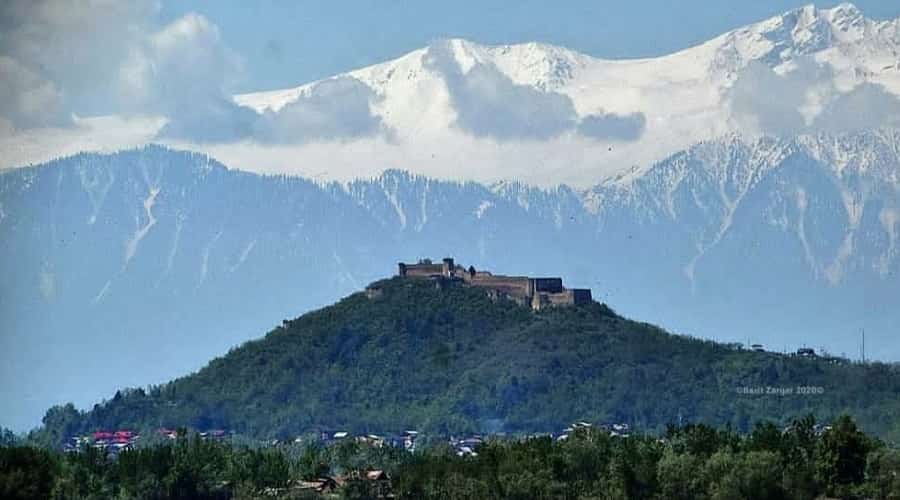
What is Hari Parbat Fort: Hari Parbat Fort is a hilltop fortress overlooking Srinagar’s Dal Lake. Its outer wall was built by Emperor Akbar in 1590, and the present fort structure was completed in 1808 by Afghan governor Atta Mohammad Khan. The hill also hosts a Hindu temple, mosques, and a Sikh shrine.
Hari Parbat is also known as Koh-e-Maran. Its history unfolds in three layers, each from a different ruling power.
- Ancient tradition: the hill has long been considered sacred, associated with the goddess Sharika.
- Mughal period (1590): Akbar built the outer defensive wall as part of an unfinished plan for a new walled city, Nagar Nagar.
- Durrani period (1808): Atta Mohammad Khan, governor of Kashmir, completed the present fort during his 1795–1806 tenure.
This layered history makes Hari Parbat one of Kashmir’s clearest examples of Mughal-era planning completed under later Durrani rule.
Fort Walls and Gates
Akbar’s wall runs about 5 km around the hill and stands roughly 10 metres high. Two historic gates pierce it: the Sangin Darwaza, known for its carved stone windows, and the Kathi Darwaza, the main entrance, decorated with Persian inscriptions.
A special permit from the Director of Tourism, Jammu and Kashmir, is required to enter the fort, since the Indian Army maintains a presence here due to its strategic hilltop position.
Shrine of Guru Har Gobind
On the fort’s southern wall stands a Sikh shrine linked to Guru Har Gobind, the sixth Sikh Guru, locally called ‘Chatti Padshahi’ (Punjabi for ‘Sixth King’). He is believed to have stopped here during his travels through Kashmir.
From the hilltop, at about 122 metres above the valley floor, visitors get wide views of Srinagar, Dal Lake, and nearby almond orchards — a popular local picnic spot in spring.
- Must Reads on: Best Tourist Places to Visit in Jammu & Kashmir
Amar Mahal Palace Museum, Jammu
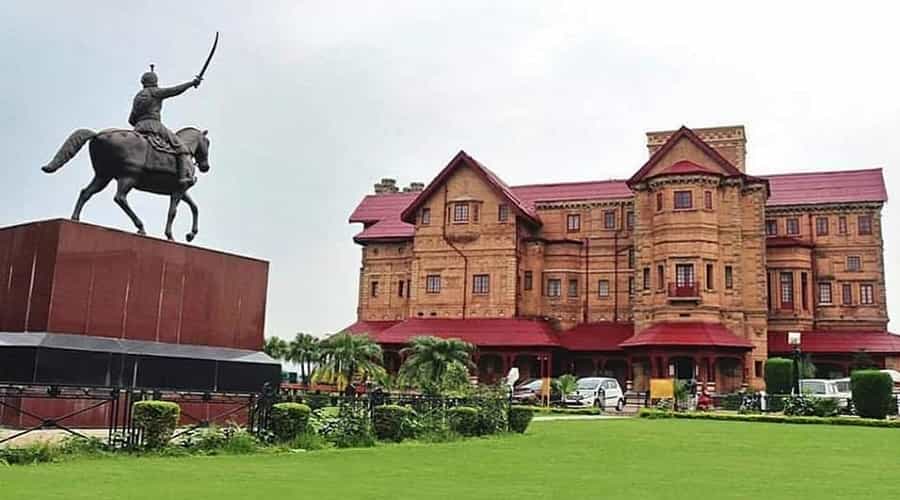
What is Amar Mahal Palace: Amar Mahal Palace is a 19th-century French-chateau-style palace on the Tawi River in Jammu city. Commissioned in 1862 for Raja Amar Singh, it now operates as a museum famous for a 120 kg gold throne and a 25,000-volume library.
A French architect designed the palace, giving it sloping red-tiled roofs, turrets, and tall towers. It was, for a time, the tallest building in Jammu.
The palace was home to the Dogra royal family and, later, to Maharani Tara Devi, wife of Maharaja Hari Singh, until her death in 1967. Her son, Dr Karan Singh, donated it to the Hari-Tara Charitable Trust, and it opened as a museum in 1975.
Inside the Museum
The centrepiece is a golden sofa-style throne weighing 120 kg, displayed in a hexagonal room and visible only through glass panels for security.
Other highlights include a 47-piece Pahari miniature collection depicting Nala Damayanti, Kangra school paintings, Dogra royal portraits, and modern works by M.F. Husain and G.R. Santosh.
Getting There
Amar Mahal is about 8 km from Jammu Tawi Railway Station and 3 km from Jammu Bus Stand — an easy add-on to a half-day Jammu heritage tour.
- Also Read: Must Visit in Jammu & Kashmir
Leh Palace, Ladakh
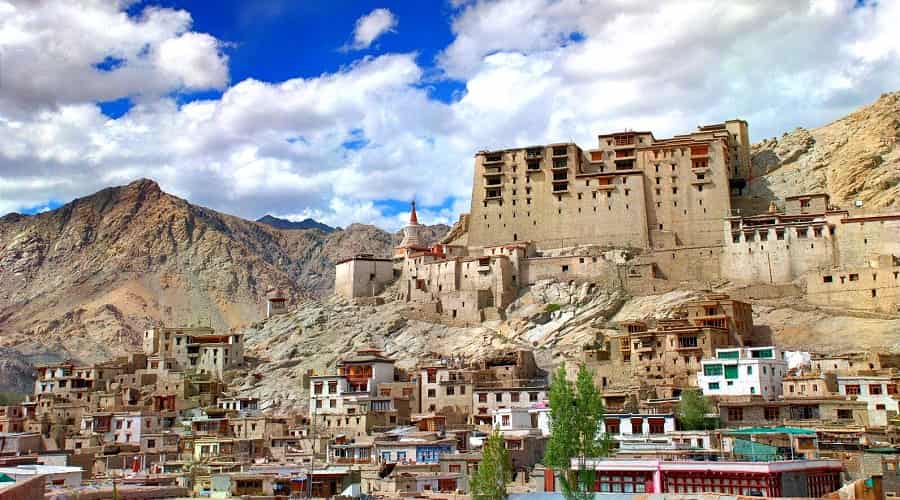
What is Leh Palace: Leh Palace is a nine-storey royal residence overlooking Leh town in the Union Territory of Ladakh. Built between 1553 and the mid-17th century by the Namgyal dynasty, it was designed along lines broadly similar to Lhasa’s Potala Palace, according to most historical accounts.
Ladakh has been governed separately from Jammu and Kashmir since 2019, though Leh Palace remains closely tied to the same royal and regional history covered in this guide.
Tsewang Namgyal, founder of the Namgyal dynasty, began construction in 1553. His successor, King Sengge Namgyal — the ‘Lion King’ — completed it in the 17th century.
Architecture and Decline
Built from mud, wood, stone, and sand, the palace stays naturally cool in summer and warm in winter, a hallmark of medieval Tibetan construction techniques.
The royal family lived here until 1834, when Dogra forces under General Zorawar Singh invaded Ladakh and forced the Namgyal rulers to relocate to Stok Palace. The abandoned structure suffered cannon damage and years of neglect afterward.
The Archaeological Survey of India now manages ongoing restoration. Some floors and staircases remain fragile, so visitors should move carefully.
The View from the Top
The palace’s highest floor, the Victory Tower, looks out over the snow-covered Stok Kangri range and Leh’s old town below.
On the way up, visitors pass the Dukhar temple, dedicated to the goddess Tara, and a small museum with Tibetan thangka paintings and royal jewellery over 450 years old.
- Also Read to Know: Places to Visit in Leh Ladakh
Bahu Fort and Temple, Jammu
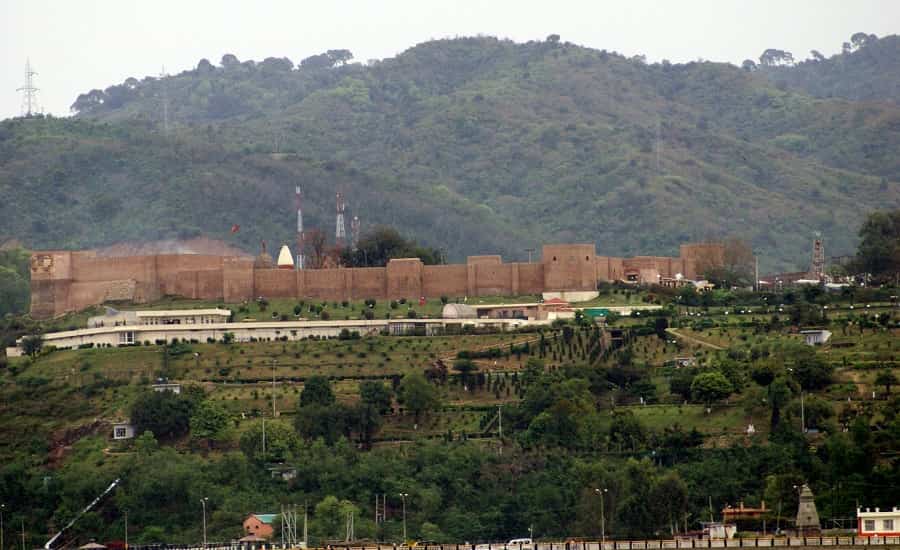
What is Bahu Fort: Bahu Fort sits on the Tawi River’s left bank in Jammu. Local tradition traces its origins back nearly 3,000 years to Raja Bahulochan, though the surviving structure reflects extensive rebuilding by the Dogra rulers in the 19th century.
According to local tradition, Bahu Fort’s earliest origins go back roughly 3,000 years to Raja Bahulochan, brother of Jammu’s legendary founder, Raja Jambu Lochan. This age rests on oral history rather than confirmed archaeological dating.
What can be confirmed is that Maharaja Gulab Singh and Maharaja Ranbir Singh substantially rebuilt and extended the fort during the 19th century — the structure visitors see today largely reflects that Dogra-era work.
Bawe Wali Mata Temple
Inside the fort stands the Bawe Wali Mata Temple, dedicated to Goddess Kali, Jammu’s presiding deity. The present shrine was built shortly after Maharaja Gulab Singh’s 1822 coronation.
Devotees gather in large numbers every Sunday and Tuesday, and the fort hosts the Bahu Mela festival twice a year during Navratri.
Bagh-e-Bahu and Nearby Maha Maya Temple
The surrounding Bagh-e-Bahu garden has terraced lawns, fountains, and an underground aquarium with around 400 fish species, making the fort complex a favourite family picnic spot.
A short walk behind the fort, on the bypass road, leads to the Maha Maya Temple, set inside a quiet City Forest — a peaceful contrast to the busier main fort area.
- You may also be interested in: Famous Hindu Temples in Jammu and Kashmir
Getting There
Auto-rickshaws and mini-buses run regularly from across Jammu city; Bahu Fort is roughly 4–5 km from Jammu Railway Station.
Mubarak Mandi Palace, Jammu
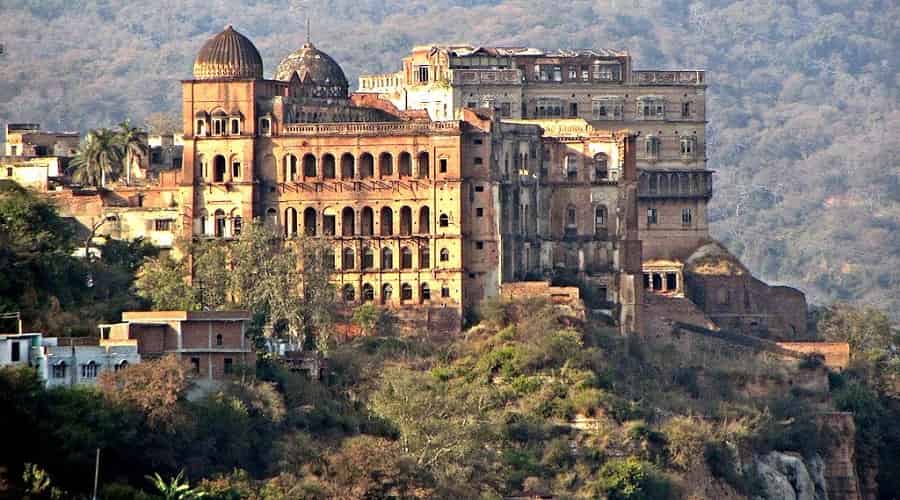
What is Mubarak Mandi Palace: Mubarak Mandi Palace is a 19th-century palace complex in Jammu’s old walled city, once the main seat of the Dogra rulers. It blends Rajasthani, Mughal, and Baroque European architecture, and today houses the Dogra Art Gallery.
This was the principal Dogra residence before the family moved to Amar Mahal and, later, Hari Niwas Palace. The oldest surviving wing dates to around 1824, though the complex kept expanding into the early 20th century.
Inside the Complex
Mubarak Mandi includes several distinct sections: the Darbar Hall, Pink Mahal, Gol Ghar, Rani Charak Mahal, Hawa Mahal, and the ornate Sheesh Mahal (Palace of Mirrors) — the complex’s most photographed spot.
The Pink Hall houses the Dogra Art Gallery, with miniature paintings from various Pahari hill schools. Long verandas, sloping tin roofs, and wooden-framed columns surround a central courtyard once used for royal audiences and public ceremonies.
Akhnoor Fort, Jammu
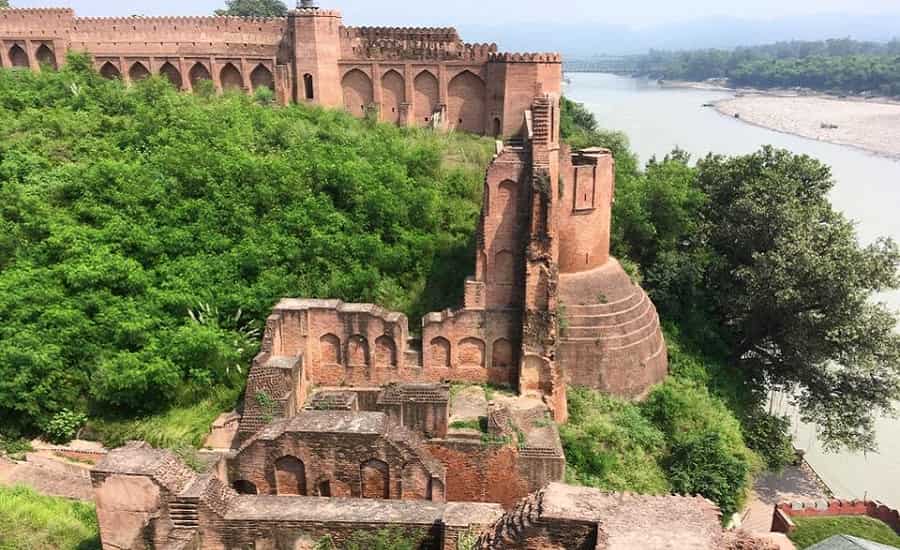
What is Akhnoor Fort: Akhnoor Fort is an 18th-century two-storey fort on the Chenab River, about 28–32 km from Jammu city. It is best known for Jia Pota Ghat, where Maharaja Gulab Singh was crowned Raja of Jammu in 1822.
Construction began in 1762 under Raja Tegh Singh and was completed in 1802 by his son, Raja Alam Singh. Thick rubble-masonry walls, corner watchtowers, and battlements mark it as a classic example of regional military architecture.
Jia Pota Ghat and the Dogra Coronation
Just below the fort, Maharaja Ranjit Singh crowned Gulab Singh as Raja of Jammu at Jia Pota Ghat on 17 June 1822 — the founding moment of Dogra rule in the region.
Archaeological Survey of India excavations nearby have uncovered Harappan-era pottery and Kushana-period artefacts, showing the site was settled long before the fort itself was built. Akhnoor Fort has been a protected national monument since 1982.
Practical Visitor Information
Timings, entry fees, and photography rules at these sites change periodically, so it is worth confirming current details with the local tourism department or ASI office before your visit. The table below gives general planning guidance based on typical visitor experience.
| Site | Suggested Visit Duration | Walking / Stairs | Best Time of Day |
| Hari Parbat Fort | 1–1.5 hours | Moderate — hill climb, uneven paths | Early morning or late afternoon |
| Amar Mahal Palace | 45–90 minutes | Easy — mostly level museum floors | Late morning |
| Leh Palace | 1–2 hours | Difficult — steep stairs, nine storeys, high altitude | Morning, before afternoon haze |
| Bahu Fort & Bagh-e-Bahu | 1.5–2.5 hours | Easy to moderate — garden paths, temple steps | Late afternoon into evening |
| Mubarak Mandi Palace | 45–90 minutes | Moderate — courtyards and older stairwells | Late morning |
| Akhnoor Fort | 45–90 minutes | Easy — two-storey structure | Morning |
Leh Palace and Hari Parbat Fort involve the most walking and elevation change, so travellers with mobility concerns or young children may prefer Amar Mahal, Mubarak Mandi, or Akhnoor Fort, which are comparatively level.
Which Fort or Palace Is Best For You?
If you are short on time or planning around specific interests, this quick comparison can help you prioritise among the forts and palaces of Jammu and Kashmir.
| Place | Best For |
| Bahu Fort | Temple visits, gardens, and families |
| Amar Mahal Palace | Museum lovers, art and antique collections |
| Mubarak Mandi Palace | Architecture and photography |
| Hari Parbat Fort | Panoramic views and multi-faith heritage |
| Leh Palace | Himalayan and Tibetan-influenced history |
| Akhnoor Fort | Riverside setting and Dogra-era history |
Nearby Attractions
Pairing these historic landmarks with other nearby sights makes for a fuller day of sightseeing.
- Near Bahu Fort and Amar Mahal (Jammu): Raghunath Temple, Bagh-e-Bahu Garden, Ranbireshwar Temple.
- Near Hari Parbat Fort (Srinagar): Dal Lake, Nishat Bagh, Shalimar Bagh, Shankaracharya Temple.
- Near Leh Palace (Ladakh): Namgyal Tsemo Gompa, Shanti Stupa, Leh Market, Thiksey Monastery.
Suggested Heritage Itinerary for Jammu and Kashmir Forts and Palaces
For travellers who want to cover most of these historical forts in Jammu and the Kashmir Valley in one trip, here is a practical day-by-day plan.
| Day | Plan |
| Day 1 | Jammu city: Bahu Fort and Bagh-e-Bahu in the morning, Amar Mahal Palace after lunch, Mubarak Mandi Palace towards evening |
| Day 2 | Half-day trip to Akhnoor Fort (roughly 30 km from Jammu) and Jia Pota Ghat, back to Jammu by evening |
| Day 3 | Travel to Srinagar (about 260–270 km by road, 6–8 hours; or roughly 1 hour by flight) and rest |
| Day 4 | Explore Hari Parbat Fort and central Srinagar in the morning; Dal Lake and Mughal gardens in the afternoon |
| Day 5–6 | Fly or drive onward to Leh (road via Srinagar is seasonal, generally open June–October) and visit Leh Palace |
This plan assumes standard road and flight conditions; always check current highway and weather updates before travelling between Jammu, Srinagar, and Leh, especially outside the summer months.
Best Time to Visit Forts and Palaces of Jammu and Kashmir
October to February suits the Jammu-region sites — Bahu Fort, Amar Mahal, Mubarak Mandi, and Akhnoor Fort — thanks to mild daytime temperatures.
For Hari Parbat Fort in Srinagar, April to October offers the clearest weather and easiest hill access.
Leh Palace, at high altitude in Ladakh, is best visited between May and September, when mountain roads are open and the palace is fully accessible. Winter brings heavy snow and can make travel difficult or impossible on some routes.
Frequently Asked Questions
Q-1: Which is the oldest fort among the forts and palaces of Jammu and Kashmir?
Bahu Fort in Jammu is traditionally considered the oldest, with local tradition dating its origins to nearly 3,000 years ago, though the present structure is largely 19th-century Dogra work.
Q-2: When was Hari Parbat Fort built?
The present fort was completed in 1808 by Atta Mohammad Khan; its outer wall dates further back, to 1590, under Emperor Akbar.
Q-3: Is Leh Palace still part of Jammu and Kashmir?
No. Leh Palace is in the Union Territory of Ladakh, which has been administered separately from Jammu and Kashmir since 2019.
Q-4: Where exactly is Amar Mahal Palace located?
Amar Mahal Palace stands on the banks of the Tawi River in Jammu city, not near Ladakh.
Q-5: What is the golden throne at Amar Mahal Palace Museum?
It is a 120 kg pure gold sofa-style throne of the Dogra rulers, viewable only through glass panels in a hexagonal room.
Q-6: How many storeys does Leh Palace have?
Leh Palace is nine storeys tall; the upper floors housed the royal family, and the lower floors held stables and storerooms.
Q-7: What are the best forts and palaces to visit in Jammu and Kashmir for families?
Bahu Fort and Amar Mahal Palace are the easiest for families, with gentle walking, gardens, and museum displays that appeal to children.
Q-8: Which fort in this list is best for photography?
Mubarak Mandi Palace’s Sheesh Mahal and Hari Parbat Fort’s hilltop views are the most photographed spots among these sites.
Q-9: How many days do you need for a Jammu and Kashmir heritage tour?
Two days comfortably cover the Jammu-region forts and palaces; add three to four more days if you plan to include Srinagar and Leh.
Q-10: Is Leh Palace difficult to visit for elderly travellers?
Yes, relatively — it involves steep stairs across nine storeys at high altitude, so it suits moderately fit visitors better than those with mobility limitations.
Q-11: Why is Akhnoor Fort historically important?
Its Jia Pota Ghat is where Maharaja Gulab Singh was crowned Raja of Jammu in 1822, marking the start of Dogra rule in the region.
Q-12: What architectural styles does Mubarak Mandi Palace combine?
It blends Rajasthani, Mughal, and Baroque European architectural styles, reflecting the wide-ranging influences on the Dogra dynasty.
Q-13: Can all these historical forts in Jammu be covered in a single day trip?
Bahu Fort, Amar Mahal, and Mubarak Mandi can be covered in one full day within Jammu city; Akhnoor Fort is best kept as a separate half-day trip.
Q-14: What is the best time to visit the forts and palaces of Jammu and Kashmir?
Visit Jammu-region sites from October to February, Hari Parbat Fort from April to October, and Leh Palace between May and September.
Conclusion
From the Mughal-Durrani walls of Hari Parbat Fort to the high-altitude grandeur of Leh Palace, the forts and palaces of Jammu and Kashmir offer far more than scenic backdrops.
They are living records of the Dogra dynasty, Mughal governors, and Ladakhi kings who shaped this Himalayan region. Whether you are tracing Bahu Fort’s ancient roots, admiring the gold throne at Amar Mahal, or exploring the Sheesh Mahal at Mubarak Mandi, each of these historic landmarks rewards travellers with a distinct chapter of the region’s past.
Plan your visit using the timeline, practical information, and itinerary above, and these forts and palaces of Jammu and Kashmir will easily become the highlight of your trip.