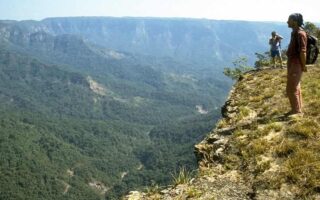
Nokrek National Park sits at the point where East Garo Hills, West Garo Hills, and South Garo Hills meet — a detail the Ministry of Environment’s own committee notes spell out clearly, though most travel pages still file the park under West Garo Hills alone and leave it at that. The park itself is small, just 47.48 sq km, but it’s the protected core of the much larger Nokrek Biosphere Reserve, roughly 820 sq km, and it’s the only biosphere reserve Meghalaya has. It’s also where botanists identified Citrus indica, a wild citrus species now treated as part of the genetic lineage behind cultivated oranges and lemons.
One distinction worth getting right before you plan around it: the Government of India declared Nokrek a biosphere reserve in 1988. UNESCO recognized it under the Man and Biosphere Programme in 2009, twenty-one years later. A lot of sources collapse this into “UNESCO designated it in 2009,” which makes it sound like the reserve didn’t exist before that. It did.
Quick answer: Visit between October and April. Entry runs through Daribokgre village, and you need permission from the Forest Officer in charge before you go in — this isn’t a park you can wander into. Tura is the gateway town, roughly 45 km from the park and about 38 km from the Daribokgre trek base specifically.
The 2023 Eco-Sensitive Zone
On 3 July 2023, the central government notified a 224 sq km Eco-Sensitive Zone around the park, extending 0.27 to 6.98 km beyond the boundary depending on location. Within it, new commercial hotels and resorts can’t be built within 1 km of the park, and commercial mining and stone quarrying are banned outright. The notification also calls for a Zonal Master Plan to govern eco-tourism activity in the zone. I couldn’t confirm whether that plan has been finalized as of this year, so check with the Meghalaya Forest Department if that affects your plans — don’t assume either way.
Practically, what this means for a visitor: don’t expect a large resort to appear near the park boundary any time soon. Accommodation here will stay small-scale for a while.
Quick Facts
| Fact | Detail |
|---|---|
| Location | Tri-junction of East, West, and South Garo Hills districts, Meghalaya |
| Park area | 47.48 sq km |
| Biosphere Reserve area | ~820 sq km |
| Highest point | Nokrek Peak, 1,412 m |
| National Park notified | 1986 |
| Biosphere Reserve declared | 1988, by Government of India |
| UNESCO MAB recognition | 2009 |
| Eco-Sensitive Zone | 224 sq km, notified 3 July 2023 |
| Tura to park | ~45 km |
| Tura to Daribokgre (trek base) | ~38 km |
| Daribokgre Trek length | 16 km, full day or 4–5 hours |
| Best time to visit | October–April |
Getting There
Guwahati’s airport is the usual gateway, and Meghalaya Tourism’s own listing for the park puts it at 170 km, with the Guwahati railway station at 186 km. Shillong’s airport is actually closer on paper, at 158 km, though flight frequency there is limited. One caveat: other pages on the same tourism site list the Guwahati distance at 262 km, which tells you the route counted matters more than the raw number. Budget half a day either way and check current road conditions before you leave, since this stretch runs through hill terrain that changes with the season.
From Tura, the road to Daribokgre runs via Asananggre — about 38 km according to both the district administration’s own site and Meghalaya Tourism, diverting at Oragitok village roughly 9 km before the settlement. A southern approach exists too, through Anchigre and Dana Adugre villages, or via the adjoining Tura Peak Reserved Forest. It’s less used and worth attempting only with a guide who knows that specific route. Either way, the vehicle stops at the forest edge — the final stretch up to the peak is on foot.
Wildlife: What’s Documented, and Where the Record Gets Shaky
Seven primate species live here, and the stump-tailed macaque is seen often enough on the main peak trail that guides treat it as a near-guaranteed sighting. Hoolock gibbons are common too — their calls carry through the forest most mornings, and there’s a dedicated gibbon reserve at nearby Selbalgre if that’s specifically what you’re after. Camera traps run by the state forest department have recorded gaur, common leopard, Chinese pangolin, and ferret badger. Eight cat species have historically been recorded in the area, from the marbled cat up to the Bengal tiger, though the tiger’s current status here is officially listed as uncertain — that’s not the same as confirmed absent, but it’s not a sighting you should plan around either.
Bird numbers vary depending on which source you check. A formal 2002 avifauna survey recorded around 150 species and earned Nokrek its Important Bird Area status. Meghalaya Tourism’s own promotional material puts the figure higher, over 200. I’d go with the survey number as the more defensible one, but both are on record.
Red pandas are the claim worth slowing down on. Wikipedia’s account states that a single specimen was shot here in the 1960s, and that researchers have generally concluded it likely escaped from Nepali porters passing through the area rather than being a wild resident. No sighting has been confirmed since. That’s Wikipedia’s framing, not an independently verified fact — but it’s a more honest starting point than the “home to red pandas” line most travel sites repeat without qualification.
Citrus Indica and the Gene Sanctuary
The discovery that gave Nokrek its scientific reputation: researchers found the wild “mother germplasm” of Citrus indica — Memang Narang locally, “orange of the spirits” — growing in the range. It’s treated as a genetic ancestor of cultivated citrus worldwide, which is why the area around it was set up as the National Citrus Gene Sanctuary. The forest also carries wild orchids, lemon grass, champak, and white meranti, though the citrus is what draws the researchers.
The Daribokgre Trek and What’s Around It
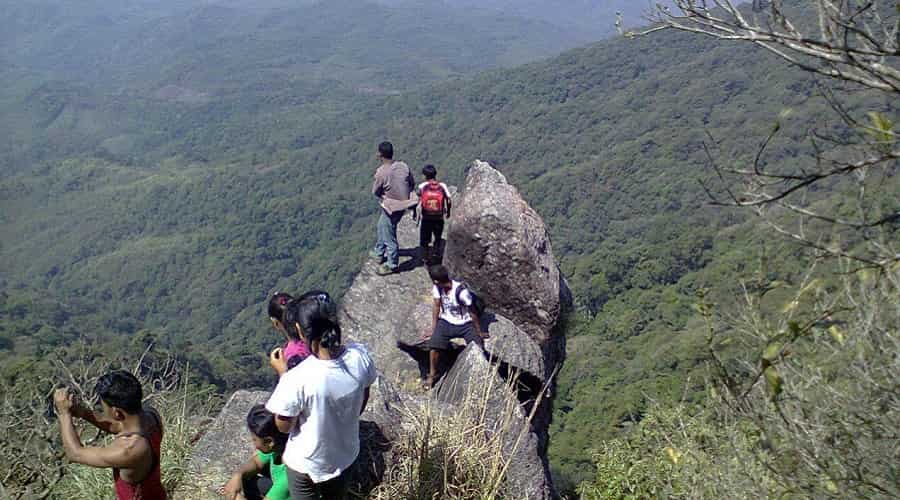
Meghalaya Tourism lists the Daribokgre Trek at 16 km, recommended as either a full day or a 4–5 hour outing depending on pace. It starts through farmland and village plots before entering forest proper, climbing toward Nokrek Peak at the top. Along the way, Daribokgre village itself has a watch tower with views over the reserve, a bamboo bridge, and orange orchards ringing the settlement — the village trades on the same citrus history as the park. Local honey and rice-wine brewing are part of the Garo culture here too, if you’re staying overnight rather than day-tripping.
Two landmarks are worth knowing by name: Nokrek A’pal, a point along the route, and Matcha Nokpante, which local Garo tradition treats as a tiger meeting place. Treat that one as folklore, not a wildlife-sighting tip — the district’s own tourism material mentions it in the same breath as the Mande Burung, a mythical “ape-man” locally associated with sightings around Nokrek that have never been substantiated. Worth asking your guide about for the story, not for trip planning.
Permits and Access
Entry to Nokrek is restricted, same as any other national park in India — the East Garo Hills district administration’s own advisory states plainly that access is allowed only after permission from the concerned Forest Officer. That’s a formal step, not a formality; sort it out in Tura or with the Nokrek Range Office before you travel, since no reliable published fee schedule exists online to check in advance.
A local guide isn’t stated anywhere as a strict legal requirement, but every official tourism listing tells you to arrange one, and the trail isn’t signposted for someone navigating alone. I’d treat “recommended” here as close to “expected” in practice.
Carry ID for registration checks, and skip single-use plastic — it’s flagged as a no-plastic zone.
Where to Stay
Nothing sits inside the protected core, but you don’t need to base yourself all the way back in Tura either. Right at Daribokgre, there’s a Forest Department inspection bungalow along with several community-run homestays, plus a campsite at the helipad ground. Chandigre Rural Tourist Resort, a community-run property with traditional huts, sits on the reserve’s fringe surrounded by tea gardens. For more hotel variety, Tura and Williamnagar remain the fallback, with Williamnagar the closer of the two at roughly 15 km.
Things to Do Nearby
Tura Peak is 2 km from the park and gives you a look toward the Brahmaputra plains. Balpakram National Park, a few hours’ drive away, is known for a canyon that draws Grand Canyon comparisons. Siju Caves get mentioned constantly in the same breath as Nokrek, but they’re about 125 km from Tura in South Garo Hills — a separate day trip, not a quick add-on, whatever the map distance between dots suggests.
Before You Go
Monsoon season, June to September, isn’t officially closed, but the trail conditions change for the worse — expect slippery ground on both the access road and the peak trail, and leeches are a real, commonly reported nuisance on this route after rain. Mobile network drops off past Tura, so download offline maps in advance rather than counting on a signal. Carry cash; digital payment options thin out fast once you’re off the main road. Bring proper trekking shoes and rain gear regardless of season, since hill weather shifts fast even outside monsoon. Start early if wildlife matters to you — gibbon calls and general forest activity are strongest in the first couple of hours after sunrise.
One older published guide cites a day-hire vehicle from Tura at around ₹2,000, but that’s not something to treat as a current rate. Ask locally when you’re there.
Final Word
Nokrek isn’t a drive-up park. You need a permit, ideally a guide, and a plan that respects the October–April window rather than fighting the monsoon. What you get for that effort is a genuinely uncrowded forest trek, a real shot at gibbon and macaque sightings, and the story of a citrus species that traces back to fruit most people eat without thinking about where it came from.
FAQs
What is Nokrek National Park known for?
It’s the core of Meghalaya’s only biosphere reserve, and the site where Citrus indica, a wild ancestor of cultivated citrus, was first documented.
When should I visit Nokrek National Park?
October to April, per Meghalaya Tourism’s own listing. May gets warmer and more humid; June–September brings monsoon rain that makes trails harder going.
Is Nokrek National Park in West Garo Hills district?
The core sits at the tri-junction of East, West, and South Garo Hills — not West Garo Hills alone, despite what many pages say.
How do I get to Nokrek National Park?
Fly or take the train to Guwahati, drive to Tura, then continue about 45 km to the park (around 38 km if your destination is specifically the Daribokgre trek base).
Do I need a permit to enter?
Yes — entry requires permission from the Forest Officer in charge. No official fee schedule is published, so confirm the amount in Tura.
Are there really red pandas at Nokrek?
One specimen is documented, from the 1960s, and it’s generally believed to have escaped from Nepali porters passing through rather than being a wild resident. Nothing confirmed since.
How long is the trek to Nokrek Peak?
The Daribokgre Trek runs about 16 km, and Meghalaya Tourism recommends budgeting a full day or 4–5 hours.
Where can I stay near the park?
Daribokgre has a forest department bungalow, several homestays, and a campsite. Tura and Williamnagar offer more hotel choice further out.
Are Siju Caves close to Nokrek?
No — about 125 km from Tura, in South Garo Hills. Plan it separately.
Also Reads on:
- Best Places to Visit in Meghalaya
- Offbeat Things to Do in Meghalaya
- Top Things to Do in Meghalaya in Monsoon
- Scenic Waterfalls in Meghalaya